At the midway point of the International Year of the Woman Farmer — when the global development community has come together to recognize the role of women farmers in producing food for the world — much of the conversation revolves around addressing the many challenges they face.
And rightly so. The barriers for women farmers are well documented: they include restrictive gender norms, disproportionate household burdens and a shortfall of resources such as land, financing, inputs and market connections. So, how do women farmers make food systems work for them?
At Heifer International, we believe supporting women, their families and their communities comes through integrated approaches that bundle social, technological, market and regenerative farming elements to address the underlying, systemic barriers to their progression and full participation in formal markets. We apply this in partnership with like-minded local partners, as well as global partners such as the CGIAR and FAO, ensuring women farmers have the opportunity to draw from a broad range of expertise and experience. Ultimately, integrated strategies are a pathway toward equitable access to assets and opportunities.
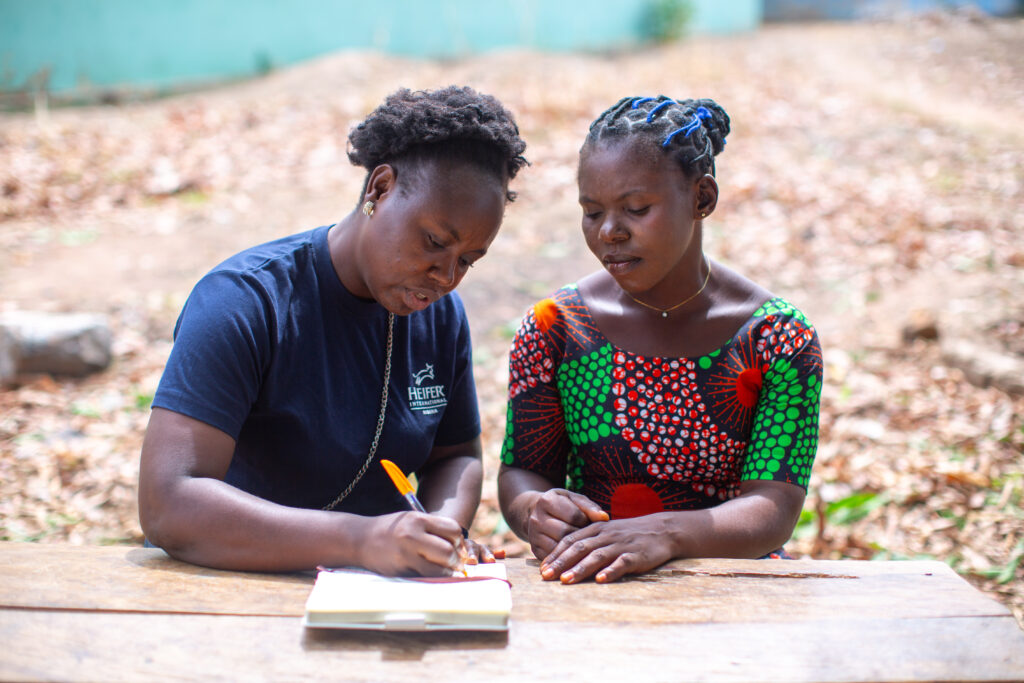
Akuhwa Sewuese, left, leads a financial training session with Rosemary Azaigba in Benue State, Nigeria. Photo by Heifer International/Phillip Davis.
But programs in support of women farmers will have limited impact if we only view our work through the lens of disadvantage. We need to embrace a bolder vision that also helps women farmers fully tap their innate and collective power.
About two-thirds of the smallholders Heifer International partners with through its programs are women, and their resolve and ingenuity — as pillars of their families, nurturers of the environment, champions for fair pricing and skilled business leaders — consistently drive advancements across farms, villages and markets. As individuals, women farmers are enduring and inspiring changemakers for their households and neighbors. And when they act together? They become an even more formidable force for transformation.
A foundational element of an integrated approach is helping women farmers harness their shared strength. Working alongside them as they organize into self-help groups, farmer producer organizations and cooperatives lays the groundwork for individuals to solve challenges together and advocate for their interests with one determined voice.
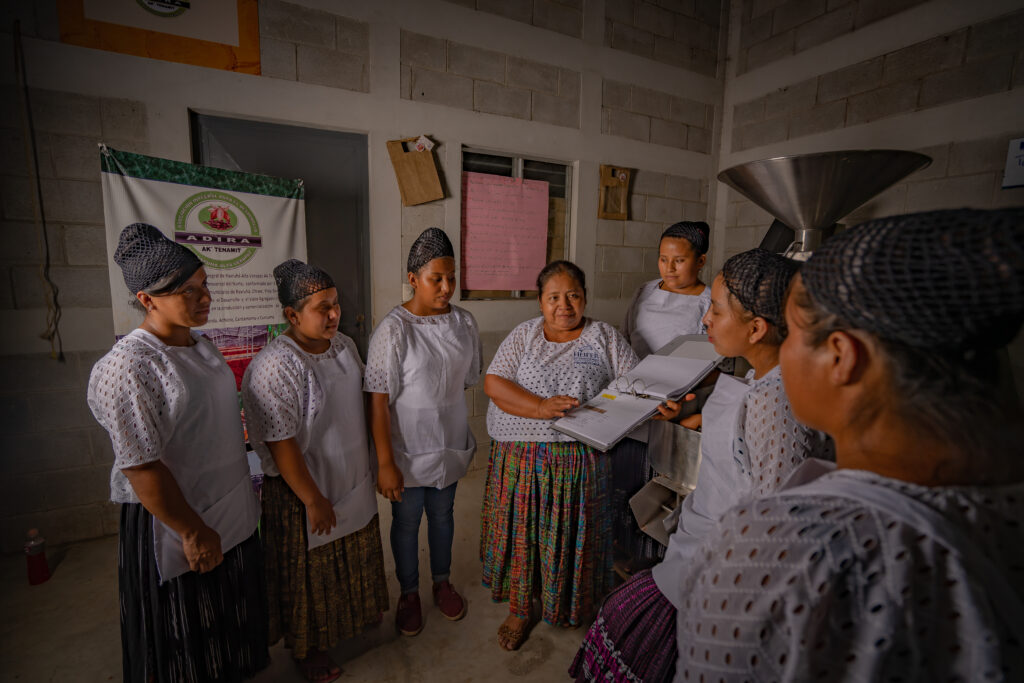
Marta Teyul, center, teaches social capital principles to members of the ADIRA cooperative in Guatemala. Photo by Heifer International/Ivan Castro.
Evidence has shown that women’s collective action has positive impacts on access to finance, livelihood diversification, knowledge exchange, group resilience and social cohesion in the context of agrifood systems. When paired with practical resources and market connections to build profitable agricultural enterprises, we see these impacts become a lever that uplifts entire communities.
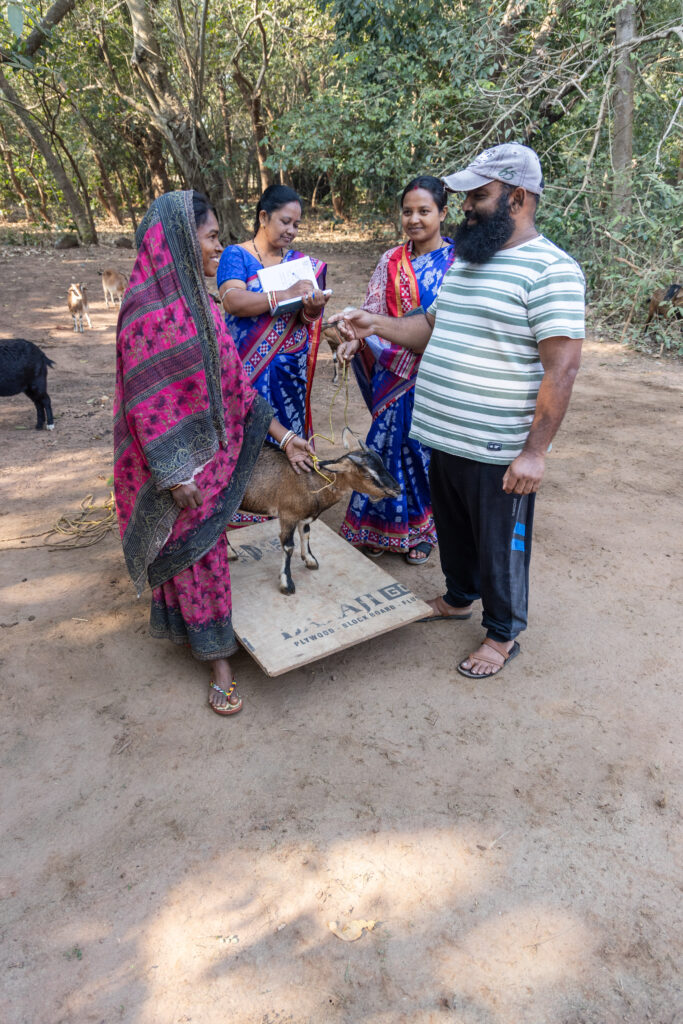
Sabita Singh, center, facilitates a goat sale through the Maa Durgadevi Producer Company in Odisha, India. Photo by Heifer International/Phillip Davis.
Examples abound: Women farmers from 63 Heifer-supported cooperatives in Bangladesh have more than doubled their average annual household income, increasing it from $1,499 to $3,716. In Mexico, women farmers improved their production practices and provided 2 million sustainably sourced eggs to local consumers. Farmers in savings groups through a Heifer project in Nepal pooled their funds to lend a stunning $1 million in loans to women farmers to finance their businesses and households. Through another initiative in Nepal, the success of women-led groups and cooperatives drew engagements from 40 market actors and more than $630,000 in investments from local governments.
These results translate not only into more income for farming households, but to more resilient local food systems that create jobs, care for the environment and nourish families. And the throughline is not that women participated in this progress. It’s that they acted together to make it.
If we are serious about helping women farmers build sustainable food systems, we must be equally serious about investing in women’s collective potential as part of our approach. That means not limiting our support to closing gaps in resources, but looking to women farmers as catalysts and leaders whose combined abilities can meet the challenges facing food systems today.
The Weight of Opportunity: Women Farmers Strengthen Markets Together in Odisha
By Heifer International|May 28, 2026
Women in rural Odisha who once had little influence over pricing or household decisions are now shaping markets, leading cooperatives and helping other women succeed.
Please be patient while we send you to a confirmation page.
We are unable to process your request. Please try again, or view common solutions on our help page. You can also contact our Donor Services team at 855.9HUNGER (855.948.6437).
-
includes to cover payment processing costs.
Give in Honor
You'll have the opportunity to fill out a free card after your donation
Details
,
Success!
Please be patient while we send you to a confirmation page.
We are unable to process your request. Please try again, or view common solutions on our help page. You can also contact our Donor Services team at 855.9HUNGER (855.948.6437).
Your Donation Amount
/mo
/yr
includes to cover payment processing costs.
Give in Honor
You'll have the opportunity to fill out a free card after your donation