
What is Regenerative Agriculture?
By Heifer International | October 9, 2025
Regenerative agriculture means stewarding the land to create a balanced ecosystem in which the cycles of nature work symbiotically and freely.

April 21, 2026

At the entrance to her farm, Marilú Rivera has posted a list of rules. Among them are to smile daily, apologize when needed and work as a team.
For Marilú, a 49-year-old coffee producer in Ecuador’s Loja Province, that last rule guides everything. The team she refers to is her local association, PROCAFEQ, part of the larger FAPECAFES network (Federation of Associations of Small Ecological Coffee Producers of Southern Ecuador). Through this farmer-run organization, six groups of coffee farmers, representing about 1,800 families, bring higher-quality coffee to market at better prices.
As part of this network, Marilú works with other farmers and technicians to earn more from her coffee while helping restore the land it depends on.
In a region where rising temperatures, erratic rainfall and crop disease put coffee harvests at risk, smallholder farmers face increasing pressure to adapt. Even a good season does not always guarantee a steady income, as changing weather and uncertain coffee prices determine what farmers earn from one harvest to the next.
For many, the answer starts with joining forces and caring for their fields with more intention.
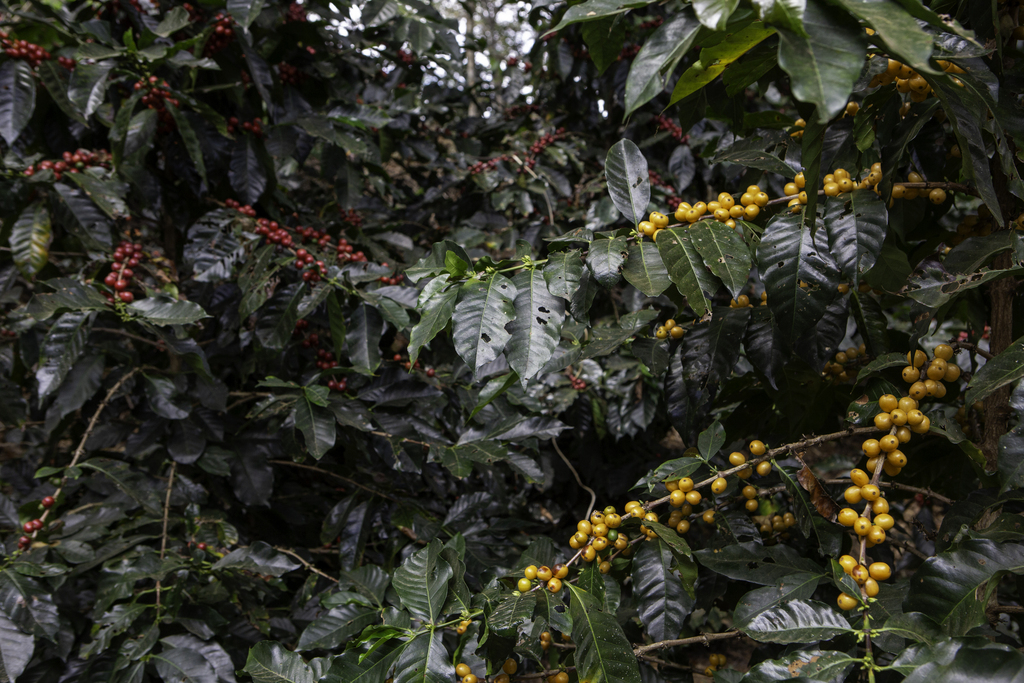
Marilú’s coffee grows among fruit trees that provide shade and protect the soil, a practice known as agroforestry. Coffee is grown in layered systems that function much like a forest, with coffee plants beneath fruit trees such as banana and citrus and taller timber trees rising above them all.
It wasn’t always this deliberate.
“[With] better soil, we have a better crop. We’re just persevering the little left of our planet,” Marilú said.
“In the past, we didn’t know much… we just grow there,” she said. “Now we know we also have to take care of those plants and carry out some processes.”
The transition from working the land to managing it with purpose has made a difference. Marilú’s trees now produce more beans, and her farm is more resilient during dry periods.
“We didn’t realize that [all] the trees here help us to have a good ecosystem… so the coffee trees grow better.”
Marilú has worked with coffee since she was a child. The oldest of 10 siblings, she began helping on her family’s farm at age 10.
“I remember some days we didn’t have enough money to buy some pencils for school,” she said.
As an adult, she and her husband worked as day laborers before inheriting a small plot of land from her husband’s mother. Even then, building a stable livelihood took time.
In 2004, Marilú found a way forward through PROCAFEQ, a local association of coffee farmers, where she accessed training in fertilizer use, plant care, harvest timing and soil management. The trainings, developed with Heifer International and local partners working alongside farmer organizations, are available across the region.
“I learned how to do the fertilizers, how to grow the coffee using some techniques,” she said. “In the past, we just grow the coffee without doing anything specific.”
Working through their local association, farmers now engage with the market differently. Instead of selling small amounts of coffee on their own, they refine how their coffee is grown, combine their harvests and negotiate rates with greater control.
“Now we are the ones as an organization to set the price,” said Victor Yanangomez, president of FAPECAFES. “And now the middleman waits for us.”
What they’ve built has brought higher incomes and stability for farmers across the network, with some farmers who once earned around $200 per bag of coffee now earning up to $1,000 through improved coffee quality and collective sales.
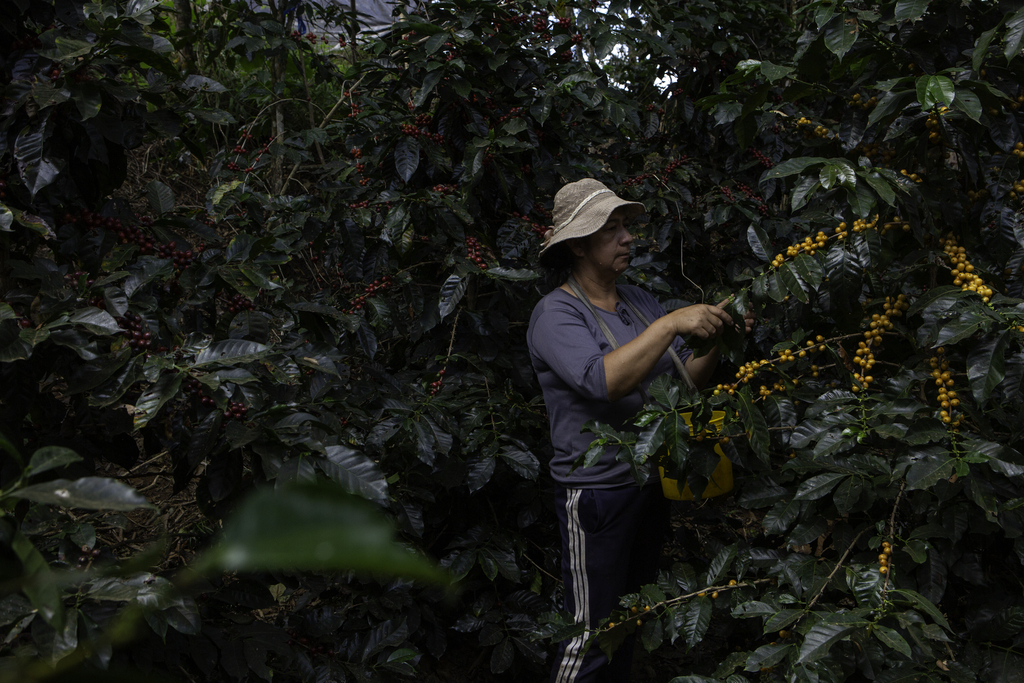
On Marilú’s farm, those results are already visible.
With guidance from technicians, she has introduced soil-cover crops, adjusted harvest timing and begun using organic fertilizers such as compost, along with natural microorganisms that keep her soil well-nourished and productive.
Over time, the soil has become more like a living system, better at holding water and nutrients and supporting healthy plant growth.
These practices reflect an agroforestry approach the U.N. Food and Agriculture Organization identifies as an effective way to store carbon and help farms withstand climate shocks. In Ecuador, similar systems have been shown to store several tons of carbon per hectare each year.
Marilú estimates her yield has increased by about 20 percent, with darker, richer soil that holds more moisture and coffee plants that are fuller, stronger and better able to withstand dry conditions.
“The trees are full of beans,” she said.
She is also preparing for the future. On one hectare, about 2 1/2 acres, she is growing a new variety of coffee plant with higher-quality potential. This investment is expected to bring better prices in the years ahead.
“I really like the things we receive because after attending workshops, I can replicate everything I learned,” she said.
That ability to take in, apply and exchange knowledge is central to how Marilú works within her association. What she gains, she brings back to her farm and her family.
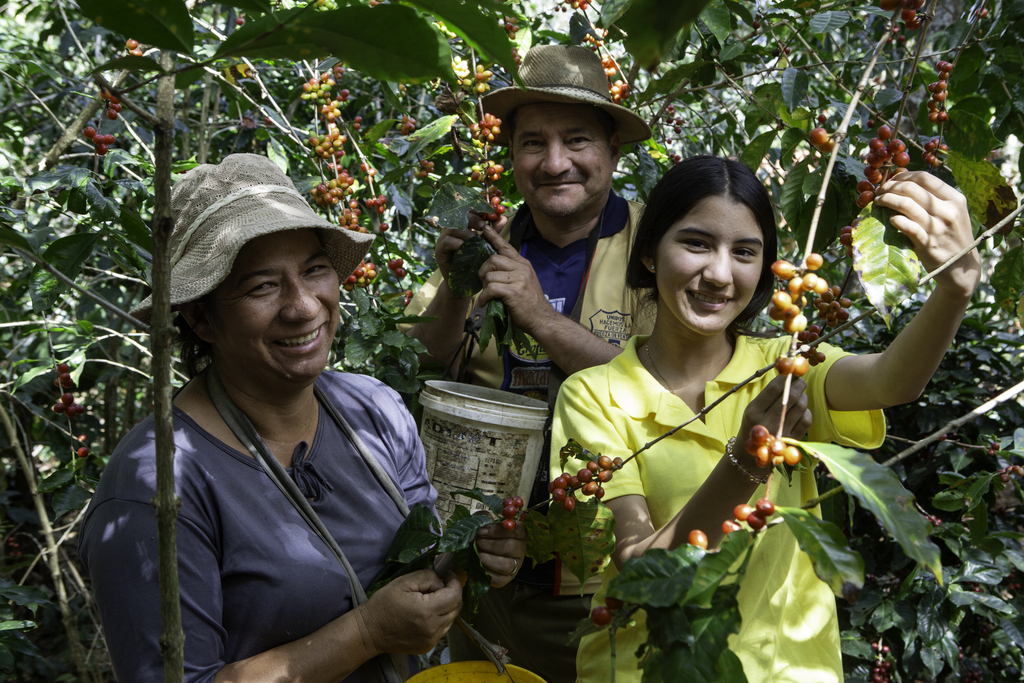
Her daughter, Dana, who is studying agricultural engineering, sees that firsthand.
“I think the coffee growing process … has improved because my mom is part of the association,” Dana said. “And they learn many things … and she comes back and puts that into practice.”
Today, Marilú’s work supports more than her own household. Through cooperation, she is part of a system that connects farmers to markets and protects the environment they are tied to.
For Marilú, that progress is only possible by working alongside others — sharing insights, building trust and making decisions together, just as the rules at the entrance to her farm suggest.
The Alliances for Sustainable Cocoa and Coffee (PASOS) project, running from 2024 to 2027, works with farmer-led organizations, local partners and governments in Ecuador to increase coffee and cocoa production and create more stable livelihoods. It connects farmers to better markets, builds business skills and expands access to financial services, while supporting agroforestry and soil management approaches that restore soil and protect the land. The project aims to improve the living conditions of 33,000 farming families, working directly with 5,500 of them, with more than 3,300 already participating in key coffee- and cocoa-growing regions.
By Heifer International | October 9, 2025
Regenerative agriculture means stewarding the land to create a balanced ecosystem in which the cycles of nature work symbiotically and freely.
Did you know?
You can add multiple resources to this cart! Feel free to keep browsing, add more resources, and get all of your resources in one package. Easy!
Cart is empty
Success!
Please be patient while we send you to a confirmation page.
We are unable to process your request. Please try again, or view common solutions on our help page. You can also contact our Donor Services team at 855.9HUNGER (855.948.6437).
Success!
Please be patient while we send you to a confirmation page.
We are unable to process your request. Please try again, or view common solutions on our help page. You can also contact our Donor Services team at 855.9HUNGER (855.948.6437).