
Self-Help Groups Are Transforming Women’s Lives in India
By Gordon Cole-Schmidt and Mirja Vogel | August 18, 2025
For decades, men ruled the farms in Bihar. Now, it’s women who are reshaping the agricultural economy.

May 28, 2026

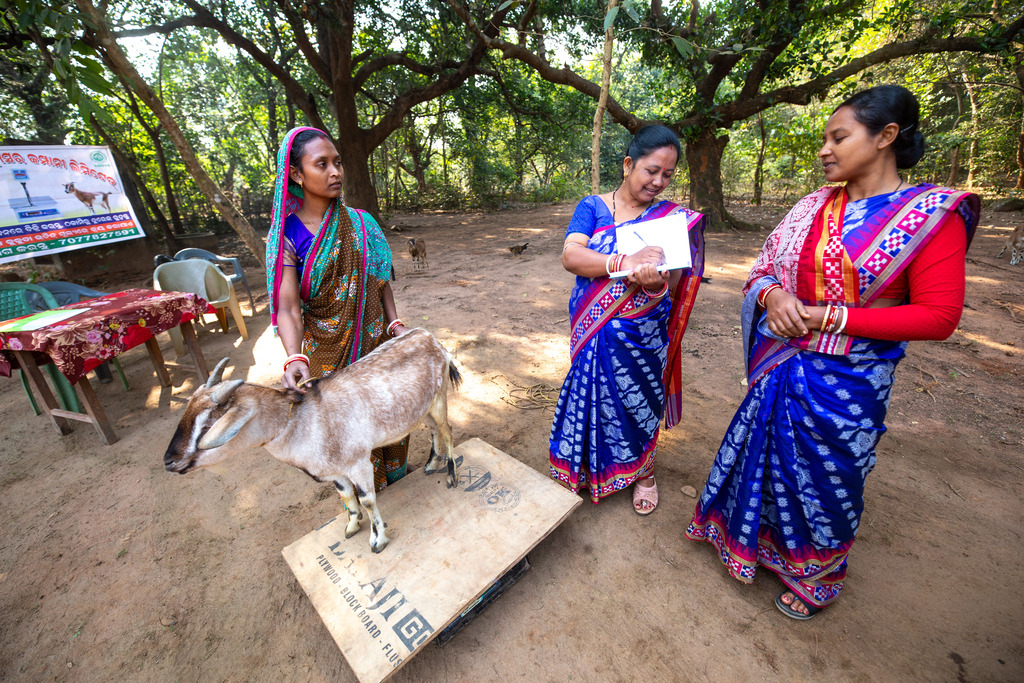
In a small village in the eastern Indian state of Odisha, Arshu Marandi leads a goat onto a board balanced on top of a scale. Nearby, cooperative leader Sabita Singh records the animal’s weight in a notebook, then uses her phone to calculate the price.
As a representative of the Maa Durgadevi Producer Company, Sabita agrees to buy the goat for 370 rupees ($4.11) per kilogram (2.2 pounds).
The transaction is simple: weigh the goat, calculate the price and pay the farmer fairly. But for women farmers in Odisha, that simple process represents a much bigger opportunity.
For years, many women sold livestock through bargaining systems controlled by middlemen, often receiving inconsistent and unfair prices. Through producer companies like Maa Durgadevi Producer Company, farmers are able to organize, share knowledge and negotiate collectively — and gain higher incomes and stronger voices in their communities.
Few people understand this transition better than Sabita. When she first became involved with the cooperative nearly a decade ago, her husband and mother-in-law resisted the idea. But through cooperative training in animal care, pricing and livestock management, her goats became healthier, larger and more valuable.
Her confidence grew, too.
“I became a known person, and people were appreciating my work, and my husband liked that, and started appreciating my work,” she said.
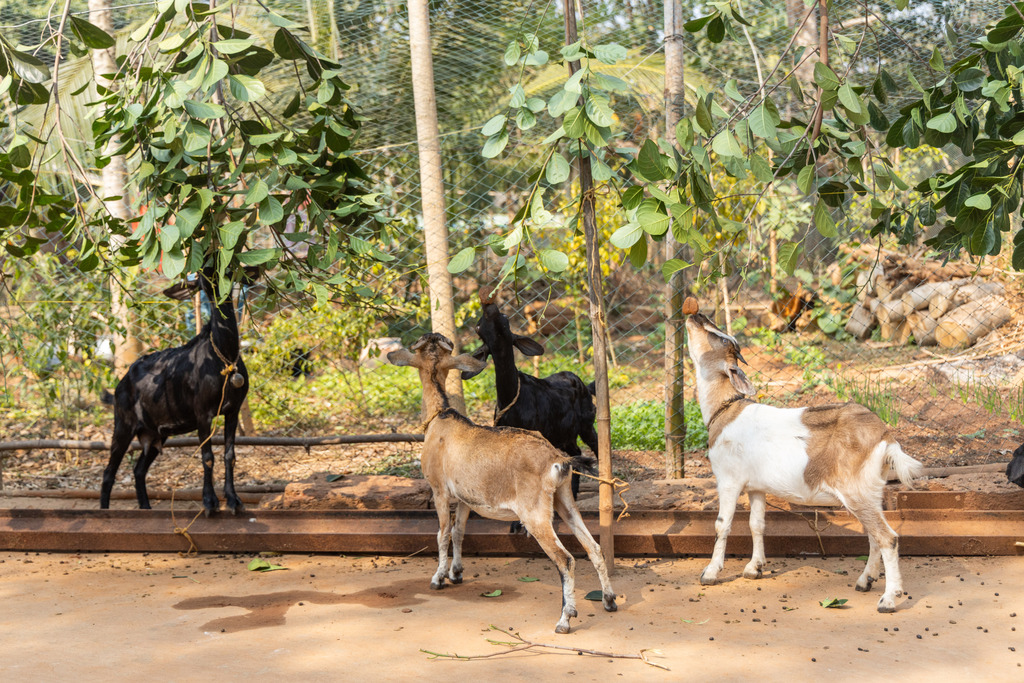
Black Bengal goats are common across Odisha, but raising them can be difficult. Without access to reliable veterinary services, proper animal housing or access to fair markets, many farmers struggle to earn a consistent income from livestock. Climate pressures, shrinking farmland, youth migration and reliance on chemical fertilizers also add strain on rural farmers — many of whom are women.
The Maa Durgadevi Producer Company was created in 2016 to help women farmers confront these challenges together. Twenty-eight women came together to improve animal care, strengthen their bargaining power and earn a more reliable income from livestock.
Early training focused on animal housing, vaccination, deworming and livestock management. Farmers also began exchanging knowledge, helping entire communities improve the health and value of their animals.
“This company helps women get the right amount for their product,” Sabita said. “They are also getting training in deworming and even the proper buying and selling manner.”
Before farmers began selling cooperatively, livestock was often priced through bargaining, not measured fairly by weight. Arshu estimates she once earned 600 to 700 rupees ($6.66 to $7.77) less per goat.
For families in rural India, that difference matters.
Many households rely on agriculture and livestock as their primary source of income, and even small increases in earnings can help families afford school fees, medicine or home improvements.
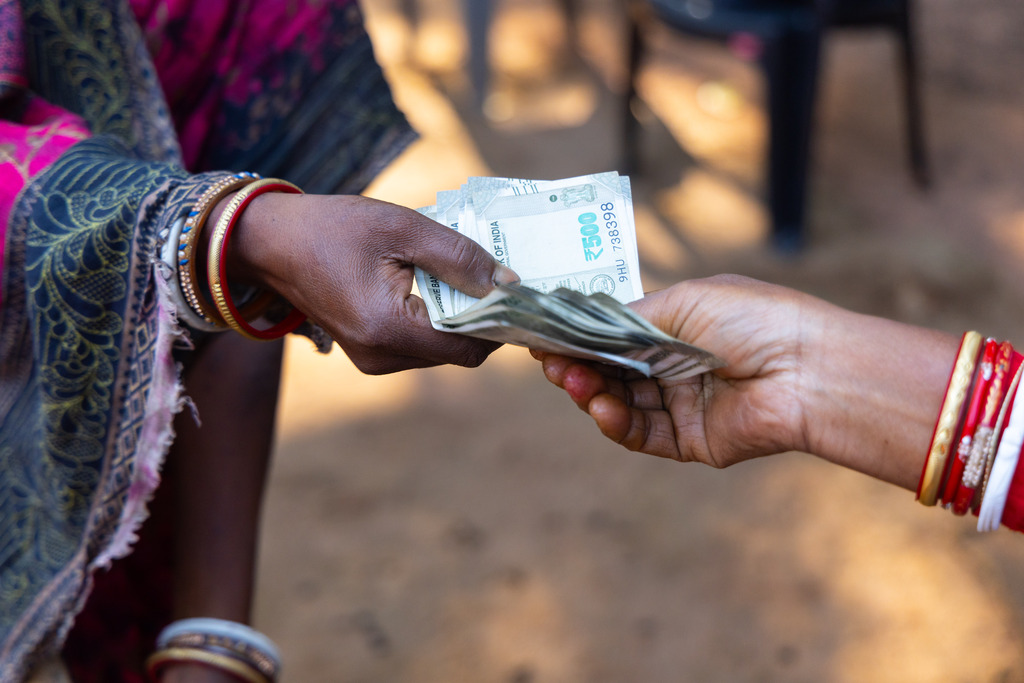
Sabita has experienced those changes firsthand.
“I want to tell you what things happened in my life,” she said. “Earlier I had a thatch roof house with a leakage problem. The money I earned after joining the company, I invested in improving the house.”
Today, her home is made of concrete instead of mud. The leaking roof is gone. She travels by scooter instead of a bicycle when visiting farmers and spreading awareness about farming techniques and the cooperative. In addition to her income from rearing goats, Sabita now earns money from selling chickens, rice and vegetables — and from teaching other women farmers.
“I am very happy with this work,” she said. “Now my family appreciates my work and supports me. That gives me immense pleasure.”
What began as a small network of farmers is now reaching thousands of women across Odisha.
Today, about 2,100 women from 52 villages are connected through the Maa Durgadevi Producer Company. In 2025 alone, the cooperative generated more than 5.3 million rupees ($58,841.66) in goat sales, using the proceeds to purchase supplies and provide loans to women farmers.
But members say the cooperative’s greatest strength isn’t financial — it’s the network itself. Women who once worked in isolation now solve problems together.
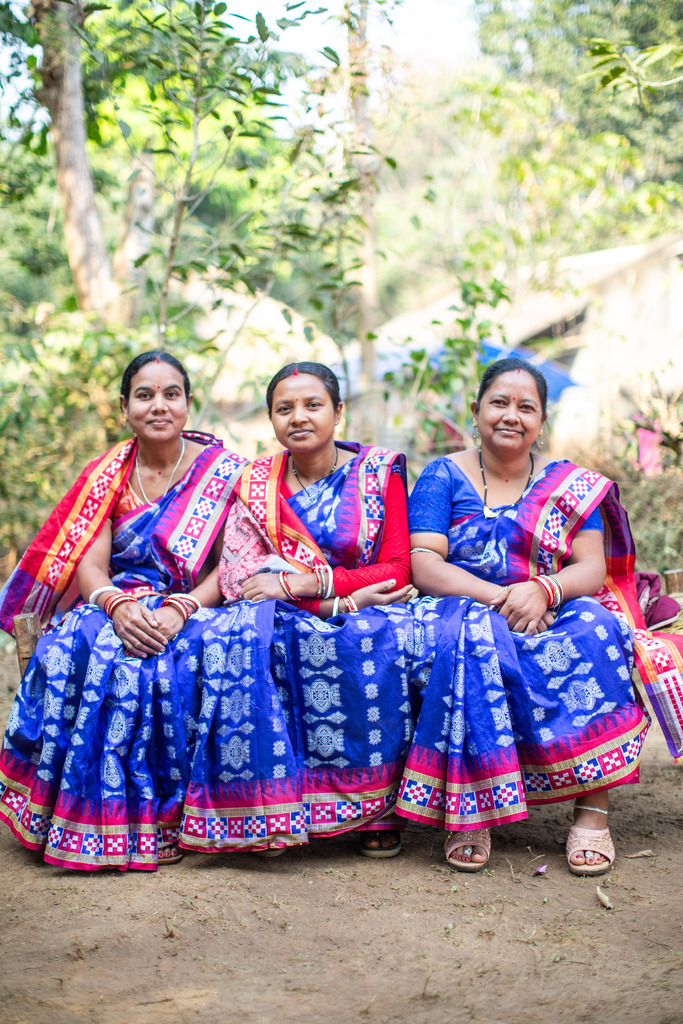
That model of collective action is shaping broader efforts to strengthen women-led farming across Odisha. The Odisha Socio-Economic Development Project, launched in 2023 with support from Heifer International and facilitated by Passing Gifts Private Limited, an Indian organization aligned with Heifer’s mission, builds on and expands farmer-owned enterprises across the state. The five-year project aims to support 30,000 families by organizing women into self-help groups and strengthening farmer-owned enterprises that improve market access, training and income opportunities for women farmers.
The project builds on lessons women farmers like Sabita have already learned: when women farmers organize, share knowledge and strengthen their bargaining power, entire communities benefit.
Many women in rural communities still face barriers to fair pricing, while climate pressures and shrinking farmland continue to strain livelihoods. But cooperative leaders like Sabita are helping their communities adapt.
Today, Sabita travels from village to village by scooter, encouraging other women to improve how they raise and sell livestock — and helping them recognize their own value as farmers and leaders in their communities.
The Odisha Socio-Economic Development Project aims to help 30,000 families across Odisha strengthen incomes through livestock farming and women-led businesses. Since launching in 2023, the project has expanded collective goat sales, leadership training and animal health support across the Mayurbhanj and Keonjhar districts. During the latest reporting period, women farmers generated about $121,500 through fair, weight-based goat sales, while nearly 20,000 goats received veterinary care. The project also helped women strengthen their businesses, improve access to markets and build more stable livelihoods.
By Gordon Cole-Schmidt and Mirja Vogel | August 18, 2025
For decades, men ruled the farms in Bihar. Now, it’s women who are reshaping the agricultural economy.
Did you know?
You can add multiple resources to this cart! Feel free to keep browsing, add more resources, and get all of your resources in one package. Easy!
Cart is empty
Success!
Please be patient while we send you to a confirmation page.
We are unable to process your request. Please try again, or view common solutions on our help page. You can also contact our Donor Services team at 855.9HUNGER (855.948.6437).
Success!
Please be patient while we send you to a confirmation page.
We are unable to process your request. Please try again, or view common solutions on our help page. You can also contact our Donor Services team at 855.9HUNGER (855.948.6437).