
How Safe, Formal Credit Helped Rebeka Build a Livestock Enterprise
By Heifer International | January 30, 2026
With low-interest loans and livestock training, one mother in northern Bangladesh built a farm her family could rely on.

February 5, 2026

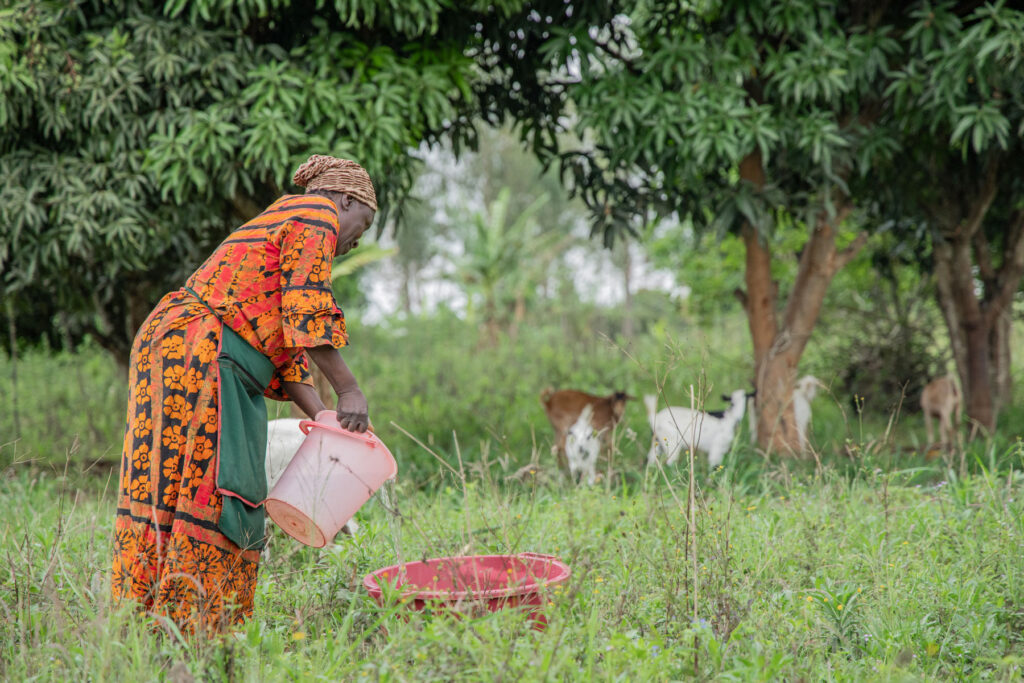
On a small dairy farm in a remote and rural region of central Uganda, Nabukenya Zam is busy and productive. Her days begin early and end late, and they begin and end with her cows, which she milks twice daily. Turning some of the milk into yogurt, she sells it and the milk that’s left over to the Dwaniro Dairy and Livestock Cooperative, a member-owned organization she helped establish in 2009. In addition to this work, Nabukenya serves as the matriarch of her family of five.
Like many women farmers across the world today, Nabukenya is vital to her region’s food production and is a leader in her community of smallholder farmers. Yet, she and other agricultural producers in Uganda face significant challenges, including little access to formal loans or savings accounts — services that can be life-changing, especially for women, providing a safety net and empowering them to purchase the tools they need to boost their farms’ productivity and transform them into consistently dependable sources of income.
Limited access to formal banking isn’t unique to Nabukenya’s region. Around the world, 1.3 billion adults remain unbanked, with women less likely than men to have their name on an account.
Nabukenya, though, is resilient. Until recently, her home had no power, so she relied on paraffin lamps to illuminate it, and she used kerosene for cooking meals for her children. Even water for drinking, cleaning, cooking and livestock was difficult to access; when her family needed water, they had no choice but to walk a significant distance several times each day to collect it from the local dam.
Nabukenya and her family didn’t face these challenges alone. Few farmers in the region where she lives, called Kiboga District, have wells or other on-farm water access, and most of the district’s farms are located in remote areas that are off Uganda’s national power grid.
In 2022, Nabukenya worked with other members of her cooperative to improve their homes, their farms and their ability to participate in and improve the local market system. Partnering with Heifer Uganda, the co-op’s leaders created an in-house equipment financing initiative, providing their members with the means to purchase the specific tools they need to address the challenges inherent in farming in Kiboga District — namely lack of clean water, power and other critical supplies.
Using an initial equipment distribution from Heifer Uganda, Dwaniro Dairy and Livestock Cooperative began selling the equipment directly to its member farmers on loan. Through the agreement, farmers repay the loans gradually and sustainably through modest deductions from milk sales to the cooperative.
“Given the nature of our farmers … it’s quite challenging for them to pay [for new tools] with cash,” said Danstuns Mugenyi, who oversees the equipment financing program on behalf of the cooperative. “Instead of paying in cash, they pay through the milk they bring. We deduct the amount owed from their milk deliveries and give them the remainder.”
As farmers pay back their loans, the equipment fund is replenished, allowing the cooperative to purchase more items and make them available to more farmers. This closed-loop system of financing has enabled the cooperative to deliver two groundbreaking changes to its members: dismantling the barriers to formal lending and providing them with much-needed tools without the upfront costs.
“Farmers are not facing the same challenges they were facing 10 years, 20 years ago,” explained Mutinga Enock, renewable energy coordinator for Heifer Uganda. “Climate impacts have brought unique challenges for the farmers. For them to get the same output, they need to put more in. So whether it’s technology, whether it’s appliances, whether it’s farm inputs, farmers need to be equipped to do more.”
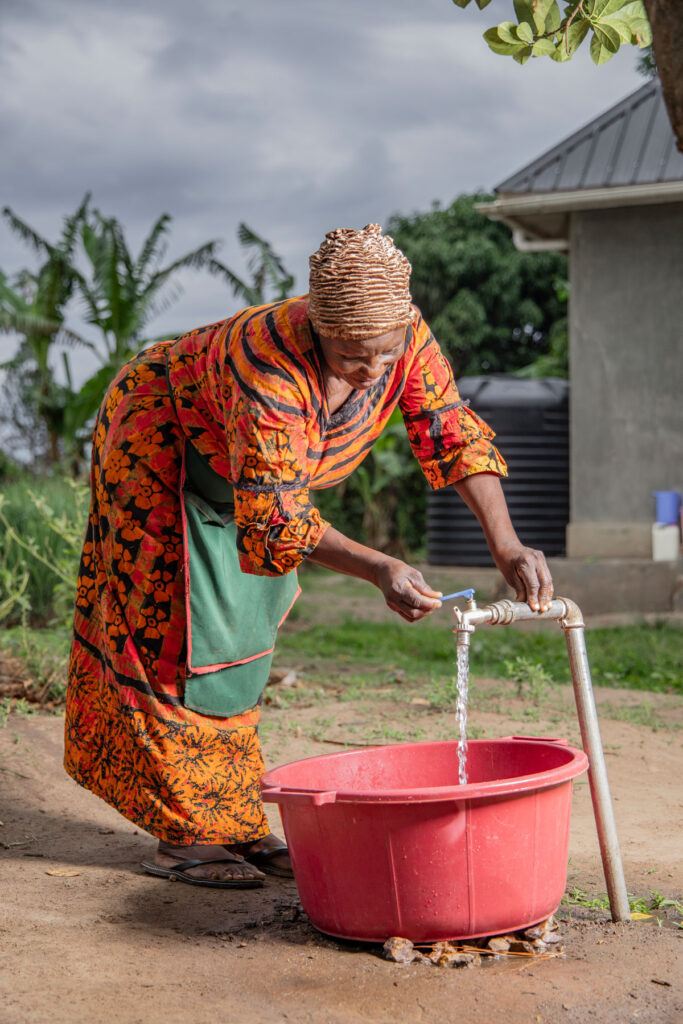
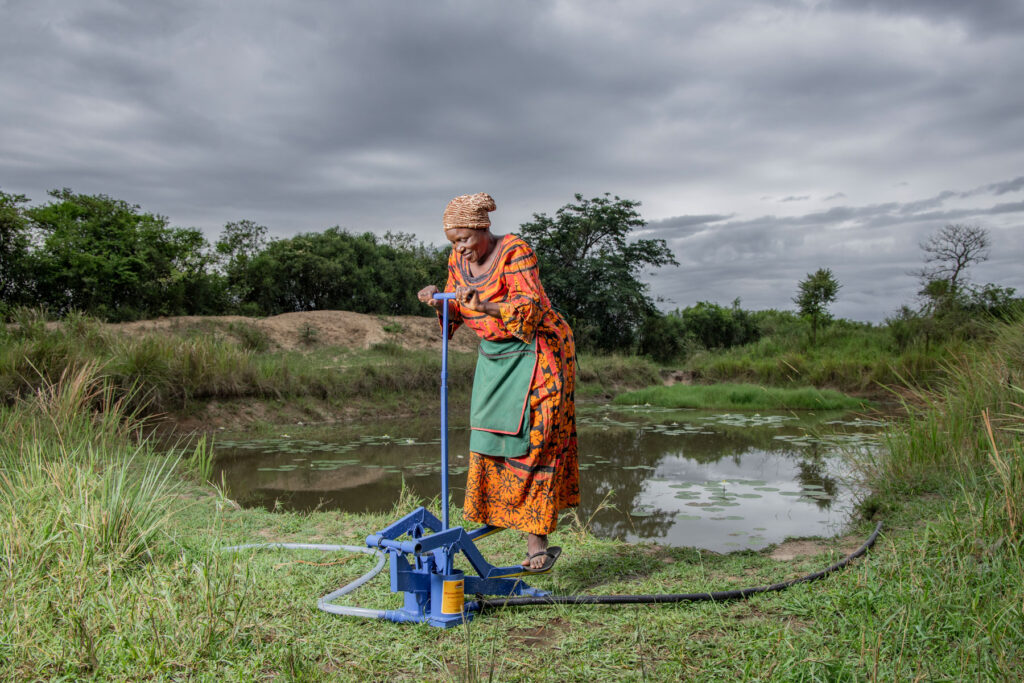
The equipment made available through the project includes home solar kits and solar flashlights — essential for security and early morning milking; foot-powered water pumps; cisterns to harvest rainwater during the region’s prolonged dry spells; chaff cutters to enable farmers to easily cut pasture and prepare fodder for their animals; and aluminum milk cans, which reduce milk spoilage and the resulting losses farmers face when their product goes bad.
After the initiative launched, Nabukenya was entrepreneurial, purchasing a water cistern, solar panels for her home, a flashlight and a water pump. “I decided to take these items because they are important to me, and the project allows us to pay in installments,” she explained.
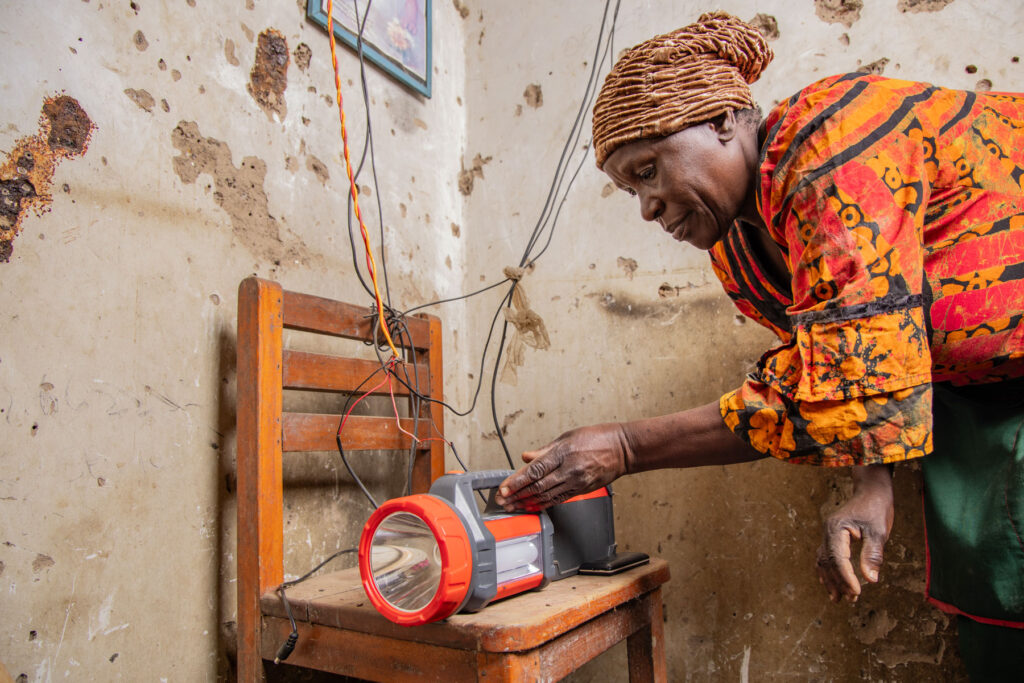
“Before I got the solar panels,” she went on, “I used to live in darkness…. But now, with solar power, I have reliable energy, and my home is always lit.”
“Now I save money that I would have spent on fuel,” she added. “Previously, I struggled with thieves who would steal my pasture, but now I use the torch [flashlight] to light up my way to the dam and monitor what’s happening on my property. As a result, I no longer need to hire someone to watch over my property, especially at night.”
Nabukenya uses the water from her new cistern for domestic use and farming. “Sometimes I lend a hand to my neighbors who request water,” she said. “I also encourage them to join the cooperative. This water has been a great help to me because, as a family, we now drink and wash with clean water, and even the animals have access to clean water.” Her animals’ health and productivity have improved, she said. “When cows drink clean water, they produce high-quality milk.”
“Although I only have two [cows],” she added, “I consistently get 12 liters in the morning and 6 liters in the afternoon.”
With affordable financing to make these improvements to her farm and household, Nabukenya has not only strengthened her livelihood, but taken a more active role in her community’s food system and economy: After taking a yogurt-making class offered by Heifer and the cooperative, she began selling yogurt made with milk from her cows, in addition to the milk she sells to the co-op.
“[Farmers’] willingness to invest in better equipment to improve their farms really shows their strong commitment to enhancing their agricultural practices and boosting productivity,” Danstuns reflected. “I can see how dedicated they are to making their farms successful.”
Nabukenya agrees. “I am both a businesswoman and a farmer,” she said.
The cooperative-led equipment financing model was introduced as part of Heifer International’s PWI Clean Energy for Dairy Cooperatives project, which aimed to enhance access to clean energy, water and productive equipment in the dairy, beef, oilseed and horticulture sectors. The initiative also focused on capacity building for farmer cooperatives in managing business operations and establishing sustainable partnerships with commercial service providers.
In total, 2,194 farmers like Nabukenya have so far adopted renewable energy solutions for their homes and farms with the help of affordable equipment financing.
By Heifer International | January 30, 2026
With low-interest loans and livestock training, one mother in northern Bangladesh built a farm her family could rely on.
Did you know?
You can add multiple resources to this cart! Feel free to keep browsing, add more resources, and get all of your resources in one package. Easy!
Cart is empty
Success!
Please be patient while we send you to a confirmation page.
We are unable to process your request. Please try again, or view common solutions on our help page. You can also contact our Donor Services team at 855.9HUNGER (855.948.6437).
Success!
Please be patient while we send you to a confirmation page.
We are unable to process your request. Please try again, or view common solutions on our help page. You can also contact our Donor Services team at 855.9HUNGER (855.948.6437).