
She Teaches by Growing in Bangladesh
December 31, 1969
In a lush field in the Jashore district of southwestern Bangladesh, tomato plants, spinach, cauliflower and cabbages are planted in long, raised rows.

Sonia Naznin used to rely on guesswork when growing crops. Now, she travels to farms near her rural village of Ichapur in Bangladesh, collecting soil samples and helping farmers improve their harvests and cut costs. As the world observes the International Year of the Woman Farmer, stories like Sonia’s illustrate why women’s leadership is essential to building resilient, sustainable agrifood systems.
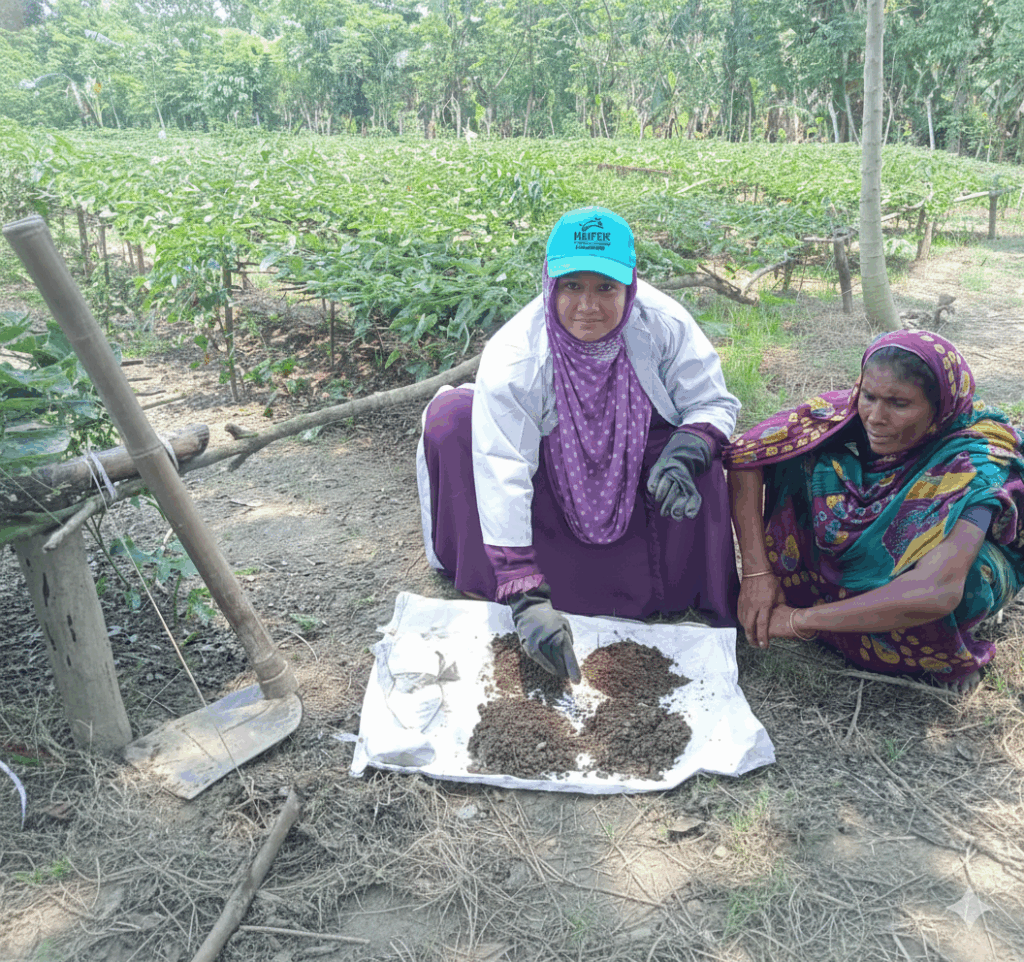
For years, Sonia believed that farming decisions — what crops to grow, how much fertilizer to apply, how land should be managed — belonged exclusively to men. Like most women in her community in Chowgacha Pourasava, Jashore District, she worked long hours in the fields, contributing significantly to farm labor while remaining excluded from decision-making. Her family, like many others, applied increasing amounts of fertilizer to their soil in the hope of improving yields, without understanding its actual condition.
“Working as a soil doctor has given me more than income — it has given me a voice.”
— Sonia Naznin
This situation began to change when Sonia became a community-based soil doctor through an initiative supported by Heifer International Bangladesh in collaboration with the Soil Resource Development Institute (SRDI). She received hands-on training in soil sampling, soil health analysis and science-based fertilizer recommendations — skills traditionally seen as technical and male-dominated.
“At first, I didn’t believe I could become a technical resource for others,” Sonia said. “As a woman, I was always told that farming decisions were not my place. But soil testing changed my life.”
Today, Sonia is one of 66 trained soil doctors in Bangladesh, 55 percent of whom are women — an important step toward closing the gender gap in agricultural advisory services. She moves from farm to farm across four villages, explains soil test results, runs awareness sessions on soil health and guides farmers to reduce excessive fertilizer use while improving productivity. To date, she has collected soil samples from 350 farmers and delivered 94 soil health recommendation cards from SRDI, helping farmers understand exactly what their land needs — and what it does not.
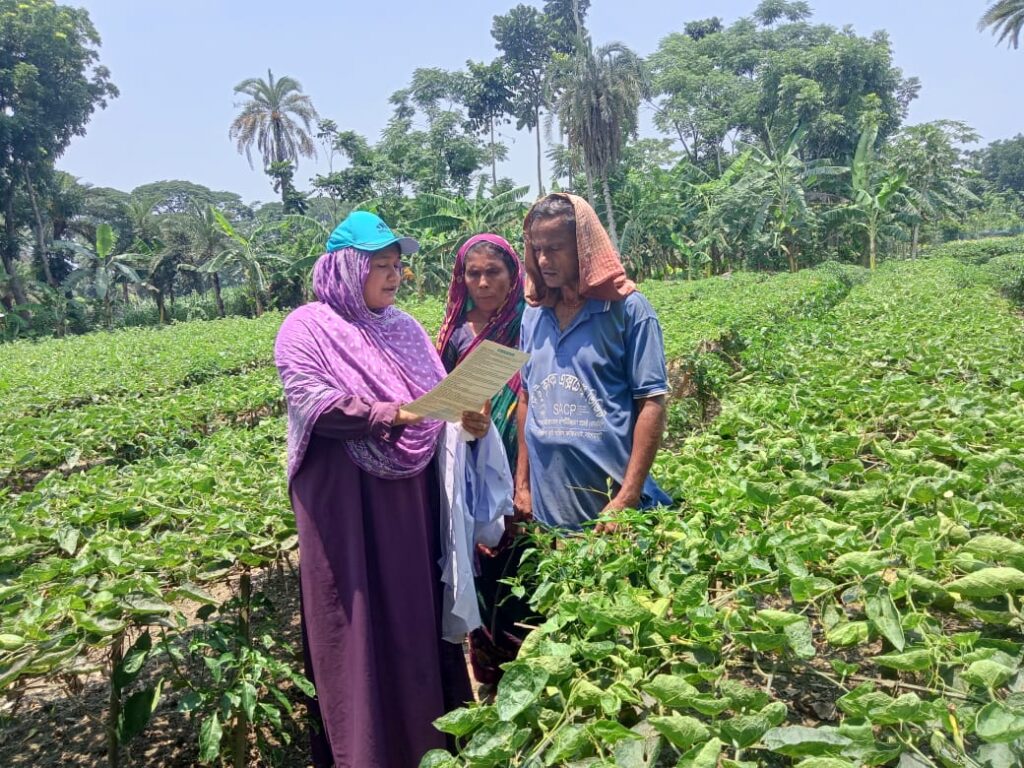
Her advice has helped farmers lower production costs and improve crop quality, particularly for vegetables such as tomatoes, broccoli and bottle gourds.
She has worked hard to build trust within her community. Many farmers were initially hesitant to pay for soil testing or wait for laboratory results. But demonstration plots soon told a story of healthier crops, reduced input costs and improved yields. As these results became visible, farmers’ demand grew rapidly, and they now increasingly see soil testing as a necessary step before planting.
“When farmers test their soil first, they save money and protect the land for the next generation,” Sonia said. “Healthy soil means healthy families.”
Sonia’s efforts improve farm economics and reshape farming practices to contribute to climate resilience and sustainable land management. By promoting balanced fertilizer use and improving soil organic matter, she helps protect soil fertility for future use while reducing environmental degradation. It is work she is proud to do.
“Working as a soil doctor has given me more than income — it has given me a voice. Now, male farmers come to my door asking for my technical advice. My children see me as a professional, and that changes everything for our family,” she said.
Beyond her work as a soil doctor, Sonia serves as president of a self-help group, where she continues to share her knowledge and strengthen the collective voice of women in her community. Together, they are helping shape a more sustainable future for local farmers.
December 31, 1969
In a lush field in the Jashore district of southwestern Bangladesh, tomato plants, spinach, cauliflower and cabbages are planted in long, raised rows.
Did you know?
You can add multiple resources to this cart! Feel free to keep browsing, add more resources, and get all of your resources in one package. Easy!
Cart is empty
Success!
Please be patient while we send you to a confirmation page.
We are unable to process your request. Please try again, or view common solutions on our help page. You can also contact our Donor Services team at 855.9HUNGER (855.948.6437).
Success!
Please be patient while we send you to a confirmation page.
We are unable to process your request. Please try again, or view common solutions on our help page. You can also contact our Donor Services team at 855.9HUNGER (855.948.6437).