
Understanding Global Hunger and Food Insecurity
By Heifer International | February 21, 2025
Untangle the complexities of global hunger and food insecurity, why they persist and how Heifer is making a difference.

October 22, 2026

The world produces enough food to feed everyone, yet an estimated 645 million people experienced hunger in 2025, and one-third of the global population can’t afford a healthy diet. Why?
The reality is that producing food and having access to it are two very different things. Millions of families, including the farmers who grow our food, face barriers that make it difficult to earn enough income and afford nutritious meals.
So what does it really take to end hunger?
When people think about ending hunger, they often think about providing food to those who need it. But what happens when that food runs out?
For many families, hunger isn’t simply about whether food is available. It’s about whether they have the resources and income to consistently access it.
Heifer International founder Dan West faced this same reality when delivering cups of powdered milk to children displaced by war. “Instead of a cup of milk,” he thought, “why not give them a whole cow?”
Providing food can help address a hungry family’s immediate needs, but lasting food security requires addressing the challenges that make families vulnerable to hunger in the first place.
Consider a farmer who has no reliable way to transport their crops to market. Or a farming family whose crops are destroyed by drought. Or a woman farmer who lacks access to the financing and resources she needs.
That’s why ending hunger requires helping people build the skills, resources and economic opportunities to provide for themselves and their families.
At Heifer International, we believe the right support can make a significant difference. Better farming practices, stronger businesses and access to new opportunities can turn agriculture into a more reliable source of food and income.
Here are four ways to make that possible.
1. Help Farmers Grow More – and Grow Better
For millions of farmers around the world, agriculture is both a source of food and a way to earn a living. But limited access to training, healthy livestock and modern farming resources can make it difficult to produce enough to support their families.
 By providing farmers with the knowledge and tools they need, agricultural development programs can help improve productivity, reduce losses and build more sustainable livelihoods.
Take Rilli Maya Rai, a dairy farmer in Nepal. Through training in animal care and nutrition from a Heifer-supported cooperative, Rilli learned how to better care for her buffalo. Not only has she increased milk production, she’s continued finding new opportunities to grow, from securing financing to expand her herd to selling nutritious livestock feed to neighboring farmers.
2. Help Families Earn Sustainable Incomes
Growing food is important, but farmers also need to earn enough money to meet their families’ immediate needs.

Even when harvests are successful, low prices, rising production costs and limited economic opportunities can leave farming families struggling to afford nutritious food, healthcare, education and other essentials.
Helping farmers build profitable agricultural businesses and earn a sustainable living income can make a significant difference.
In Rwanda, Jeanne d’Arc Barakamfitiye once struggled to provide basic nutrition for her family. With support from Heifer, she started a poultry business with just 10 chickens. Today, she’s expanded her flock to 40 chickens, and the consistent income from egg sales is helping her family meet everyday needs.
3. Connect Farmers to Better Markets
Imagine spending months producing food, only to discover you have no reliable place to sell it.
That’s a challenge many farmers face. Without access to transportation, reliable buyers or fair market opportunities, even successful farming businesses can struggle to generate enough income to support their families.

Connecting farmers to stronger markets can help them reach more buyers, reduce food loss and earn better returns for their products.
In Mexico, 143 women entrepreneurs from a farming collective secured a partnership to supply eggs to a popular Mexican restaurant chain. By October 2023, they had sold more than 500,000 eggs, generating over $86,500 in sales and creating a more secure income source for their families.
These connections help farmers turn their hard work into reliable income and reduce families’ vulnerability to hunger and poverty.
4. Help Farmers Work Together
Sometimes the biggest challenges farmers face are too difficult to overcome alone.
That’s where farmer cooperatives and community self-help groups can make a difference. By working together, farmers can share knowledge, pool resources, access financing and negotiate better prices for their products.
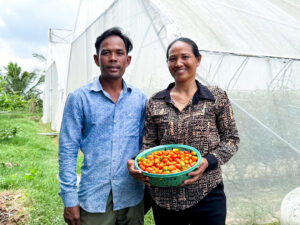
In Cambodia, farmer Neang Mao struggled to earn enough to support his family. After joining a Heifer-supported cooperative with his wife, he received training in vegetable cultivation, pest control and greenhouse farming. With help from fellow farmers, Mao reduced crop losses, increased his income and built a thriving vegetable farm.
“I’ve learned so much from other members in the cooperative,” Mao said. “Compared to my life before, the difference is huge. Now, I’m not just working to survive – I’m running a farm that thrives.”
His experience shows how working together helps farmers build stronger businesses while creating a network of neighbors they can rely on for knowledge, encouragement and support.
Ending global hunger starts with investing in the people who grow our food and helping them break the cycles that make them vulnerable in the first place.
Since 1944, Heifer International has worked alongside farming communities around the world to do just that. When farming families have access to training, fair markets, and strong community support, they can keep food on their tables — and ours. Learn how you can support farming families around the world.
By Heifer International | February 21, 2025
Untangle the complexities of global hunger and food insecurity, why they persist and how Heifer is making a difference.
Did you know?
You can add multiple resources to this cart! Feel free to keep browsing, add more resources, and get all of your resources in one package. Easy!
Cart is empty
Success!
Please be patient while we send you to a confirmation page.
We are unable to process your request. Please try again, or view common solutions on our help page. You can also contact our Donor Services team at 855.9HUNGER (855.948.6437).
Success!
Please be patient while we send you to a confirmation page.
We are unable to process your request. Please try again, or view common solutions on our help page. You can also contact our Donor Services team at 855.9HUNGER (855.948.6437).