
Solar Powers Sustainable Water Access for Cooperatives in Uganda
By Alyssa Cogan | December 31, 1969
In Uganda’s drought-prone dairy corridor, solar-powered water systems keep farmers’ animals healthy and their livelihoods afloat.

April 2, 2026

In poultry-farming communities across Edo State, Nigeria, the potential of women entrepreneurs has long been constrained by a systemic barrier: unreliable electricity. For Christabel Omoba, a determined poultry entrepreneur, an unstable power supply was more than a daily inconvenience; it was a constant threat to her family’s food security and her hard-won independence.
“In the poultry business, the cold chain is the lifeline,” Christabel said. “Without consistent power, chicken spoils and profits disappear.” The constant risk of spoilage turned every investment into a gamble, with her children’s future at stake.

Christabel changed her family’s trajectory when she joined Heifer Nigeria’s In-Power Her initiative, a poultry value chain project under the Naija Unlock signature program. The initiative helps women grow income, expand their businesses and strengthen household well-being.
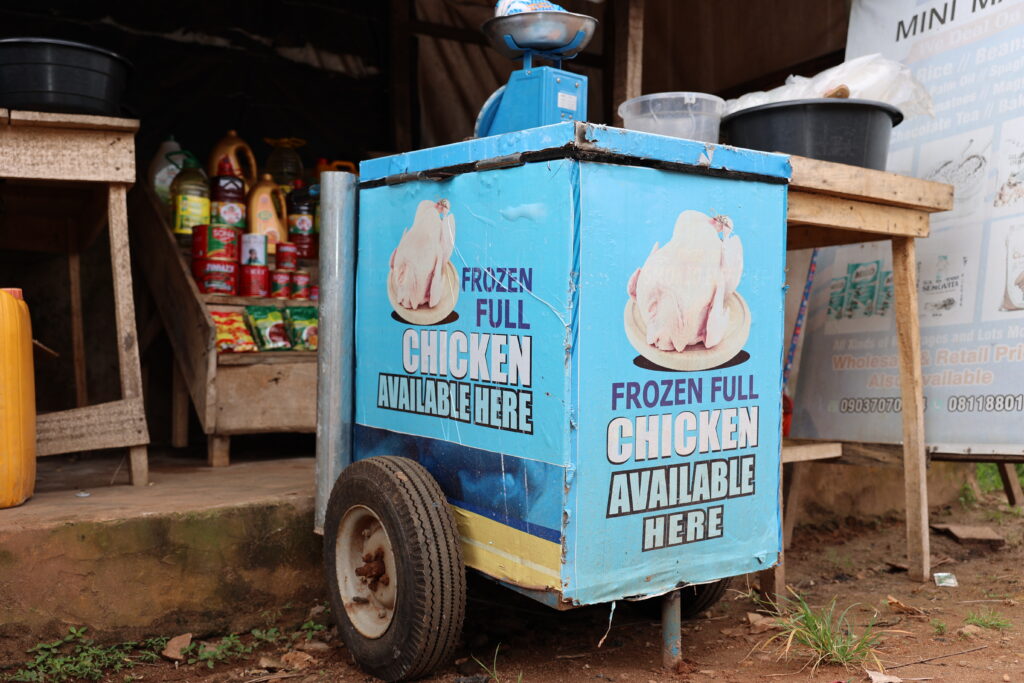
Through an innovative hub-and-spoke model, it places solar-powered technology directly into the hands of women. In this model, Christabel operates as a hub, using a high-capacity, solar-powered freezer to store large volumes of poultry safely. She supplies youth and other women who distribute fresh products throughout the community using insulated carts.
They collect products directly from her shop, where she offers a reliable supply at a reduced price. Because her poultry stays fresh longer, they can also return unsold products, reducing their risk of financial loss.
“In the poultry business, the cold chain is the lifeline. Without consistent power, chicken spoils and profits disappear.”
— Christabel Omoba, poultry entrepreneur
At the center of her transformation is a solar-powered freezer, financed through Heifer’s In-Power Her project. It operates entirely off-grid, with batteries that store energy and keep the freezer running consistently.
No longer dependent on expensive generator fuel or the unpredictability of the national power supply, Christabel can now preserve her poultry products with confidence and consistency. With access to this model, she can buy products at a favorable rate, stock more at once and reduce costs related to transportation, fuel and spoilage.
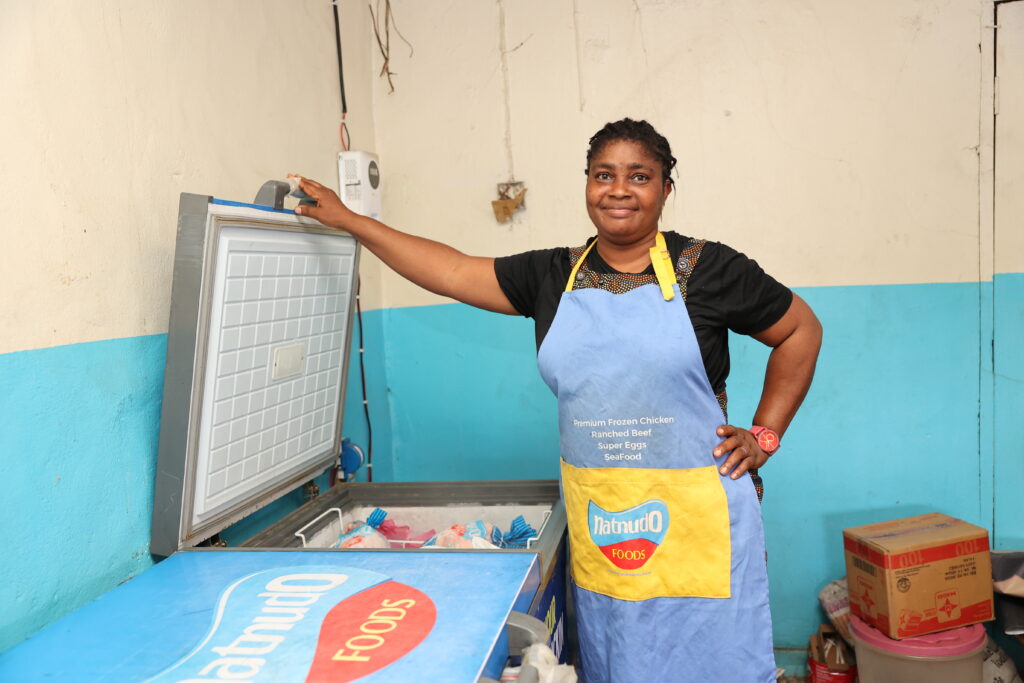
Reliable solar energy has allowed Christabel to grow her business steadily. Customers increasingly seek her products, confident in their freshness and quality. Many even ask whether she relies on the National Electric Power Authority (NEPA) — Nigeria’s national electricity provider — to keep her poultry cold.
“When I bring out chicken to sell,” she says, “customers often ask, ‘Madam, are you using NEPA light to cool this chicken?’”
For Christabel, the impact of the In-Power Her initiative is measured in more than financial returns; it is reflected in the stability and dignity it has restored to her household. With dependable energy, she can plan her days with confidence and manage her business without constant anxiety. She is no longer simply participating in the market; she is leading it as well.
“I feel privileged to have this freezer,” Christabel says. “It is not something I could have afforded on my own. I feel empowered.”
That empowerment extends beyond her business. With a steady income, Christabel can now ensure that her family has nutritious meals and her children’s school fees are paid on time. Her success has also strengthened household dynamics, earning her increased respect and support from her husband, who proudly tells her, “My wife, you are doing well.”
As she continues to grow her business, Christabel is not only securing her family’s future but inspiring her community.
From the solar-powered freezer at the center of her business to her fresh products reaching local households, Christabel has become a visible example of success for other women in Edo State. With her mastery of the hub-and-spoke approach, she is demonstrating how sustainable technology can unlock pathways from vulnerability to prosperity — for her neighbors and the next generation.
By Alyssa Cogan | December 31, 1969
In Uganda’s drought-prone dairy corridor, solar-powered water systems keep farmers’ animals healthy and their livelihoods afloat.
Did you know?
You can add multiple resources to this cart! Feel free to keep browsing, add more resources, and get all of your resources in one package. Easy!
Cart is empty
Success!
Please be patient while we send you to a confirmation page.
We are unable to process your request. Please try again, or view common solutions on our help page. You can also contact our Donor Services team at 855.9HUNGER (855.948.6437).
Success!
Please be patient while we send you to a confirmation page.
We are unable to process your request. Please try again, or view common solutions on our help page. You can also contact our Donor Services team at 855.9HUNGER (855.948.6437).