
In Southern Ecuador, Coffee Farmers Earn More While Restoring the Land
By Heifer International | April 21, 2026
On small coffee farms in Loja Province, farmers are turning teamwork into higher incomes, fuller harvests and more resilient land.

September 15, 2026

In the lush, fertile region between the Andes Mountains and the Pacific Coast in southern Ecuador, 49-year-old Jessica Orellana carries on a tradition she inherited, one with benefits that ripple out to both her family and her community. Jessica is the founder of an agricultural association called ASOPROMIPRO, which brings together smallholder cacao farmers in her region and, in the process, helps them build resilient farms and dignified incomes.
Ecuador is one of the world’s leading producers and exporters of high-quality cacao. Yet, smallholder cacao farmers are among the country’s most economically vulnerable populations. They often struggle to earn a dignified income due to low productivity, high farming costs and unpredictable markets. Rising temperatures and erratic rainfall make farming even more difficult. For rural women in Ecuador, those challenges can be even greater, as they face additional barriers to resources, services and markets.
By investing in the idea that the power of the collective is greater than the power of the individual — like Jessica has in founding and administering ASOPROMIPRO — Ecuador’s smallholder farmers are building resilience in the face of these obstacles.
“Our dream was to work and improve lives by having a better and fair cacao price.”
— Jessica Orellana
A single mother, Jessica learned farming from her mother and grandfather, who cultivated cacao, lemons and coffee. Jessica and her four siblings never went hungry, but times were often tough as they grew up. Her grandfather, however, believed that things could get better, especially if farmers worked together to cultivate and sell their products. He joined a cacao farmer association and, eager to involve young people in the organization, he encouraged Jessica to apply for a secretarial job there.
While Jessica enjoyed her role at the organization, she eventually left to work as a seamstress and grow cacao on the 2.5-acre plot her mother gave her. Back then, Jessica’s harvests amounted to about six bags of cacao per year, which sold for approximately $120 per bag.
She earned just enough to get by, she said, and support her daughter, Karla. But then her circumstances changed. “My daughter got sick, then the money was not enough,” she said.
Like her grandfather, Jessica held on to her belief in the power of farmers’ collaboration. In 2019, she returned to association work as a cacao buyer, gaining firsthand experience with another part of the cacao supply chain.
When that association eventually folded, Jessica saw an opportunity to build something new. In 2022, she founded ASOPROMIPRO, which brought smallholder cacao farmers together to improve their access to buyers and better prices. The association became a member of the Unión de Organizaciones Campesinas Cacaoteras del Ecuador (UNOCACE), which processes and exports cacao from farmer associations.
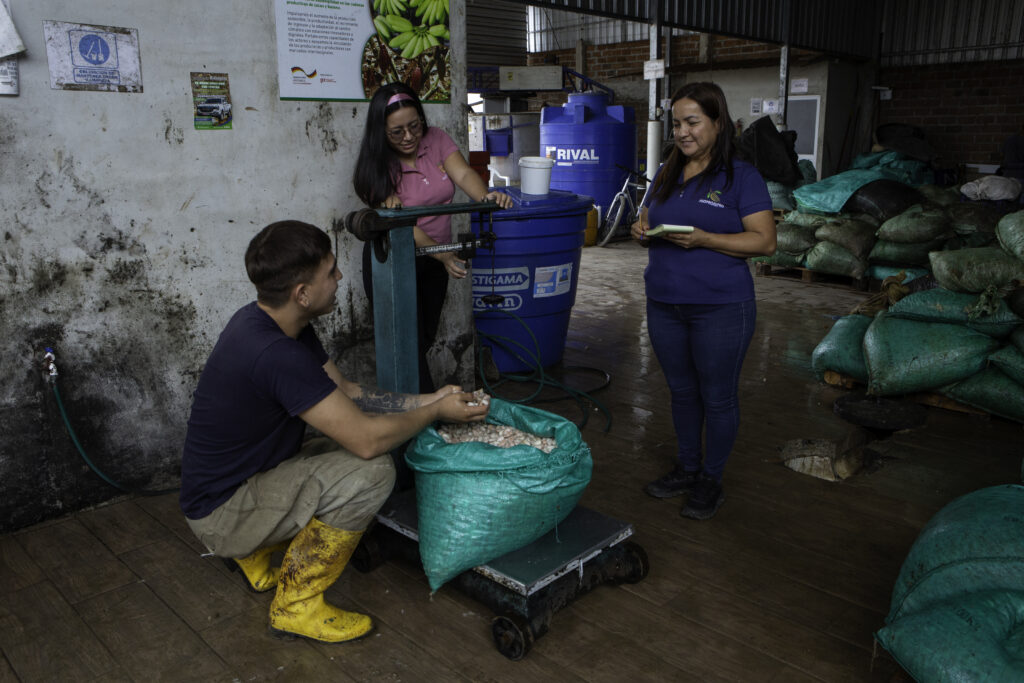
“Since the organization was new, we had nothing, just our willingness to work hard,” Jessica said. “Our dream was to work and improve lives by having a better and fair cacao price.”
ASOPROMIPRO participates in Heifer International’s Alliances for Sustainable Cocoa and Coffee (PASOS) project, which works with farmer associations across Ecuador to strengthen cacao and coffee value chains.
Through the project, ASOPROMIPRO matched the funding it received to purchase cacao fermentation boxes, drying sheds and a mechanical dryer, as well as roofing and flooring for the collection center where the association purchases and processes its farmers’ cacao.
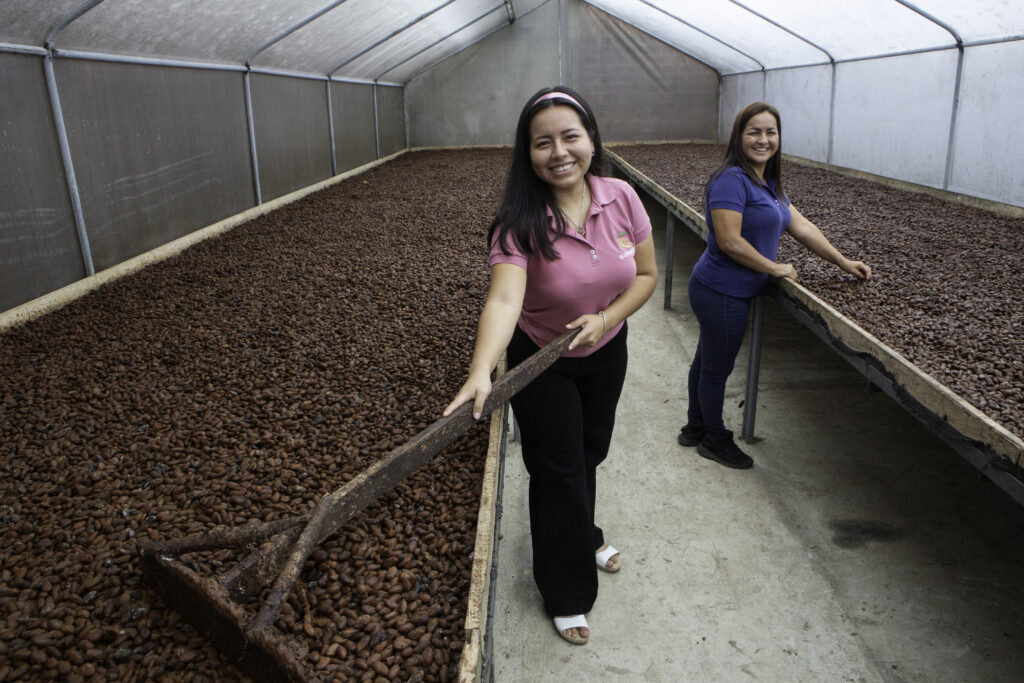
Jessica said the equipment has helped association members produce higher-quality cacao. European buyers now purchase their product through UNOCACE and pay extra for premium, certified fair trade and organic cacao. The increased profit from this premium cacao is ultimately passed on to ASOPROMIPRO’s farmers, who today are paid $300 per 100-pound bag compared to the $260 they might get elsewhere.
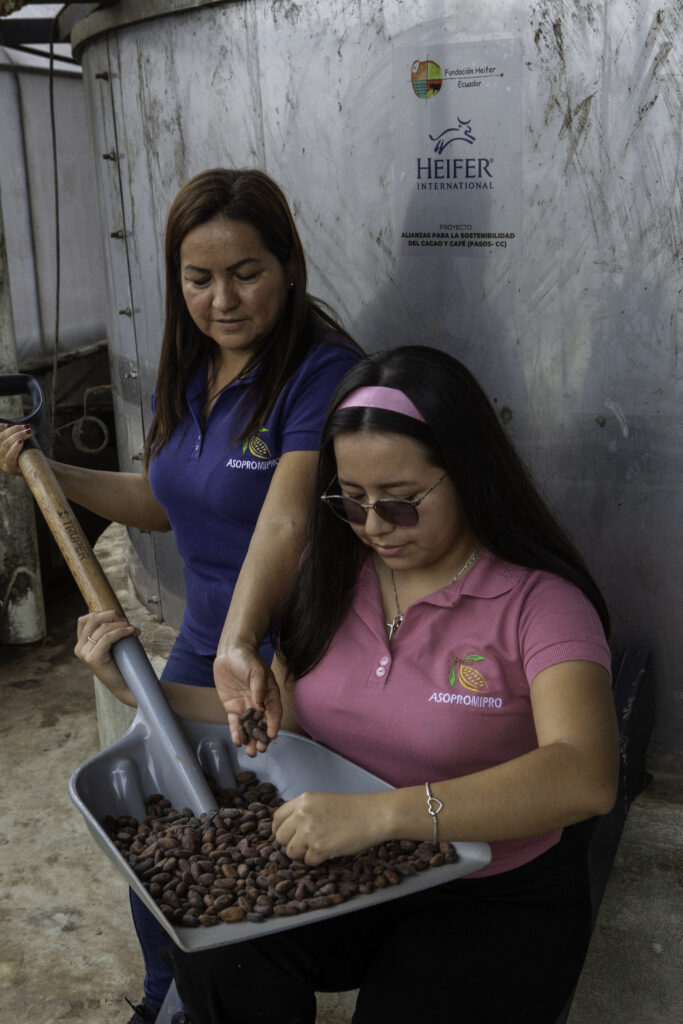
Farmers are also improving how they grow cacao. Through the project, they’re learning practices such as agroforestry — growing cacao alongside other trees — as well as using organic liquid fertilizer and following more precise pruning schedules. “We used to do pruning, but now we have better techniques,” she said. “For example, we did not know when we needed to do the pruning, we just were doing some pruning, but maybe not in the right time.”
On the same amount of land where Jessica used to harvest six 100-pound bags of cacao per year, she now harvests 10 to 15 bags of the same weight.
For Jessica, greater financial stability has changed what she can provide for her family.
The $600 a month Jessica earns as ASOPROMIPRO’s manager helped her pay for Karla’s university education. In 2024, Karla graduated from university with a degree in journalism. And someday, Jessica said, she intends to purchase a house that she and Karla can call home — an alternative to the concrete-block house they currently rent.
In founding and leading ASOPROMIPRO and bringing together the region’s smallholder cacao farmers, Jessica has realized her grandfather’s vision that things could get better — for herself, her family and her community. What began as hope for something different has now become a future her daughter can already feel. As Karla put it, “Mom is happier and less stressed, and I am the daughter, so I am also happier.”
By Heifer International | April 21, 2026
On small coffee farms in Loja Province, farmers are turning teamwork into higher incomes, fuller harvests and more resilient land.
Did you know?
You can add multiple resources to this cart! Feel free to keep browsing, add more resources, and get all of your resources in one package. Easy!
Cart is empty
Success!
Please be patient while we send you to a confirmation page.
We are unable to process your request. Please try again, or view common solutions on our help page. You can also contact our Donor Services team at 855.9HUNGER (855.948.6437).
Success!
Please be patient while we send you to a confirmation page.
We are unable to process your request. Please try again, or view common solutions on our help page. You can also contact our Donor Services team at 855.9HUNGER (855.948.6437).