Coffee cherries harvested in the Plan de Barrios community of Honduras. Photo by Heifer International/Russell Powell.
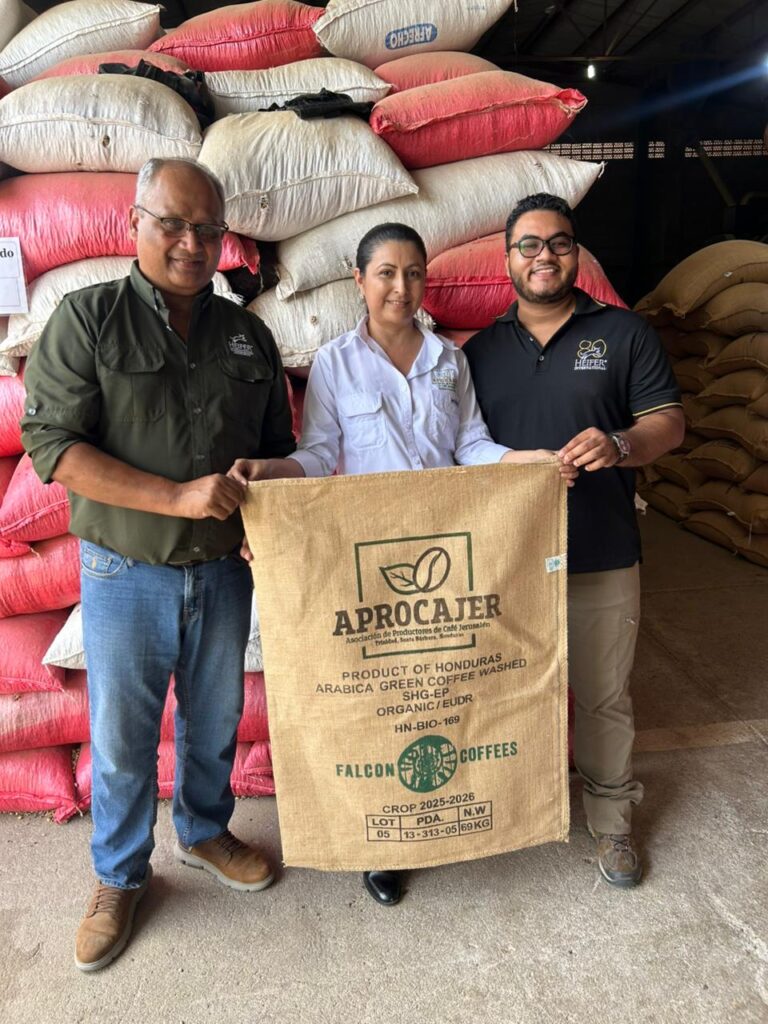
Yenny Castellanos, president of APROCAJER, stands with Heifer International team members José Nieto, left, and Alex Caballero, right, in Honduras. Photo by Heifer International/Alex Caballero.
June 27, 2026, marked a historic milestone for the Jerusalem Coffee Producers Association (APROCAJER) and the coffee-growing families in Honduras that make up its production base. From the municipality of Trinidad, Santa Bárbara, the organization made its first export of a container of organic coffee to Germany, produced in alignment with the European Union Deforestation Regulation’s traceability and compliance measures.
More than a commercial transaction, this shipment represents the result of several years of preparation — investment in local capacities, adoption of digital tools and the commitment of producer families to sustainable and competitive coffee production.
APROCAJER currently has 340 members, including 68 women, and strong youth participation, with young people accounting for approximately 34 percent of its membership. The organization has continued to establish itself as a producer-owned enterprise capable of connecting smallholder coffee farmers in Santa Bárbara with international markets that demand not only excellent-quality Arabica coffee but also evidence of sustainability, traceability and environmental responsibility.
From the Farm Plot to the European Market
Coffee is one of the commodities covered by the European Union Deforestation Regulation (EUDR). Under this new framework, products entering the European Union market must demonstrate, among other requirements, that they do not come from land deforested after Dec. 31, 2020. They must also comply with the relevant laws of the country of production and include information that enables their origin to be determined.
For organizations composed of smallholder farmers, meeting these new requirements poses a major challenge. Producing high-quality coffee is no longer enough: Organizations must know precisely where the coffee was grown, maintain verifiable information about the farm plots and ensure product traceability throughout the supply chain.
APROCAJER began preparing early to meet this challenge.
Through its regional Promesa Café y Cacao signature program, Heifer International supported APROCAJER in implementing a digital traceability system using the GrainChain platform. The system strengthens APROCAJER’s ability to track coffee production and traceability information and is operated by young people hired directly by the organization.
This youth participation has helped build the organization’s internal capacity to manage information that is becoming increasingly strategic for competing in international markets.
In this way, technology, environmental sustainability and youth inclusion have become interconnected elements of a single business-strengthening strategy.
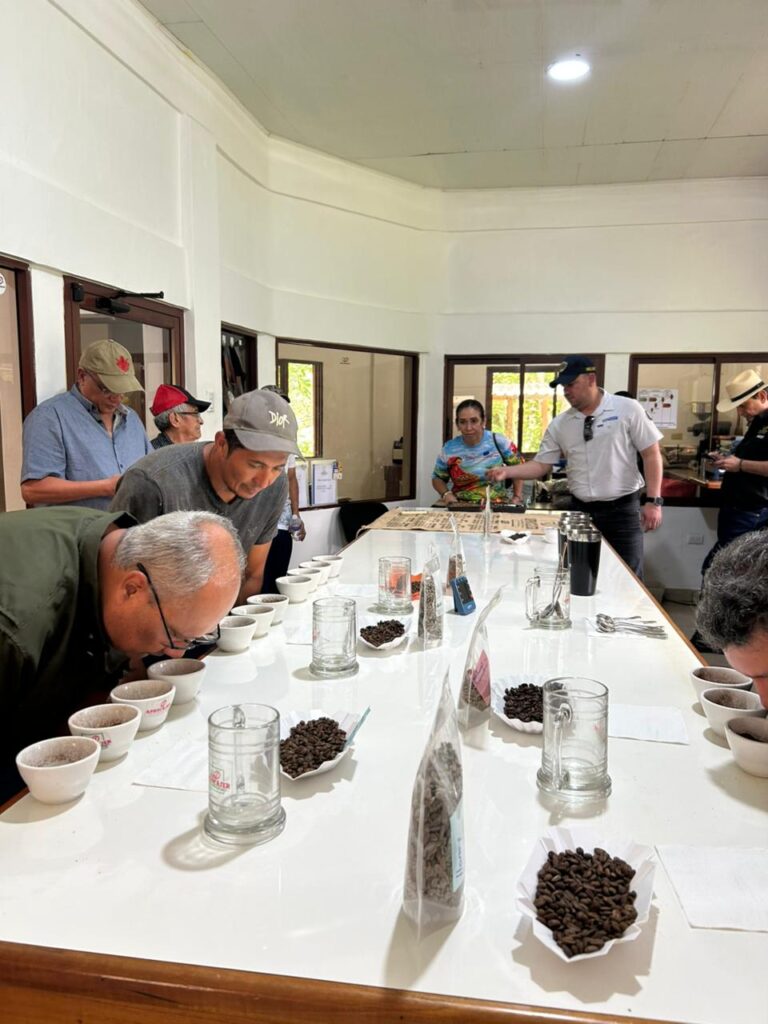
Coffee is evaluated during a cupping and tasting session to assess its quality. Photo by Heifer International/Alex Caballero.
A Container Representing New Opportunities
According to information published by the nonprofit ACICAFOC, the first shipment to Germany comprised 421.50 quintals of coffee. The lot was prepared in accordance with EUDR-related traceability and compliance measures.
By following these measures, APROCAJER is better positioned to establish commercial relationships with European buyers that require suppliers to demonstrate the origin of their coffee.
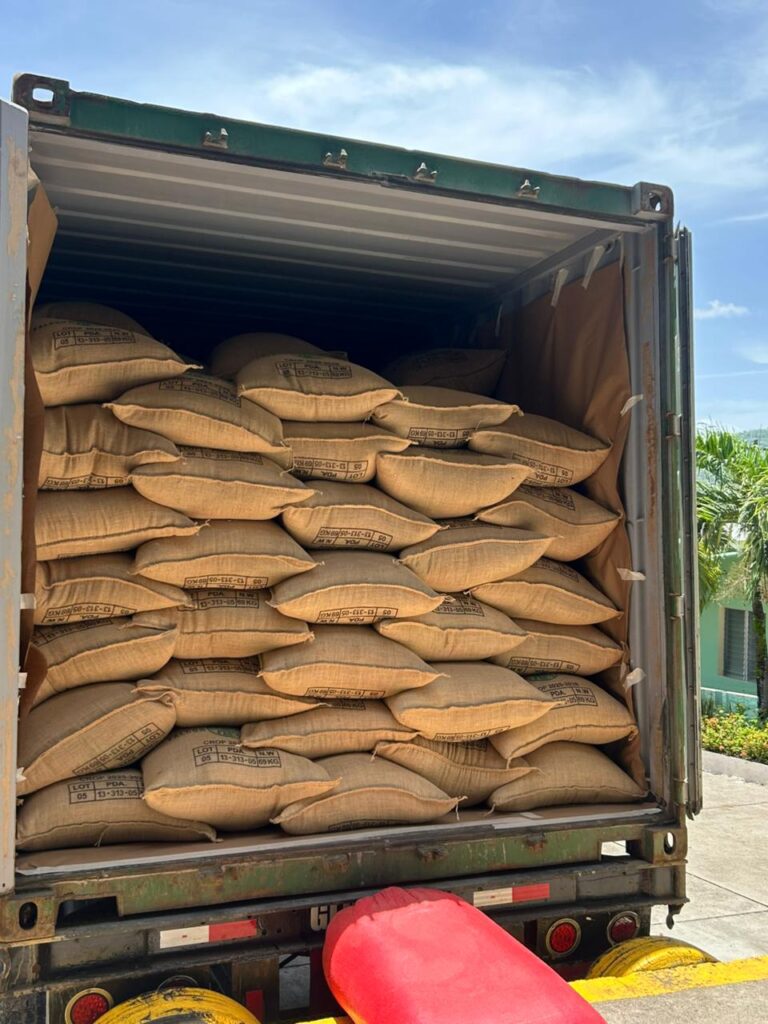
Bags of APROCAJER coffee fill an export container ready for transport. Photo by Heifer International/Alex Caballero.
According to process records, approximately 30 farmers from APROCAJER’s production base supplied the coffee that was exported. At an estimated average price of US$310 per quintal, the shipment represents a free-on-board commercial transaction of approximately US$124,000 and creates opportunities for farmers who meet the required standards to access international markets.
But the impact goes beyond the value of this first container. Its true potential lies in demonstrating that an organization of smallholder farmers can develop the capacities needed to participate in increasingly demanding international supply chains.
Traceability Begins on the Farm
One of the main lessons from this process is that traceability does not begin at the port or the time of export. It begins with the producer’s farm plot.
Georeferencing allows spatial identification of coffee-growing areas; digitization helps organize and safeguard producer information; and traceability systems link that information to the coffee subsequently collected, processed and marketed.
APROCAJER is committed to documenting this process rigorously and providing the required information to the responsible actors in the destination market.
This effort aligns with Honduras’ progress in responding to the EUDR framework. At the national level, the country is strengthening geospatial databases; mechanisms for verifying forest cover using 2020 as the reference year; georeferencing tools; and traceability systems for value chains such as coffee, cocoa and palm oil.
An Effort Built Through Partnerships
APROCAJER’s progress also reflects the importance of bringing together the capacities and resources of different stakeholders.
Heifer International, through PromesaCafé y Cacao, connected APROCAJER with a European Union-funded initiative to support coffee and cocoa producer organizations on EUDR procedures and environmental governance. Through this initiative, APROCAJER received training on EUDR requirements, financial support and connections with European buyers and partners.
The initiative was implemented by a consortium comprising ACICAFOC, La Sureñita Ltda. Regional Agricultural Production Cooperative and the Regional University Center of the Atlantic Coast, with funding from the European Union.
In May 2026, a European Union delegation also visited APROCAJER in the field to learn about and monitor the preparation of the coffee destined for the European market.
These complementary efforts have helped strengthen the organization’s capacity to respond to changing conditions in international trade.
Preparing Early to Compete More Effectively
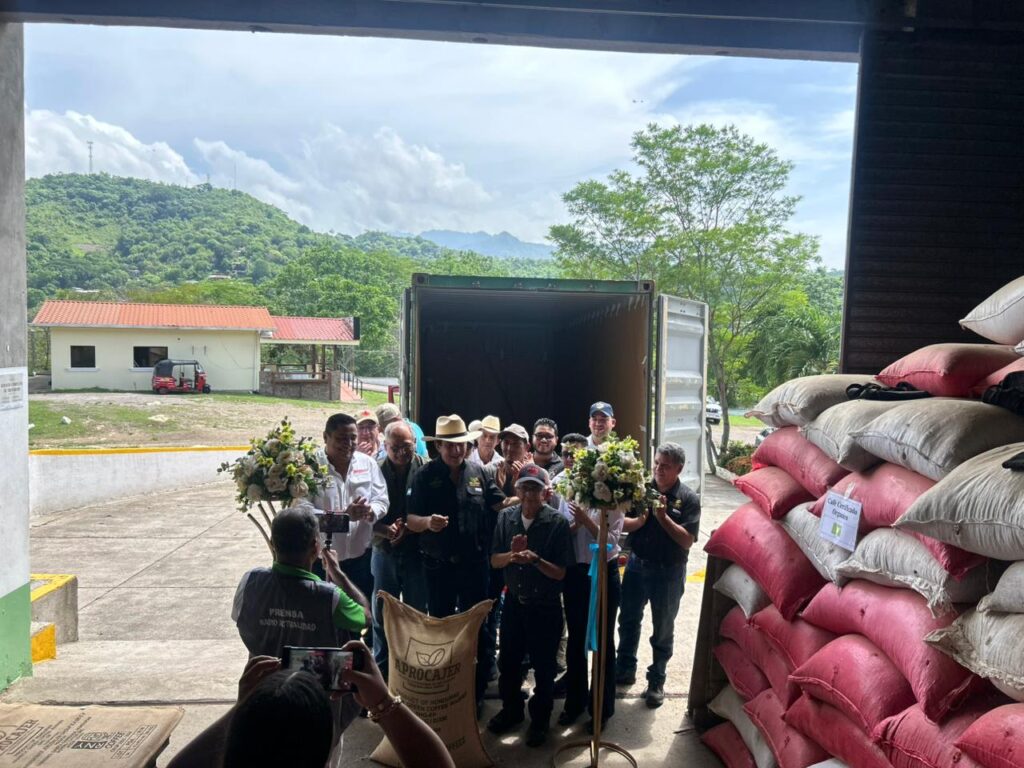
Members of APROCAJER gather during a launch event marking the association’s first organic coffee export to Germany. Photo by Heifer International/Alex Caballero.
APROCAJER’s experience demonstrates that environmental regulation can also become an opportunity when producer organizations have access to the right support, information and tools.
By preparing in advance, the association began adapting its systems before the new European requirements became fully mandatory. In doing so, it built internal capacities that can support access to international markets.
This achievement is even more significant because the EUDR seeks to ensure that products such as coffee, cocoa, timber, rubber, soy, cattle and palm oil traded in the European market are not linked to recent deforestation. For Honduran coffee entering the European Union market, demonstrating traceability and deforestation-free origin will be required under the regulation.
The First Container Is Only the Beginning
For APROCAJER’s producer families, the shipment to Germany represents far more than 421.50 quintals of coffee crossing the Atlantic.
It represents farm plots that now have georeferenced information; farmers who can demonstrate the origin of their coffee; young people using digital tools to manage strategic information; an organization strengthening its business capabilities; and rural families gaining access to markets that increasingly recognize quality and sustainability.
It also demonstrates that protecting forests and creating economic opportunities for smallholder farmers do not have to be separate goals. When local capacities, technology, organization and market connections are in place, both goals can advance together.
With this first shipment, APROCAJER has taken a decisive step toward consolidating its position as a reliable supplier of high-quality, traceable Honduran coffee.
Above all, it demonstrates that preparing smallholder farmers today for the market demands of tomorrow can lead to more competitive rural organizations and new economic opportunities for Honduras’ coffee-growing families.
Please be patient while we send you to a confirmation page.
We are unable to process your request. Please try again, or view common solutions on our help page. You can also contact our Donor Services team at 855.9HUNGER (855.948.6437).
-
includes to cover payment processing costs.
Give in Honor
You'll have the opportunity to fill out a free card after your donation
Details
,
Success!
Please be patient while we send you to a confirmation page.
We are unable to process your request. Please try again, or view common solutions on our help page. You can also contact our Donor Services team at 855.9HUNGER (855.948.6437).
Your Donation Amount
/mo
/yr
includes to cover payment processing costs.
Give in Honor
You'll have the opportunity to fill out a free card after your donation