
In Ecuador’s Mangroves, Native Communities Lead a Sustainable Shellfish Market
What happens when native crab collectors take control of the coast? In Ecuador, one cooperative is turning tides for livelihoods, land and legacy.



We strengthen triple-impact rural businesses, driving positive outcomes for incomes, food security and the environment.
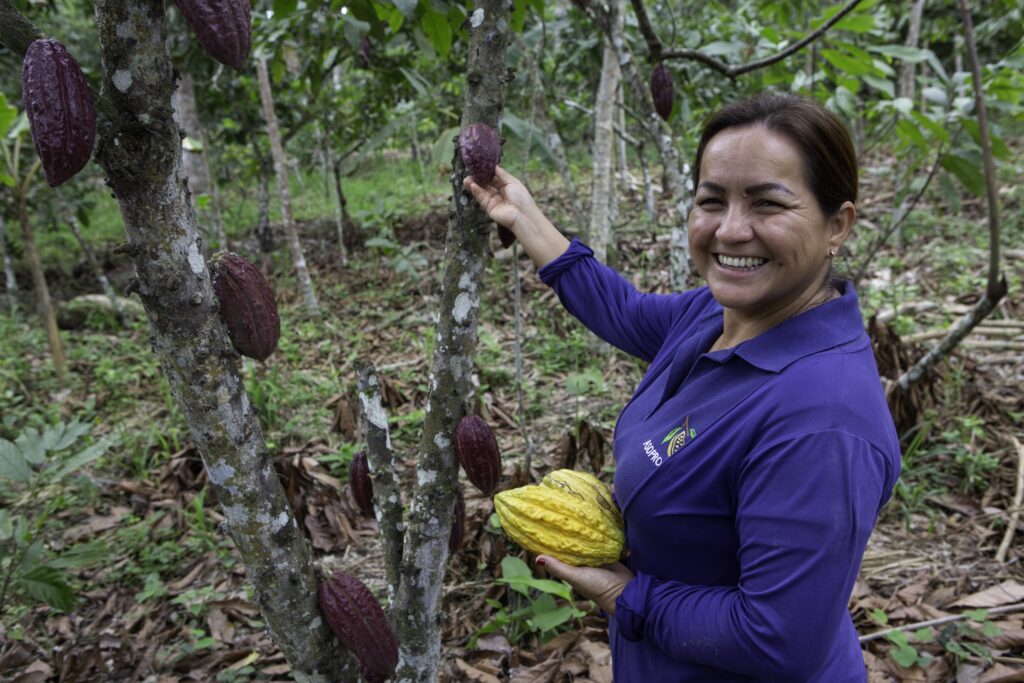
In Ecuador, 61 percent of rural women engage in agricultural and related livelihood activities. Yet, rural family farmers struggle with volatile pricing due to dollarization, limited access to value-added processes and difficulties in securing formal financing. A recent economic downturn, worsened by organized crime, disruptions in oil production and climate-related events, has further stressed these vulnerabilities. According to recent estimates, poverty affects more than 25 percent of Ecuadorians — more than 4 million people — while food insecurity affects about one-third of the population.
Ecuador’s constitution recognizes the rights of nature and Indigenous peoples, underscoring a commitment to social justice and environmental stewardship. As climate-related disasters threaten economic stability and amplify food security challenges, they emphasize the increasing need for strong agricultural support and financial solutions for rural farmers who care for the Earth and all its people. The country’s diverse ecosystems — from the Amazonian rainforests to the Andean slopes — offer vast opportunities for rural development. By supporting rural family farmers, who are best positioned to responsibly steward the ecosystems they work in, agribusiness can drive economic growth, improve food stability and strengthen climate resilience to secure a sustainable future for Ecuador’s citizens.
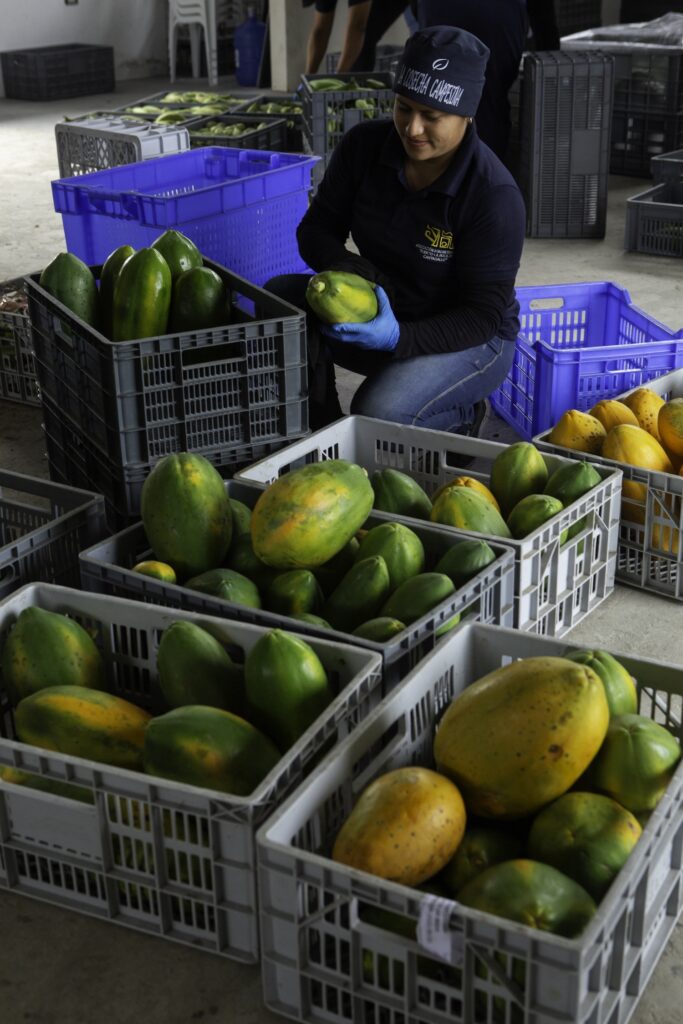
Heifer International’s objective in Ecuador is to ensure long-term results and foster partnerships for sustainable, locally led development. We envision resilient and prosperous communities where rural families access resources, knowledge and opportunities to reach their full potential. By providing technical assistance, training and financial support and connecting farmers to markets, we help grow the economy, improve food security and build resilience across Ecuador’s ecosystems.
Creating and improving rural businesses with environmentally friendly practices and sustainable landscape management are critical to our poverty alleviation efforts, with programs that promote resilient and fair food systems, gender equity, social inclusion and biodiversity conservation. We support rural communities to adopt more productive methods and nature-based solutions that protect, manage and restore degraded ecosystems, and we work closely with local populations — particularly Indigenous women — to leverage their leadership and knowledge to encourage self-management and sustainability.
Our primary objective is helping families achieve a sustainable living income, our measure for the amount of money required for a decent life — including safe shelter, nutritious food, clothing, education and health care — while reaching additional benchmarks for economic and climate resilience.
Year Heifer launched in Ecuador
Household participants in 2025
Household participants to date
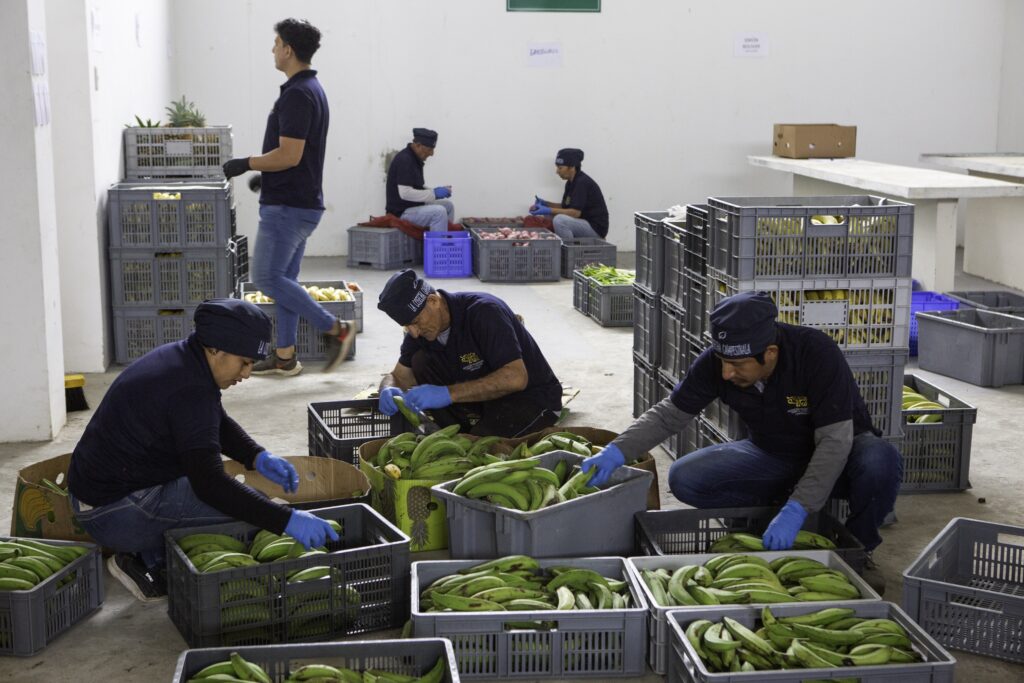
Heifer International’s work is organized at the country level into signature programs focused on large-scale, measurable and sustainable impact achieved by building partnerships at all levels. Each program supports farmers through time-bound projects designed to increase their household income.
The Future of Food signature program aims to build sustainable food systems and reach 189,000 families in urban, peri-urban and rural areas by 2030. The program operates across five ecosystems — coastal marine, dry forest, humid forest, Andean slopes and páramo — to help rural families overcome poverty and reach a living income.
The Promesa Café y Cacao signature program strengthens food security for rural family producers of coffee and cacao in Ecuador, the world’s leading exporter of high-quality cacao. This program focuses on reducing reliance on a single seasonal product and generating year-round income to improve producers’ quality of life and livelihood sustainability.
Project timeline: 2024–2027
The Alliances for Sustainable Cocoa and Coffee (PASOS) project strengthens cocoa and coffee value chains by supporting 33,000 producer families, including 5,500 direct participants, and 24 coffee and cocoa associations. The project aims to improve living conditions and reduce poverty by strengthening business management, expanding financial inclusion, improving market linkages and building resilience within producer organizations. Through stronger participation across value chains, PASOS works to close the poverty gap for 600 families while supporting more stable and sustainable livelihoods.
Project timeline: 2022–2026
The Biobusiness Ecuador: Enabling Sustainable Biodiversity-Based Businesses project works to create favorable conditions for sustainable businesses based on Ecuador’s native biodiversity. The project supports the implementation of legal frameworks, strengthens cross-sector collaboration and addresses key barriers facing biodiversity-based enterprises. By promoting responsible use of native species, it helps advance economic development while protecting Ecuador’s natural ecosystems.
Project timeline: 2021–2028
The Guarango: Business Development, Associativity and Andean Dry Forest Restoration project strengthens the guarango value chain by supporting sustainable production, collective organization and forest restoration in the Andean dry forest. The project focuses on improving business operations and strengthening associations to sustain guarango export markets. By positioning guarango as a viable source of family income and promoting sustainable forest management, the project contributes to long-term economic and environmental resilience.
Project timeline: 2024–2026
The Mangrove Bioenterprises for Local Development and Conservation project supports fishing organizations in Esmeraldas and Guayas to strengthen sustainable bioenterprises linked to red crab and concha prieta, a type of mangrove shellfish, harvesting. The project focuses on improving the competitiveness of rural businesses to boost local economies while reinforcing social cohesion and protecting mangrove ecosystems. By aligning income generation with conservation, the project helps coastal families improve livelihoods while safeguarding vital mangrove habitats.
Project timeline: 2019–2027
The Future of Food project supports farming families in Ecuador and the Galápagos by strengthening sustainable production, market access and responsible consumption. The project promotes environmentally friendly farming practices, collective marketing and resilient food systems, while expanding infrastructure and small agricultural enterprises that support agroecological markets. These efforts help families increase incomes, reduce costs and build long-term food security and economic stability.

La Fundación Heifer Ecuador
trabaja 30 años acompañando procesos que generan oportunidades
en las áreas rurales, a través de sistemas agroalimentarios
sostenibles con enfoque de cadena de valor.

Mujeres Rurales de la Agricultura Familiar Campesina de las provincias de Azuay y Manabí: fortalecimiento productivo, organizativo y comercial como una PROYECTO alternativa de dinamización para la economía rural.
Rafael Chiadó, Provincial Government of Santa Elena
Did you know?
You can add multiple resources to this cart! Feel free to keep browsing, add more resources, and get all of your resources in one package. Easy!
Cart is empty
Success!
Please be patient while we send you to a confirmation page.
We are unable to process your request. Please try again, or view common solutions on our help page. You can also contact our Donor Services team at 855.9HUNGER (855.948.6437).
Success!
Please be patient while we send you to a confirmation page.
We are unable to process your request. Please try again, or view common solutions on our help page. You can also contact our Donor Services team at 855.9HUNGER (855.948.6437).

