Woman smiles as she tends a flock of chickens inside a coop.

Kenya

We partner with Kenyan farmers to build sustainable futures through resources, training and community values.

Contact Us

Wairimu Munyinyi-Wahome, Country Director

info.kenya@heifer.org

Country Context

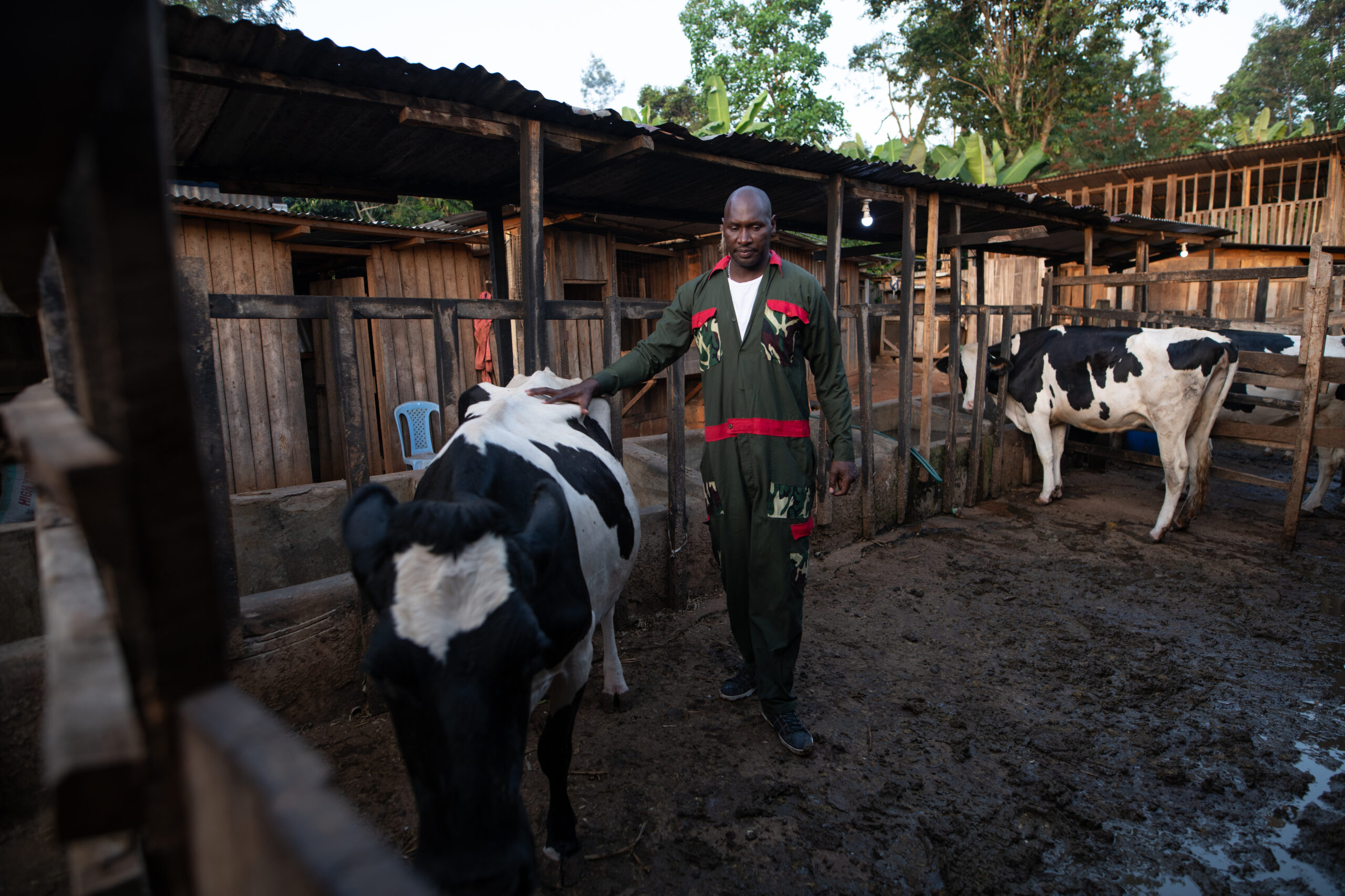
Man stands in a cattle shed and rests a hand on a black-and-white cow.Kenya’s economy relies heavily on agriculture and livestock, yet the sector faces persistent challenges. Following the COVID-19 pandemic, many communities have continued to experience food insecurity driven by climate shocks, rising food prices, economic pressures and localized conflict. In 2024, food security assessments found that about 1 million people experienced acute food insecurity during the year, with needs rising to nearly 2 million during peak dry periods. Malnutrition also remains a serious concern in Kenya’s arid and semi-arid regions, particularly among children under five and pregnant and breastfeeding women.

Agriculture contributes about 22 percent to Kenya’s gross domestic product and supports the livelihoods of more than 70 percent of the rural population. However, low productivity, limited access to finance, inadequate infrastructure and market barriers make it difficult for many smallholder farmers to grow their businesses and increase their incomes. Limited economic opportunities, particularly for young people, also contribute to unemployment and poverty in many rural communities. Livestock diseases and other production shocks can further reduce earnings and increase vulnerability for farming families. Climate change adds to these pressures, as increasingly erratic rainfall, droughts and floods disrupt traditional farming cycles and threaten rural livelihoods across the country.

Our Response

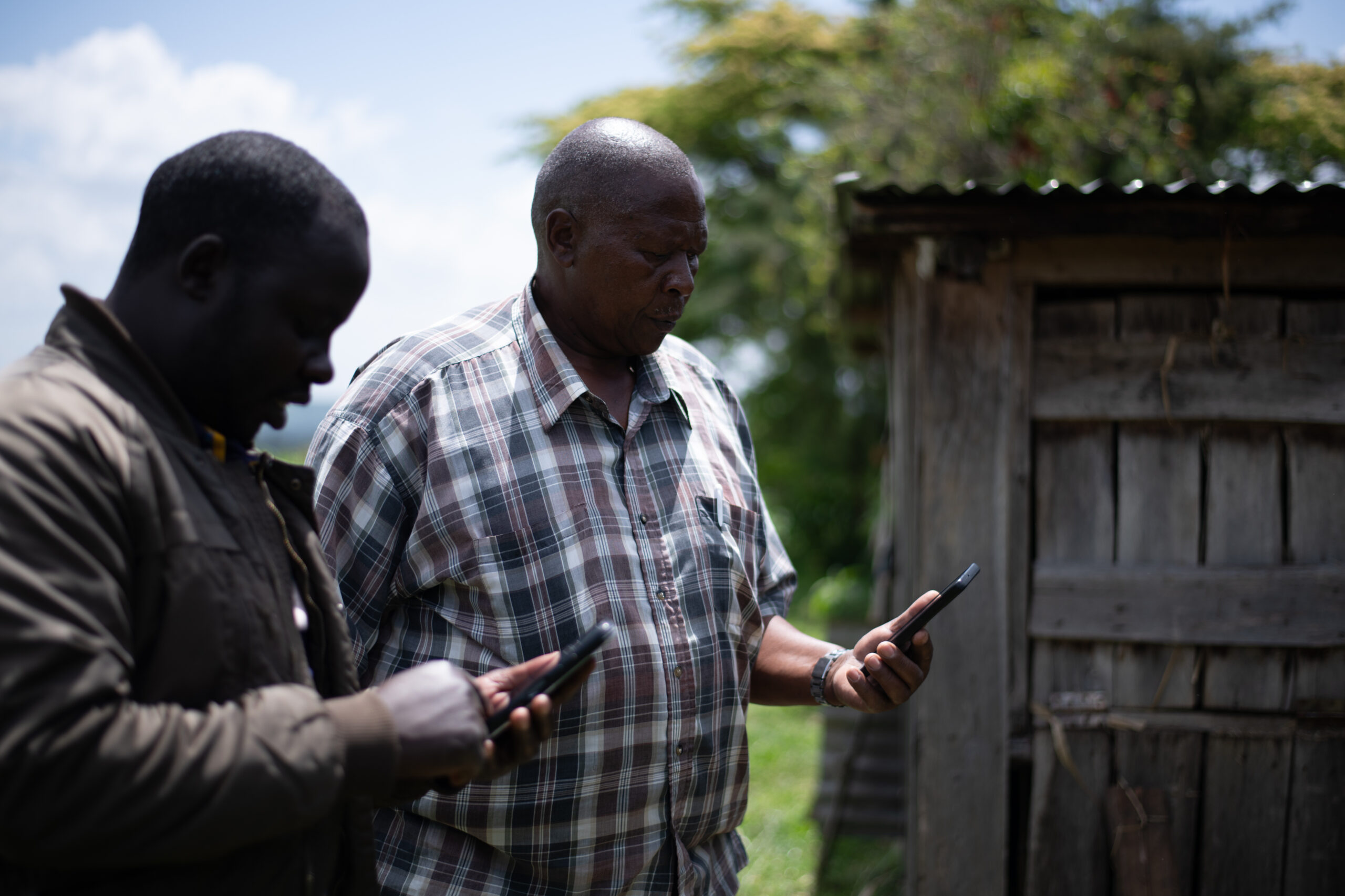
Two men stand outdoors and check information on their mobile phones.Heifer Kenya supports smallholder farmers by providing livestock, seeds, tools and market access. Key strategies include strengthening agricultural cooperatives and supporting farmer-owned businesses so farmers can share resources and ideas to improve collective bargaining power, reduce costs and improve their enterprises.

Partnering with governments and the private sector secures essential resources and services for farmers to invest in their operations. Our approach focuses on engaging youth, promoting digital agriculture and working with communities to foster shared goals and values. Farmers receive training in modern techniques and gain access to financial services that help them build strong market systems for long-term success.

Our primary objective is helping families achieve a sustainable living income, our measure for the amount of money required for a decent life — including safe shelter, nutritious food, clothing, education and health care — while also reaching additional benchmarks for economic and climate resilience.

Primary Value Chains

Dairy
Horticulture
Poultry
Red Meat

1981

Year Heifer launched in Kenya

313,841

Household participants in 2025

5,214,653

Household participants to date

The Kenya Signature Program

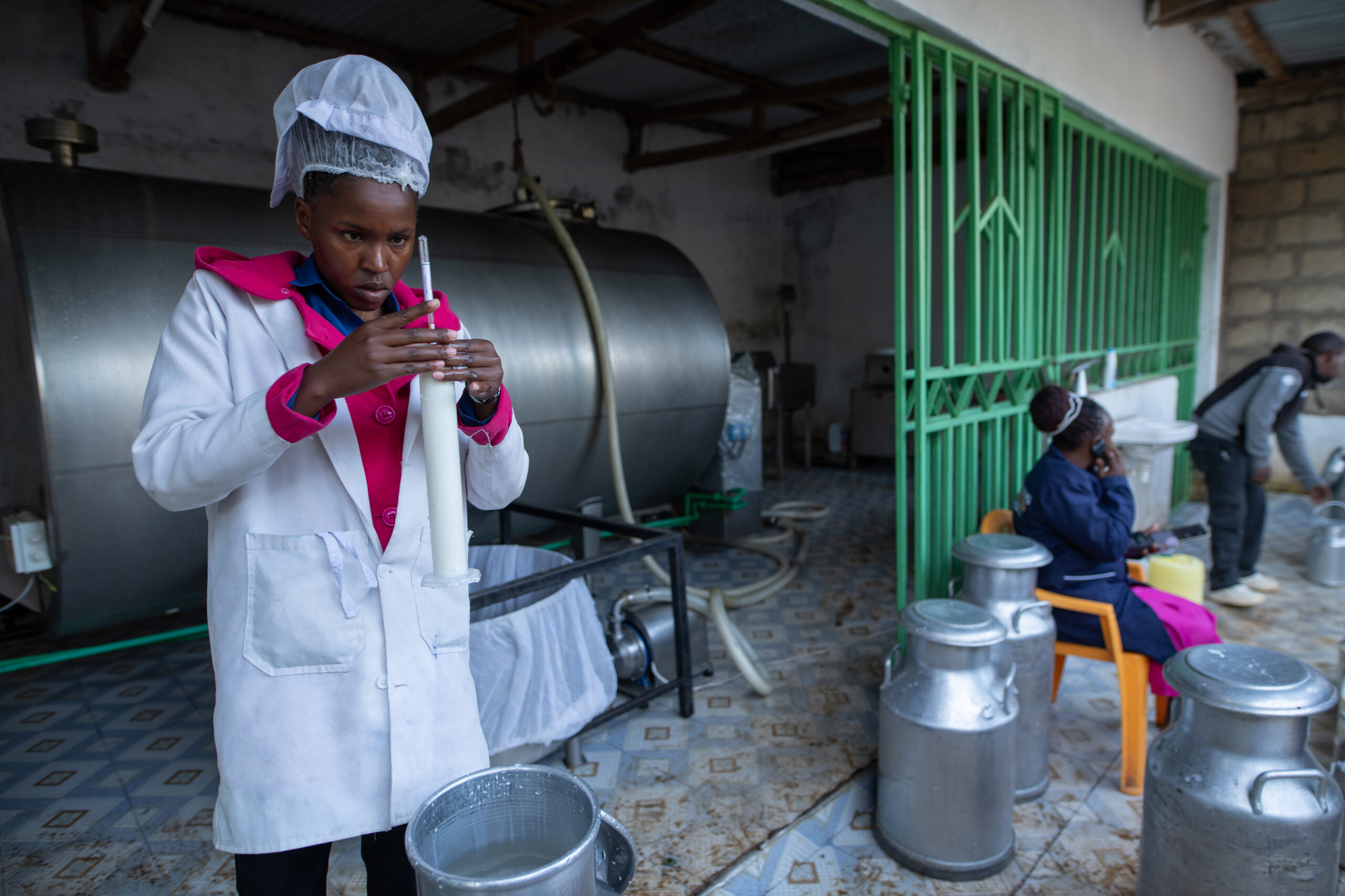
Woman in a lab coat measures milk inside a small dairy facility.Heifer International’s work is organized at the country level into signature programs focused on large-scale, measurable and sustainable impact achieved by building partnerships at all levels. Each program supports farmers through time-bound projects designed to increase their household income.

Kenya Practice for Change

Heifer Kenya’s signature program, Practice for Change (P4C), aims to help 625,000 households achieve a sustainable living income by 2030 through the transformation of agricultural value chains, including dairy, horticulture, poultry and red meat. The program works with farmers, agribusinesses and partners across the value chain to improve productivity, strengthen market access and expand economic opportunities for rural communities, with a focus on women and youth.

Featured Projects

AYuTe Africa Challenge Kenya

Project timeline: 2022–present

The AYuTe Africa Challenge Kenya is an annual national competition that awards cash grants to Kenyan agritech innovators with ideas to transform farming and food production. The national competition is part of a regional program, AYuTe Africa NextGen, which supports young African entrepreneurs in developing solutions to address smallholder farmers’ challenges, providing necessary incubation and financing to drive agribusiness innovation across the continent. Since its launch in 2022, the project has trained more than 380 young entrepreneurs and awarded more than $90,000 to help them grow their businesses.

Kenya Livestock Marketing and Resilience Project

Project timeline: 2023–2027

The Kenya Livestock Marketing and Resilience Project (KLMP), funded by the Swedish International Development Cooperation Agency, promotes food production and livelihood resilience for 38,000 smallholder farming households across nine counties: Kajiado, Isiolo, Busia, Kakamega, Nandi, Uasin Gishu, Trans-Nzoia, Nakuru and Bungoma. The project works with county governments, digital service providers, cooperatives and technical experts to increase farmers’ access to technology, training and technical assistance for poultry and red meat production (including cattle, sheep and goats).

KLMP also strengthens the poultry and red meat value chains by helping farmer-owned agribusinesses grow and connecting producers to reliable markets, financing and insurance. These efforts reduce risk and create more stable income opportunities for livestock producers, including women and youth.

Transforming Yield Through Feed and Fodder Access in Dairy

Project timeline: 2025–2029

The Transforming Yield Through Feed and Fodder Access in Dairy (TYFFAD) project strengthens Kenya’s dairy sector by tackling long-standing gaps in feed and fodder production, conservation and access. Feed accounts for up to 60–80 percent of dairy production costs, yet supply remains highly seasonal and vulnerable to climate variability. TYFFAD supports smallholder dairy farmers by reducing seasonal feed shortages, lowering production costs and improving productivity through climate-smart, market-driven approaches.

Building on lessons from earlier dairy programs, TYFFAD works with private sector partners, cooperatives and county institutions across the dairy value chain to expand access to quality inputs, mechanization and tailored financing for farmers and farmer-owned enterprises. Through this approach, the project contributes to more resilient dairy systems, stronger market connections and sustained income growth for farming households.

News & Stories

Two Heifer International project staff speaking to a man driving a tractor in Nigeria.

Report Finds Agricultural Finance Model Created by Heifer International and Hello Tractor Profitable, Effective

A 2024 report by Aceli Africa and Dalberg confirms the significant impact of the collaboration between Heifer International and Hello Tractor in unlocking agricultural finance for resource constrained smallholder farmers across Africa.

From Kenya to Bangladesh: 5 Ways Heifer Builds Strong Market Systems

Heifer invests in infrastructure across our project areas to build strong market systems, giving farmers the purchasing power to keep nutritious food on the table and roofs above their heads.

Young Innovators Lead Africa’s Food Systems at AYuTe NextGen 2025

Meet the youth-led startups turning bold ideas into real change for farmers across Africa.

Our Partners in Kenya

  • Agriculture Sector Development Support Programme (ASDSP)
  • Cargill
  • DigiCow Africa Ltd.
  • E4Impact Accelerator
  • Embassy of Sweden in Nairobi, Kenya
  • Government of Kenya
  • Hello Tractor
  • International Fund for Agricultural Development (IFAD)
  • International Livestock Research Institute (ILRI)
  • Irish Aid
  • Kenya Agricultural and Livestock Research Organization (KALRO)
  • Kenya Climate Innovation Center (KCIC)
  • Kenya Dairy Board (KDB)
  • Kenya National Innovation Agency (KeNIA)
  • Kerio Valley Development Authority (KVDA)
  • Mastercard Community Pass
  • Netherlands Development Organisation (SNV)
  • New Kenya Co-operative Creameries (KCC) Ltd.
  • State Department for Livestock Production
  • Swedish International Development Cooperation Agency (Sida)

“Heifer’s support changed our cooperative from when we first received a cooler and generator to today, with a 5,000-litre capacity and a milk tanker. We’ve reduced spoilage, improved quality and grown with confidence.”

Sarah Kendi, Manager, Magati Dairy Cooperative

More Information

More Countries Where We Work