
Women Farmers Fuel Productivity and Possibility With Equipment Loans
Access to cooperative-led financing allows one woman farmer in rural Uganda to invest in her farm — and reclaim time, income and agency.



We connect farmers to innovative technologies alongside tools, expertise and insights to elevate agriculture.
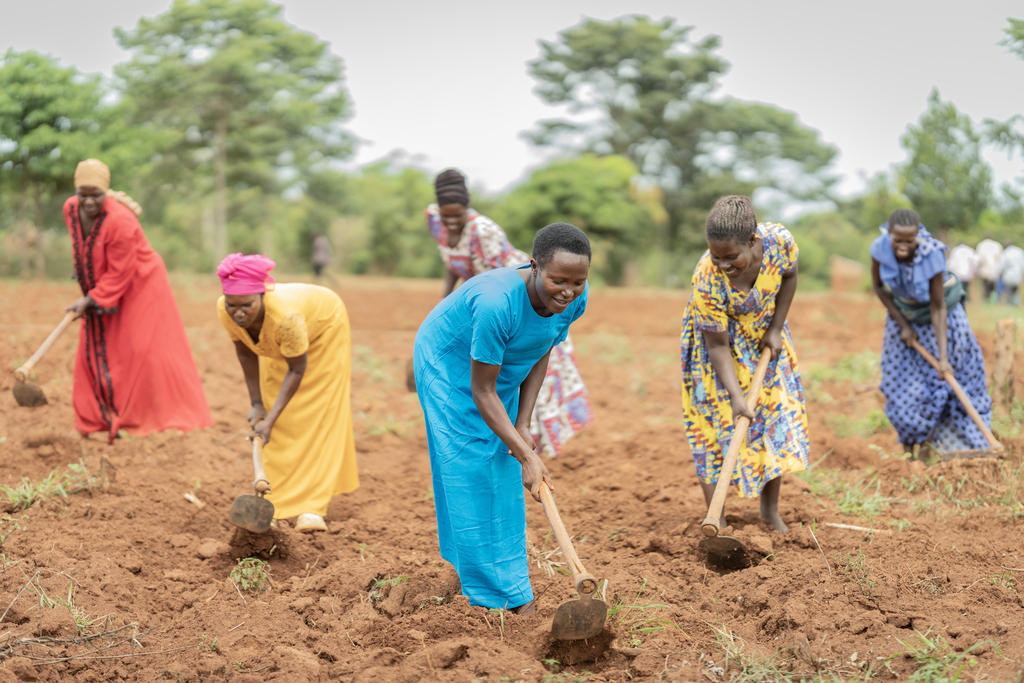
Uganda’s economic backbone is its agricultural sector, which employs 70 percent of the workforce and accounts for a quarter of its gross domestic product. Despite rich soil throughout the country, farming is plagued by inefficiencies and low output due to outdated farming techniques and a lack of access to modern technology. According to the Food and Agriculture Organization of the United Nations, Uganda’s fertile land has the potential to feed 200 million people (four times the country’s population), yet only 35 percent of arable land is being cultivated. Agricultural hurdles are compounded by environmental challenges, including recurring floods and severe droughts that are expected to intensify without climate adaptation.
Most of Uganda’s population under age 30 works in informal jobs, often earning inconsistent income without stable employment or benefits. This is partly due to a disconnect between the education system and the needs of the job market. The nation’s economic stability is further compromised by inflation, which impacts the cost of living. Although Uganda enjoys relative political stability and some signs of economic recovery, poverty levels are expected to decline only slightly in the near term. The success of poverty reduction efforts will depend on improvements in food security, a more affordable cost of living and adaptation to climate and environmental changes.
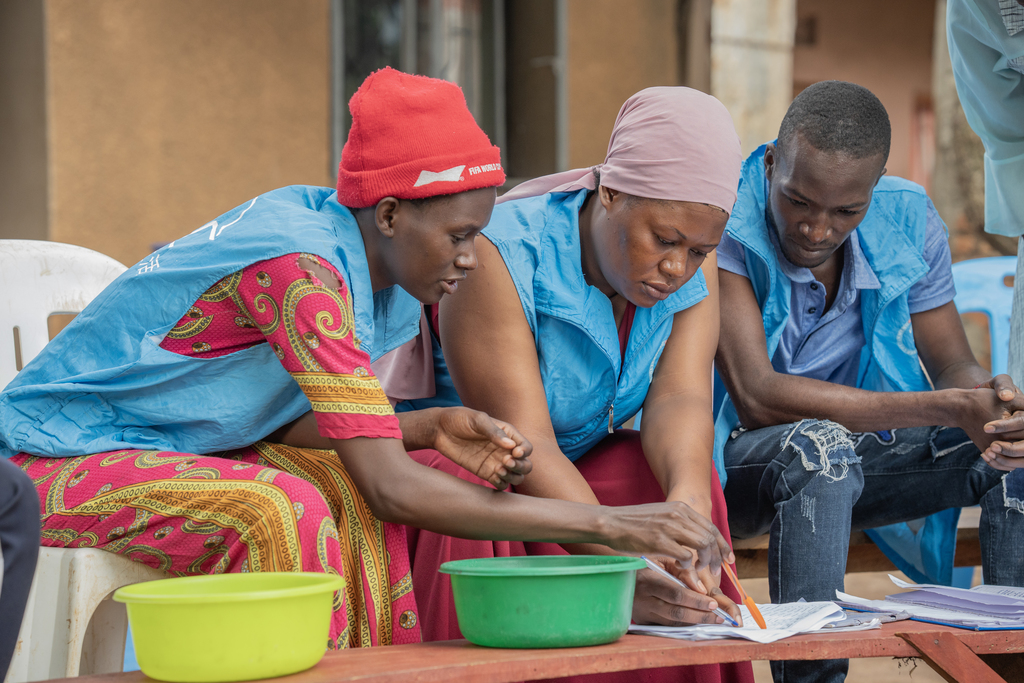
Heifer Uganda is committed to transforming the lives of 400,000 smallholder farmers — 60 percent of whom will be women — by 2030 through the inclusive development of value chains in which these farmers have the potential to earn more income. We aim to enhance farmers’ competitiveness and build their climate resilience by facilitating access to renewable energy sources such as solar power, finance, extension services, information, insurance and mechanization. We also work with women farmers to earn a living income in agriculture, and we support young agri-entrepreneurs who are driving innovation in farming.
At the heart of our efforts is our community-led development approach, which encourages collaborative problem-solving and collective action within farming communities. This approach strengthens social capital, laying the groundwork for local investment in programs’ success and sustained progress over time. Together, this work contributes to economic stability, job creation and increased food security, helping to position agriculture as a cornerstone of Uganda’s future.
Our primary objective is helping families achieve a sustainable living income, our measure for the amount of money required for a decent life — including safe shelter, nutritious food, clothing, education and health care — while also reaching additional benchmarks for economic and climate resilience.
Year Heifer launched in Uganda
Household participants in 2025
Household participants to date
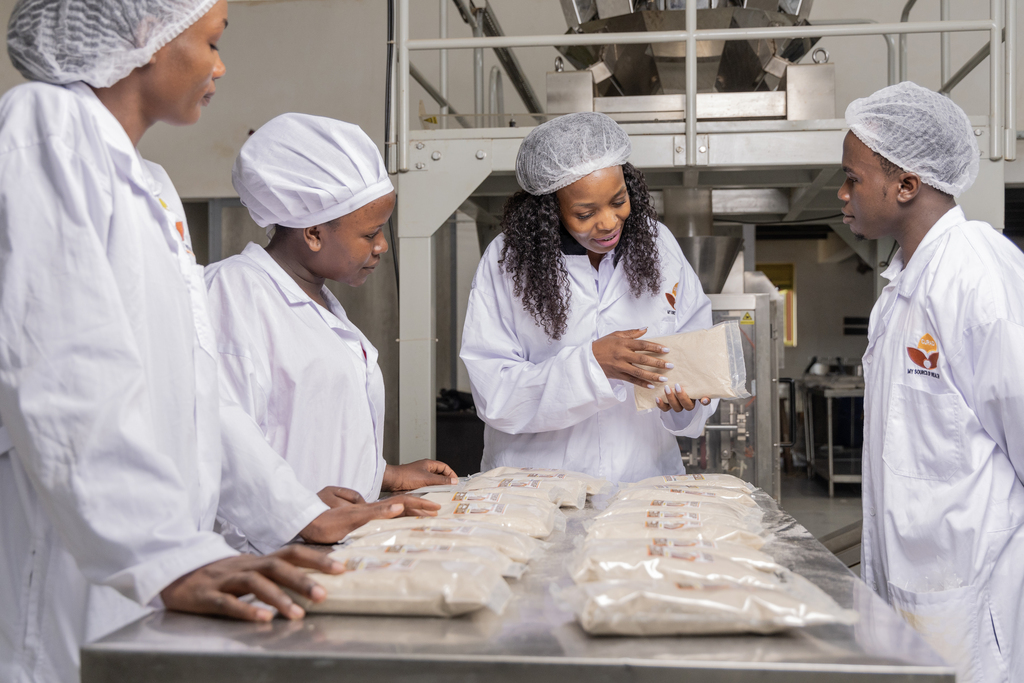
Heifer International’s work is organized at the country level into signature programs focused on large-scale and measurable impact achieved by building partnerships at all levels. Each program supports farmers through time-bound projects designed to increase their household income.
Heifer’s signature program in Uganda, Inclusive Markets for Agribusiness Agenda, is working to enhance the competitiveness, employability and resilience of 400,000 smallholder farmers in the dairy, oilseeds, poultry and horticulture value chains. The program’s ultimate goal is to help them achieve a sustainable living income and live dignified lives.
Project timeline: 2022–present
The AYuTe Africa Challenge Uganda is an annual national competition that awards cash grants to Ugandan agritech innovators with ideas to transform farming and food production. The national competition is part of a regional program, AYuTe Africa NextGen, which supports young African entrepreneurs in developing solutions to address smallholder farmers’ challenges, providing necessary incubation and financing to drive agribusiness innovation across the continent.
The initiative identifies youth-led innovations and provides mentorship and financing to scale solutions to benefit smallholder farmers.
Project Timeline: 2025-2028
The Green Dairy Investment Program (GDI) works to strengthen Uganda’s dairy sector by transforming existing dairy hubs into resilient, inclusive and economically viable platforms. The program promotes green agribusiness investments and climate-smart technologies while supporting the development of a 10-year dairy sustainability roadmap to guide long-term investment and policy alignment.
Through GDI, farmers and dairy hub actors are trained and supported to adopt improved dairy technologies and best practices, including water-efficient systems, renewable energy and enhanced livestock management. These efforts aim to increase milk yields, improve product quality, strengthen producer organizations and dairy processors, and reduce greenhouse gas emissions across the dairy value chain while expanding access to formal markets and sustainable livelihoods for smallholder farmers.
Project timeline: 2023–2029
Stimulating Agribusiness for Youth Employment (SAYE) aims to uplift 250,000 young people in Uganda’s Busoga region. Supported by the Mastercard Foundation, the project will increase market access, stimulate enterprise growth and create 44,000 jobs for youth. The initiative is focused on improving the entrepreneurial environment for youth by facilitating market-relevant skill development, providing innovative financing and supporting self-sustaining, youth-led agricultural business hubs.
Project timeline: 2022–2030
A collaboration of Heifer International and Hello Tractor, Tractors 4 Africa is a tractor co-sharing model that makes ownership attainable for smallholder farmers, secures profits for owners offering tractor rental services and improves tractor access regionally. Tractors are a net income-increasing technology for smallholder farmers, and research has shown that access to tractors can result in up to a fivefold increase in smallholder farmers’ yields.
The project includes an innovative pay-as-you-go financing component that provides young entrepreneurs and smallholder farmers the opportunity to own tractors at a very affordable rate, offering flexible repayment based on actual tractor rental and eliminating the bottlenecks around collateral requirements by commercial banks.
Access to cooperative-led financing allows one woman farmer in rural Uganda to invest in her farm — and reclaim time, income and agency.

In rural Uganda, smallholder farmers leverage the sun’s energy to redefine dairy production for a brighter future.

Through savings groups and collective action, young Ugandans are linking to buyers, producing new crops and creating businesses that generate jobs and income.

A roadmap for building a greener dairy sector through climate-smart practices, solar solutions and stronger farmer-led businesses.

A snapshot of how farmer-led innovation, clean energy and youth enterprise are reshaping agriculture across Uganda.

Key data and stories from Heifer Uganda’s 2025 projects, focused on farmers, youth and local enterprise.
Specioza Nabunya, Project Participant
Cart is empty
Success!
Please be patient while we send you to a confirmation page.
We are unable to process your request. Please try again, or view common solutions on our help page. You can also contact our Donor Services team at 855.9HUNGER (855.948.6437).
Success!
Please be patient while we send you to a confirmation page.
We are unable to process your request. Please try again, or view common solutions on our help page. You can also contact our Donor Services team at 855.9HUNGER (855.948.6437).

