
Crop Insurance Protects Farming Families in Nigeria
In Nigeria, smallholder farmers are safeguarding their livelihoods with innovative crop insurance to protect their families from the devastating impact of climate change.



We equip smallholder farmers, youth and women with tools, skills and innovations to unlock agricultural potential.
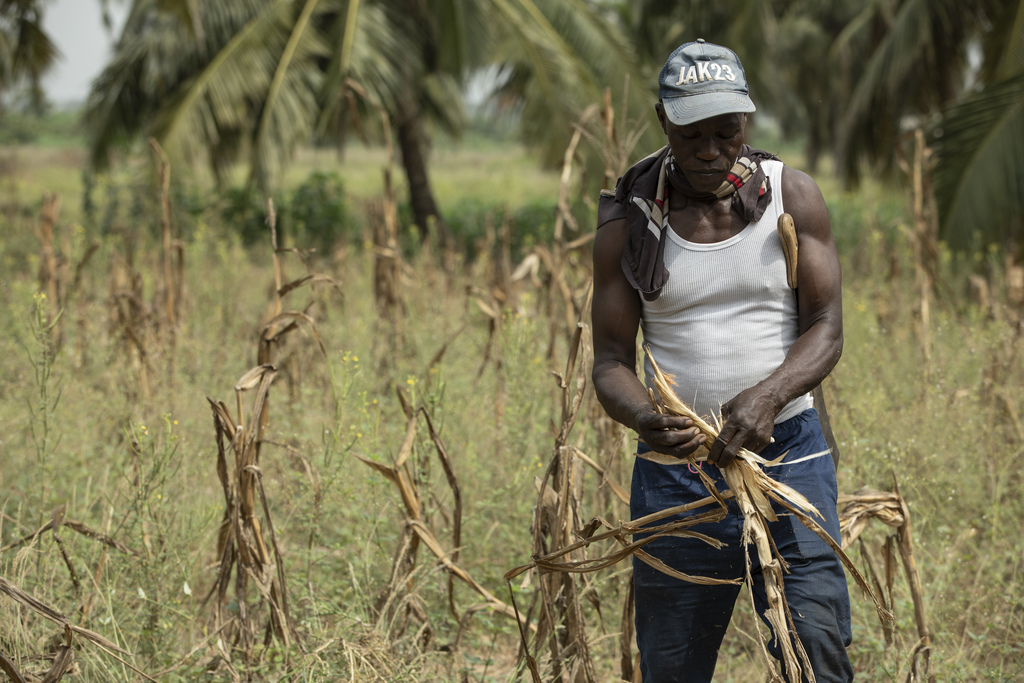 Agriculture is the backbone of the economy in Nigeria, providing sustenance, employment and income for millions of people. However, despite notable strides in improving productivity and food security in the early 2000s, economic growth has slowed in recent years and challenges such as climate change, inadequate infrastructure, inefficient supply chains and limited credit access persist, particularly for smallholder farmers. Although the country has abundant agricultural resources, including arable land and plentiful rainfall, local demand significantly outweighs local production, prompting a heavy reliance on food imports.
Additionally, a sluggish job market struggles to support the 3.5 million Nigerians who enter the workforce every year. Based on the most recent official household survey from Nigeria’s National Bureau of Statistics, about 31 percent of Nigerians live below the international extreme poverty line. Going forward, agriculture has an important role to play in Nigeria’s economic recovery and development. Future growth hinges on strengthened support for smallholder farmers that enables them to withstand extreme weather, access machinery, secure financing and optimize supply chains to increase profitability. This transformation is crucial as Nigeria faces the challenge of feeding and employing a rapidly growing population that projections show could reach nearly 375 million by 2050.
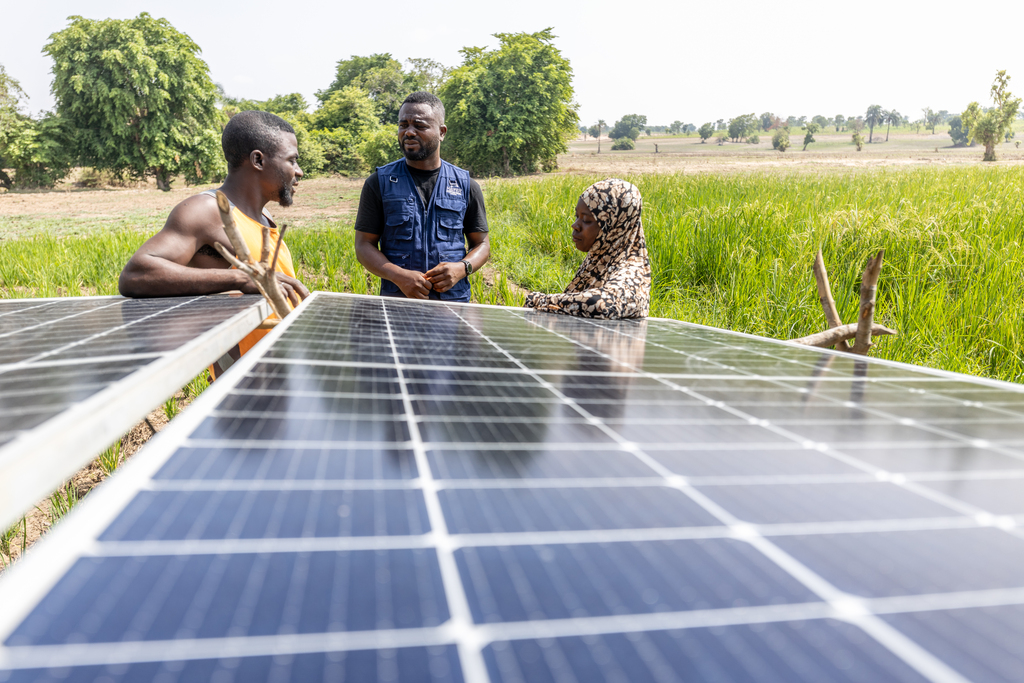 With a focus on strategic partnerships and market development, Heifer Nigeria connects smallholder farmers with resources to strengthen their production and access premium buyers so they can increase their income and localize food production. Through our local partners, we provide crop insurance and access to finance to nurture financial stability and agricultural business growth, and we deliver information and technical guidance that enable farmers to respond effectively to environmental changes.
We facilitate and invest in vital infrastructure and forward-thinking solutions that reduce time and labor costs and, in turn, increase crop yields and profits. Heifer supports social capital training that builds strong community relationships and trust among farmers, improving their ability to collaborate toward mutual goals. When smallholder farmers thrive, the region’s food security and economic prosperity also improve.
Our primary objective is helping families achieve a sustainable living income, our measure for the amount of money required for a decent life — including safe shelter, nutritious food, clothing, education and health care — while also reaching additional benchmarks for economic and climate resilience.
Year Heifer launched in Nigeria
Household participants in 2025
Household participants to date
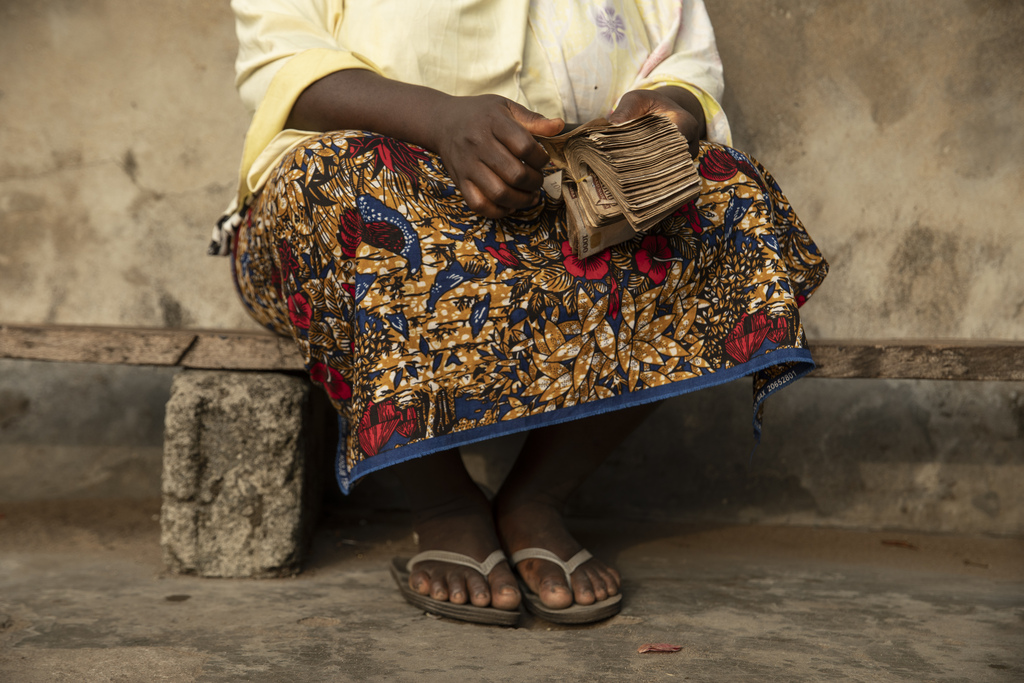 Heifer International’s work is organized at the country level into signature programs focused on large-scale, measurable and sustainable impact achieved by building partnerships at all levels. Each program supports farmers through time-bound projects designed to increase their household income.
Heifer’s signature program in Nigeria, Naija Unlock, aims to unleash the country’s potential for food self-reliance by increasing agricultural production to meet rising local demands while closing the living income gap for smallholder farmers and households experiencing poverty. The program focuses on three priority value chains — poultry, rice and tomato — and seeks to enable 2 million households, predominantly women and youth, to achieve a sustainable living income by 2030 through better access to premium markets, finance, insurance and climate change adaptation strategies, such as climate-smart agricultural practices.
Project timeline: 2024–2030
The GrowRice project aims to support 1.2 million smallholder rice farmers across Nigeria to increase production and improve household incomes. Although Nigeria produces large amounts of rice, supply falls short of demand. The project helps close the gap by improving farming practices and supporting farmer-owned businesses that can grow and sell rice more efficiently.
GrowRice expands access to farm machinery, weather-based advisory services and insurance that allows farmers to pay after harvest. These tools help farmers manage climate risks and market uncertainty while producing food year-round. By strengthening local markets and farmer networks, the project supports more stable incomes and long-term food security.
Project timeline: 2024–2030
The Solar-Powered Irrigation Pumps Lease Financing project helps smallholder farmers grow crops year-round by reducing reliance on rainfall and costly fuel. By expanding access to solar-powered irrigation pumps, farmers can water their fields more reliably and increase the number of growing seasons each year.
Farmers can acquire the pumps through a lease-to-own model that spreads payments over two years, making the technology more affordable. The pumps support farming across rice and tomato systems and strengthen production systems linked to poultry value chains, which in turn help farmers manage water shortages while lowering fuel costs by up to 40 percent.
Project timeline: 2024–2030
The Strengthening Tomato Farmers’ Productivity, Market Access and Resilience (STOPMAR) project aims to support 200,000 smallholder farmers by helping them grow more tomatoes and reduce post-harvest losses. Tomatoes are a key food crop in Nigeria, yet much of the harvest is lost before it ever reaches markets. The project helps farmers increase supply while meeting nutrition needs across the country.
The project also introduces practical tools such as solar-powered irrigation and storage solutions that reduce spoilage. In addition, farmers receive training in better farming and group management practices, helping them access quality inputs and better-paying markets. Women and youth play a central role in building a more stable and food-secure tomato value chain.
Project timeline: 2024–2030
The Sustainable Market Access for Smallholder Poultry Farmers (SMAP) project supports 600,000 poultry farmers across Nigeria, with a strong focus on women and young people. It addresses common challenges such as high feed costs, bird mortality and limited access to animal health services so farmers can build more stable incomes. The project also expands processing centers to create reliable market opportunities and scales improved chicken breeds that require fewer inputs and deliver higher yields. Through accessible financing and stronger value chain coordination, the initiative promotes better environmental practices and long-term resilience in Nigeria’s poultry sector.
Project timeline: 2024–2028
A collaboration of Heifer International and Hello Tractor, Tractors 4 Africa is a tractor co-sharing model that makes ownership attainable for smallholder farmers, secures profits for owners offering tractor rental services and improves tractor access regionally. Tractors are a net income-increasing technology for smallholder farmers, and research has shown that access to tractors can result in up to a fivefold increase in smallholder farmers’ yields.
The project includes an innovative pay-as-you-go financing component that provides young entrepreneurs and smallholder farmers the opportunity to own tractors at a very affordable rate, offering flexible repayment based on actual tractor rental and eliminating the bottlenecks around collateral requirements by commercial banks.
Project timeline: 2025–2028
The Transforming Dairy Production in Nigeria (TransformDairyNG) project supports smallholder dairy farmers in Adamawa and Taraba states to improve milk production and transition toward more settled and commercially viable dairy systems. Many farmers face low yields and rely on seasonal grazing. The project promotes more settled dairy systems that improve access to feed, animal care and markets.
The project also introduces improved breeding practices, better animal health services and irrigation for growing nutritious fodder. By organizing farmers into cooperatives and linking them to milk collection centers and financial services, the project helps build a more reliable, profitable and climate-resilient dairy sector while reducing conflict over land and resources.
In Nigeria, smallholder farmers are safeguarding their livelihoods with innovative crop insurance to protect their families from the devastating impact of climate change.

In Nigeria, one tractor is more than a machine. It’s a business, a livelihood and a catalyst for change in farming communities.

Agricultural microloans are promoting financial inclusion and business growth for women smallholder farmers in the small village of Dadi Louis, Nigeria.
Godwin Obaseki, former governor of Edo State
Did you know?
You can add multiple resources to this cart! Feel free to keep browsing, add more resources, and get all of your resources in one package. Easy!
Cart is empty
Success!
Please be patient while we send you to a confirmation page.
We are unable to process your request. Please try again, or view common solutions on our help page. You can also contact our Donor Services team at 855.9HUNGER (855.948.6437).
Success!
Please be patient while we send you to a confirmation page.
We are unable to process your request. Please try again, or view common solutions on our help page. You can also contact our Donor Services team at 855.9HUNGER (855.948.6437).

