Nepal

Active Projects
Past Projects

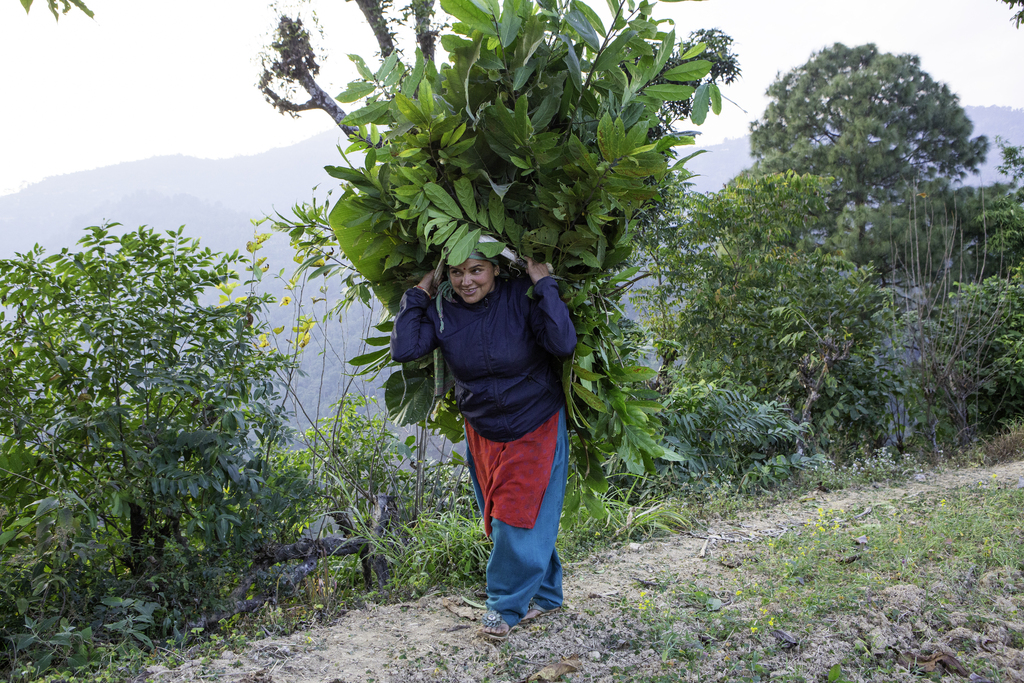
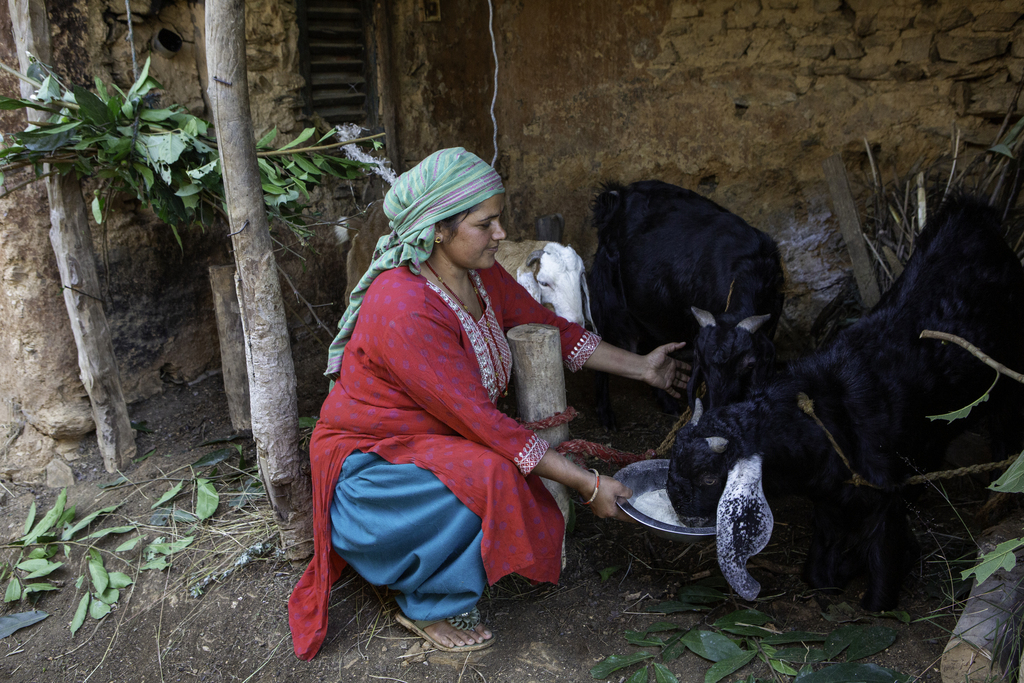
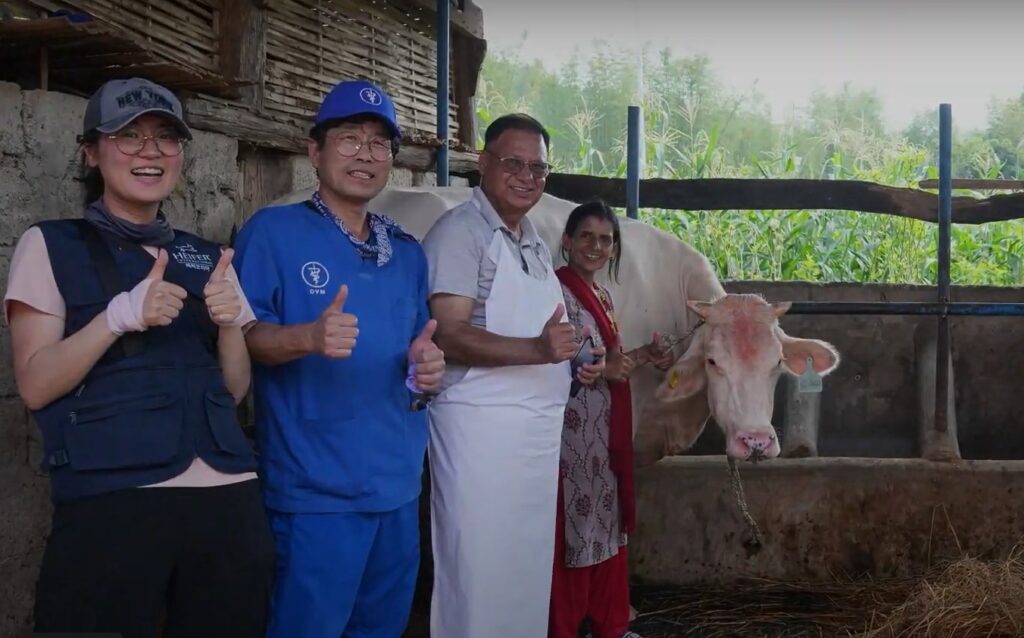
We train and support farmers — especially women — to reach new markets, raise better livestock and earn more money.

Active Projects
Past Projects

Contact Us

Dr. Tirtha Raj Regmi, Country Director

heifer.nepal@heifer.org

Country Context

Nepal, a landlocked country in South Asia, has a diverse population that faces substantial social and economic challenges. Agriculture remains central to the national economy, supporting a majority of households and employing about two-thirds of the population. A large share of households live outside of urban centers, where poverty rates are higher than the national average. Persistent issues such as caste-based discrimination and gender inequality were compounded by the devastating 2015 earthquakes — the worst disaster in Nepal’s history — which claimed nearly 9,000 lives and pushed an additional 1 million people into poverty.

Small landholdings, limited irrigation and restricted access to credit constrain agricultural productivity. Climate-driven weather variability threatens crops, and limited access to modern farming techniques reduces efficiency. Labor outmigration remains widespread, with remittances accounting for 26 percent of gross domestic product, often leaving women to manage both households and farms with limited resources or institutional support. Even so, Nepal’s diverse agroclimatic zones, fertile land and abundant water resources offer strong potential for agricultural development. Addressing these structural barriers could improve farmers’ livelihoods and support the economic stability of rural women and their communities.


Our Response

Heifer Nepal fosters resilience and sustainable development in rural communities. Our approach centers on the Social Entrepreneurs Women’s Alliance (SEWA), a network of cooperatives led by progressive women farmers. This alliance improves the livelihoods of women and smallholder farmers by enhancing their technical, governance and financial management skills. In collaboration with government bodies and local nongovernmental organizations, Heifer Nepal connects self-help groups, cooperatives and cooperative networks to strengthen community development and economic empowerment.

We provide livestock, seeds and training to boost agricultural productivity and market access. Our programs prioritize gender equity by supporting women in agriculture with targeted training and leadership development. We also implement disaster preparedness programs and build resilient infrastructure to protect communities from adverse weather. These initiatives enable farmers to build sustainable businesses, access vital markets and empower their communities to train a new generation of agricultural leaders.

Our primary objective is helping families achieve a sustainable living income, our measure for the amount of money required for a decent life — including safe shelter, nutritious food, clothing, education and health care — while also reaching additional benchmarks for economic and climate resilience.

Primary Value Chains

Dairy
Eggs
Flowers
Fruits and Vegetables
Grains and Cereals
Poultry
Rice
Small Ruminants
Spices
Swine

1997

Year Heifer launched in Nepal

480,512

Household participants in 2025

1,721,453

Household participants to date

The Nepal Signature Programs

Heifer International’s work is organized at the country level into signature programs focused on large-scale, measurable and sustainable impact achieved by building partnerships at all levels. Each program supports farmers through time-bound projects designed to increase their household income.

Milky Way

Heifer Nepal’s Milky Way signature program is designed to transform the dairy sector, significantly improve the livelihoods of more than 500,000 smallholder dairy farmers and double milk production by 2030. The initiative collaborates extensively with government bodies, development banks, private-sector actors and Korean partners to address systemic barriers across the dairy value chain. By reforming policies and practices crucial for dairy development, the program focuses on creating sustainable institutions and structures within rural economies to ensure permanent impact.

Strengthening Smallholder Livestock Value Chains

Heifer Nepal’s Strengthening Smallholder Livestock Value Chains (SLVC II) signature program targets the meat goat and dairy value chains to connect smallholder producers with profitable formal markets. It aims to scale up the enterprises of 125,000 participating families and an additional 350,000 families indirectly across 29 districts by incorporating innovative technology and improving access to finance and business development services, including input supply, technical support, market access, insurance and financing.

Value Chains for Inclusive Transformation of Agriculture Program

The Value Chains for Inclusive Transformation of Agriculture Program (VITA), funded by the International Fund for Agricultural Development (IFAD), is set to bolster the capacities of Nepali farmers by building social capital, developing agricultural businesses and strengthening community ties to promote sustainable economic growth. Financial inclusion is a key aspect, facilitated by the “Bank Sathi” concept, where local facilitators — or “Bank Friends” — assist farmers in accessing necessary financial services such as loans.

Featured Projects

Building Agroforestry-Based Adaptation Plans for Resilient Floodplains

Project timeline: 2024–2026

The Building Agroforestry-Based Adaptation Plans for Resilient Floodplains (BAGAR) project aims to develop ecosystem-based agroforestry to sustainably manage floodplains in Nepal’s Marin and Gadhimai municipalities within the Bagmati River basin. Heifer Nepal collaborates with participants, 40 percent of whom are from vulnerable Dalit and Indigenous groups, to reduce flood risks, improve ecosystem services and generate livelihood opportunities that enhance food and fodder production and support a living income.

Digital Mentoring and Continuing Education for Improved Service and Market Linkages among Community Animal Health Workers in Nepal

Project timeline: 2023–2026

The Digital Mentoring and Continuing Education for Improved Service and Market Linkages among Community Animal Health Workers in Nepal project focuses on improving the quality of community animal health worker services by designing and evaluating a digital consultant and education platform that improves access to markets and opportunities to enhance their skills. The platform, along with a goat marketing tool to enhance collective marketing through cooperatives, strengthens relationships between community animal health workers and production material providers while also increasing farmers’ income from goat sales. The project aims to reach 400 community animal health workers, 50,000 farming families and 116 cooperatives.

Girl Child Education

Project timeline: 2022–2026

The Girl Child Education (GCE) project aims to educate and support 1,000 girls in Nepal by 2026, ensuring they have access to essential educational resources that are often out of reach for many, especially girls from rural and poor families. Disparities in education for girls put them at higher risk of trafficking, abuse and early marriage, limiting their lifetime potential. In an effort to help close this education gap, the project has already benefited 2,851 girls and provided 210 girls with scholarships and essential school supplies.

Jersey Valleys Nepal: Fostering Resilience through Sustainable Dairy Development

Project timeline: 2025–2028

The project Jersey Valleys Nepal: Fostering Resilience through Sustainable Dairy Development (JV Nepal) builds on efforts to strengthen Nepal’s dairy sector by establishing a Jersey cow nucleus herd to support national breed improvement and developing efficient, inclusive dairy value chains. Implemented in Gandaki Province’s Kaski, Tanahu and Nawalparasi districts, the project will directly benefit 6,100 people — particularly women, youth and marginalized groups — and indirectly reach nearly 49,000 people, contributing to resilient livelihoods, stronger markets and a more sustainable dairy sector.

Innovations in Agriculture and Livestock Value Chains Development in Nepal

Project timeline: 2023–2027

The Innovations in Agriculture and Livestock Value Chains Development (IALVC) project focuses on improving the farming of goats, vegetables and dairy in Nepal. Its goal is to help 163,418 smallholder farmers increase their farming productivity and better connect with markets so they can achieve sustainable living incomes.

Integrated Dairy Productivity Improvement Project for Smallholder Farmers in Kamalamai Municipality

Project timeline: 2023–2026

The Integrated Dairy Productivity Improvement Project for Smallholder Farmers in Kamalamai Municipality project’s primary goal is to improve Nepal’s dairy sector by making milk production more efficient and improving quality. These improvements will help farmers grow their businesses and allow more families, especially those in need, to strengthen their health and nutrition through improved access to milk’s essential nutrients. Heifer Nepal will provide farmers with better access to technology and tools, providing more feed for their cows and teaching them how to keep their milk clean and safe through the adoption of more hygienic practices.

Nepal Government Partnership for Economic Growth

Project timeline: 2021–2026

The Nepal Government Partnership for Economic Growth project collaborates with multiple local governments to leverage resources such as funding, infrastructure and expertise to implement Heifer’s model, which cultivates local ownership and ensures continuous investment for sustainable development. The initiative is designed to help 75,000 families close the living income gap by improving access to financial services and finding buyers through innovative technologies such as a virtual collection center app for goat sales.

News & Stories

Nepal Research Study Highlights Empowerment Benefits to Women Farmers from Heifer Projects

Heifer Nepal’s work sparks remarkable gains in women’s economic status, gender equality and societal views on gender-based violence in this new study’s findings.

Leaving the City Behind: A Nepali Woman Returns Home and Finds Empowerment

In a region where opportunities are slim, Sushmita Chidi returned home to build her future, one goat at a time.

The Milky Way Program: Nepali Smallholders Lead Dairy Sector Transformation

The Milky Way program is driving sustainable change in Nepal’s dairy sector, supporting smallholder farmer incomes, increasing milk production and advancing the local government’s goal of raising dairy standards.

Resources

Cows standing in a field with people behind them

Milky Way Factsheet

A closer look at efforts to strengthen Nepal’s dairy sector through better breeds, markets and farmer-led growth.

IALVC Project Factsheet

How innovation and market connections are opening new paths to income for smallholder farmers.

Nepal Annual Report 2025

Stories, results and progress from farmers and cooperatives working to build stronger food systems across Nepal.

Our Partners in Nepal

  • Abdul Latif Jameel Poverty Action Lab (J-PAL)
  • Abhiyan Nepal
  • Action Nepal
  • AGCO Agriculture Foundation
  • Agriculture Development Bank Limited (ADBL)
  • Agriculture and Forestry University
  • Alliance of Bioversity International and the International Center for Tropical Agriculture (CIAT)
  • aQysta
  • Aspen Network of Development Entrepreneurs (ANDE)
  • Asian Venture Philanthropy Network (AVPN)
  • BYC Baglung
  • Central Dairy Cooperatives Association Limited Nepal (CDCAN)
  • Collective Concern Society (CCS), Sindhuli
  • Committee Development Forum
  • Community Development and Environment Conservation Forum (CDECF) Nepal
  • Community Rural Development Society Nepal (CRDS Nepal)
  • Dairy Development Corporation (DDC)
  • Dairy Industries Association (DIA)
  • Dalit Help Society (DHS)
  • Department of Livestock Services (DLS)
  • Deutsche Gesellschaft für Internationale Zusammenarbeit (GIZ) GmbH
  • Development Facilitation Network, Udayapur (DFNU)
  • District Micro-Entrepreneurs Group Association (DMEGA)
  • District Milk Producers Cooperative Unions (DMPCUs)
See All Additional Partners
  • Diyalo Syangja
  • Environment Preservation Service for Development (ENPRED), Nepal
  • Everest Bank Limited
  • Feed the Future Innovation Lab for Livestock Systems (LSIL)
  • ForestAction Nepal (FAN)
  • Fulbari Integrated Rural Development Organization (FIRDO), Nepal
  • Global EbA Fund
  • Global IME Bank Limited
  • Good Governance Coordination Committee (GGCC)
  • Good Return
  • Government of Nepal
  • Hamro Prayash Nepal (HPN), Sindhuli
  • Heifer International
  • Heifer Korea
  • Heifer Netherlands
  • Himalayan Bank Limited
  • Himalayan College of Agricultural Sciences and Technology (HICAST)
  • Himalayan General Insurance Co. Ltd.
  • Human & National Development Society (HANDS) Nepal
  • International Climate Initiative (IKI)
  • International Fund for Agricultural Development (IFAD)
  • International Livestock Research Institute (ILRI)
  • International Union for Conservation of Nature (IUCN)
  • Jana Kalyan Yuwa Samiti (JKYS)
  • Jersey Overseas Aid
  • Kathmandu University School of Management (KUSOM)
  • Laxmi Sunrise Bank Limited
  • Machhapuchchhre Bank Limited
  • Mallarani Rural Development Concern Center (MRDCC)
  • Mountain Social Welfare Center (MSWC)
  • Nabil Bank Limited
  • National Cooperative Bank Limited (NCBL)
  • National Dairy Development Board (NDDB)
  • National Environment and Equity Development Society (NEEDS Nepal)
  • Nawa Prabhat Yuwa Sangh (NPYS)
  • Naya Goreto Sanstha
  • Nepal Agricultural Research Council (NARC)
  • Nepal Dairy
  • Nepal Dairy Association (NDA)
  • Nepal Dietetics Association
  • Nepal Women Community Service Center (NWCSC)
  • Nepal Gaja Development Foundation (NGDF)
  • NLG Insurance Company Limited
  • NMB Bank Limited
  • Oxfam in Nepal
  • Pathway Technologies, Inc.
  • Pawan Dairy
  • People Development Centre (PDC)
  • Prabhu Bank Limited
  • Pragatishil Yuwa Samaj (PYS)
  • Rabo Foundation
  • Ratauli Yuwa Club (RYC)
  • RSDC Laghubitta Bittiya Sanstha Ltd.
  • Rural Community Health Development Center (RCHDC) Nepal
  • Rural Development and Awareness Society (RUDAS)
  • Rural Economic Development Association (REDA)
  • Rural Mutual Development (RMD)
  • Rural Women Development Center (RWDC)
  • Sahid Pariwar Samaj Nepal (SPSN)
  • Safal Partners
  • SAHAMATI
  • Sana Kisan Bikas Laghubitta Bittiya Sanstha Ltd. (SKBBL)
  • Sanima Bank Limited
  • Seto Gurans Child Development Service Rupandehi
  • Siddhartha Bank Limited
  • Siddhartha Insurance Limited
  • Shikhar Insurance Company Limited
  • Sindhuli Integrated Development Service (SIDS) Nepal, Sindhuli
  • Social Development Public Awareness Center (SODEC)
  • Social Entrepreneurs Women’s Alliance (SEWA) Nepal
  • Social Rise Help Centre (SRHC)
  • Social Welfare Resource Development Centre (SoRDec)
  • Society Upliftment Welfare Association (SUWA)
  • Student’s Organization for Research and Development Nepal (SORD Nepal)
  • Sujal Dairy
  • Sustainable Enterprise and Environment Development Society (SEEDS)
  • Tharu Women Upliftment Centre (TWUC)
  • The Small Earth Nepal (SEN)
  • Tufts University
  • Ujyalo Nepal (Bright Nepal)
  • University of Florida
  • Women’s Group Coordination Committee (WGCC)
  • WWF Nepal
  • Youth and Small Entrepreneur Self-Employment Fund (YSEF)

“When we work as a group, there is really nothing at all that we can’t do.”

Shanti Tamang, Manager, Chhatre Deurali Social Entrepreneur Women’s Cooperative

More Information

More Countries Where We Work