
Getting Women Farmers the “Credit” They Deserve
By Surita Sandosham | March 4, 2026

October 6, 2026

Three years ago, Sanju Devi, the leader of Prabhavati Farmer Producer Company in Bihar, India, said during a visit with Heifer International’s chief executive officer: “You are a CEO with money. I am a CEO without money — and our business plan is ready.”
She said it moments after presenting her business case, without a note of apology. She wasn’t asking for charity. She was asking for capital. There is a difference. The ambition was not missing. The plan was not missing. The business was not missing. Finance was. And this is where too many women-led businesses stall: they have a board, a business plan, a buyer, a product, a market — and still no loan.
The development ecosystem in India often treats the day a woman reaches a buyer as the finish line. I think it is the middle. A buyer creates demand. Capital allows a business to respond — by purchasing goods from members, holding inventory, processing products, fulfilling larger orders and managing seasonal cash flow.
Part of our focus at Passing Gifts Private Limited, an Indian subsidiary of Heifer International, where I serve as executive director, is to advance programs that help women farmers reach this reimagined horizon: the point at which they can successfully finance their business growth and engage in the broader agricultural economy. We provide technical advisory and capacity-building support to farmer institutions and local organizations to, in part, enable women to address systemic barriers to capital — lack of collateral, weak networks, limited financial documentation, low financial literacy — and become not only thriving agricultural executives, but leaders of resilient food systems.
Well-equipped farmers’ groups and farmer producer organizations (FPOs) — farmer-owned businesses that bring producers together to build enterprises and access markets — with strong systems, sound technical knowledge and collective agency are foundational for this shift. Because before capital comes capability, and before capability comes organization. This less visible work matters: thorough recordkeeping, understanding costs and margins, making decisions collaboratively, holding one another accountable, and learning to negotiate with customers and engage with financial institutions.
In Odisha and Bihar, “farmer business schools” run by our local partners help women build these skills. The goal of this education is not for a woman to simply complete a training program. It is to reach the point where she can sit across the table from a buyer or banker and confidently explain her business.
“Before capital comes capability, and before capability comes organization.”
— Rina Soni
When women-led farmer producer organizations have both the confidence and financing to invest in their enterprises, it unlocks exponential potential. In Odisha, a turmeric farmer named Damyanti Panji once spent a week processing her harvest on a kitchen stove. With equipment owned by her farmer producer group, she can now do it in about an hour. Paired with access to technical training and more reliable markets, she has dramatically increased her farm’s efficiency and production and roughly quadrupled her income.
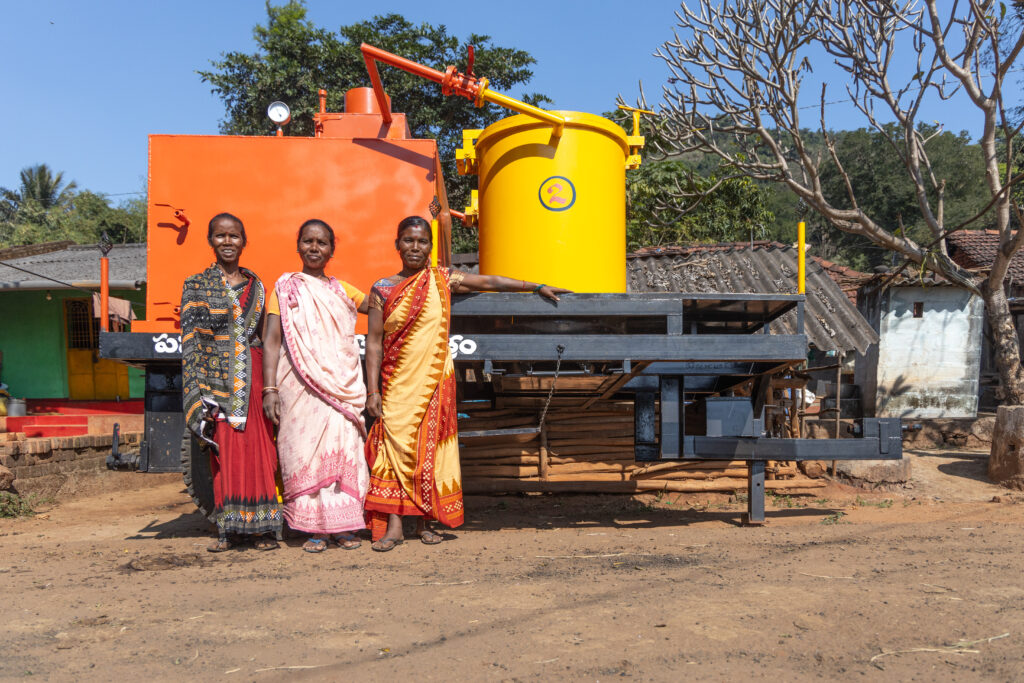
The gains made by women farmers like Damyanti are not only financial. They can mean better meals for a family, a medical bill paid on time or a child attending school. In Andhra Pradesh, producer company leaders are strengthening governance, pricing and buyer negotiation for their members. Elsewhere, weather-triggered insurance and farmer-owned solar systems invested in by women are helping protect hard-won gains and more sustainable local food systems. A woman mentored to develop her own business acumen can become the person another woman calls before a negotiation.
Across three states, our work reaches 140,000 smallholder farmers, most of them women. But scale is not the measure that matters most. Our support is designed so that when we step back, capability remains: Can the business raise its own capital? Can the board make difficult decisions without us? Can women negotiate with buyers without waiting for someone else to speak for them?
The test of our work is not what a woman earns while we are there. It is what still grows after we have gone.
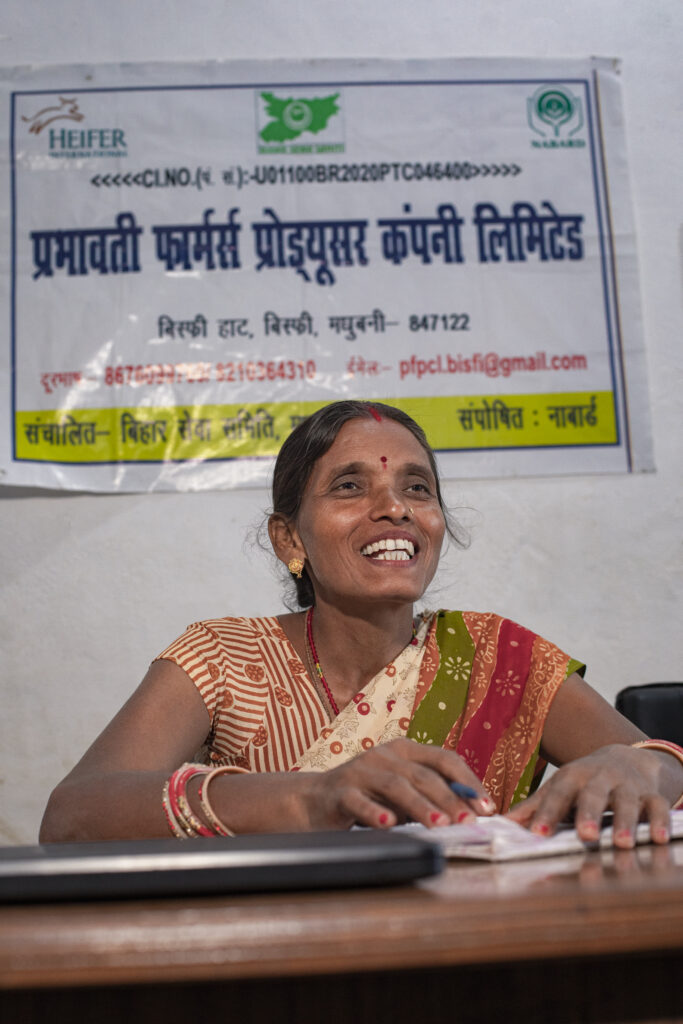
Prabhavati Farmer Producer Company, which FPO Sanju Devi oversees, began its enterprise journey with horticulture and goat sales six years ago and, with support from our local partners, has since built businesses around goat marketing and the processing and sale of packaged spices. It also received the prestigious Special Recognition commendation in the women leadership category of the CII FPO Excellence Awards 2024, honors organized by the Confederation of Indian Industry’s Food and Agriculture Centre of Excellence (CII-FACE). This specific accolade recognized Prabhavati Farmer Producer Company’s outstanding work in the goat sector, highlighting how rural women are driving leadership, economic independence and sustainable livestock farming in their region.
Today, the collective is looking to expand further. Under Sanju’s leadership, and with guidance from our local partner, the FPO has applied for a ₹10 lakh working-capital loan — approximately $10,500 — from Friends of Women’s World Banking, India (FWWB), an organization that provides capacity building and financial services to advance women’s self-reliance, as well as a cash-credit limit from Punjab National Bank. Through FWWB, the FPO is also strengthening the financial management systems it needs to engage with formal finance and scale its operations.
Recognition validates what a women-led FPO like Prabhavati Farmer Producer Company has built. Capital determines what it can build next.
This year, 2026, is the United Nations’ International Year of the Woman Farmer. For me, the significance is not that the world has finally recognized the woman farmer. She has long been producing, managing risk, feeding families and making decisions. The significance of this observance is the opportunity to change how we see her: Not as a beneficiary waiting to be empowered. Not as a participant in someone else’s project. But as an entrepreneur, an owner, a decision-maker and, yes, a CEO.
Sanju Devi does not need to be told she is a business leader. Like so many women farmers, she already has the ambition and vision to build and grow her enterprise. The task before us is to ensure that capital, markets and institutions recognize that leadership — and invest in it.
That is what a farmer-led food system demands: women farmers not simply contributing, but owning enterprises, managing institutions and shaping decisions. Because when women lead, the gains reach families, farmer-owned institutions and entire communities.
Sanju is ready. Her business plan is ready. Are we ready to back her?
By Surita Sandosham | March 4, 2026
Did you know?
You can add multiple resources to this cart! Feel free to keep browsing, add more resources, and get all of your resources in one package. Easy!
Cart is empty
Success!
Please be patient while we send you to a confirmation page.
We are unable to process your request. Please try again, or view common solutions on our help page. You can also contact our Donor Services team at 855.9HUNGER (855.948.6437).
Success!
Please be patient while we send you to a confirmation page.
We are unable to process your request. Please try again, or view common solutions on our help page. You can also contact our Donor Services team at 855.9HUNGER (855.948.6437).