
Impact Report: How Rwandan Farmers Are Building Prosperity Together
By Kim Kamasa and Harriet Mutoni | November 12, 2025
A new assessment in Rwanda shows major improvements in income, nutrition and social cohesion among households engaged in PRISM.


Musabyimana Maliya’s future as a smallholder farmer was uncertain before she joined the Partnership for Resilient and Inclusive Small Livestock Markets (PRISM) project in 2023. A single mother of eight from Nyanza Sector in Rwanda’s Gisagara District, she struggled with rising feed costs, limited land and increasingly unpredictable rainfall, which made livestock production risky and expensive.
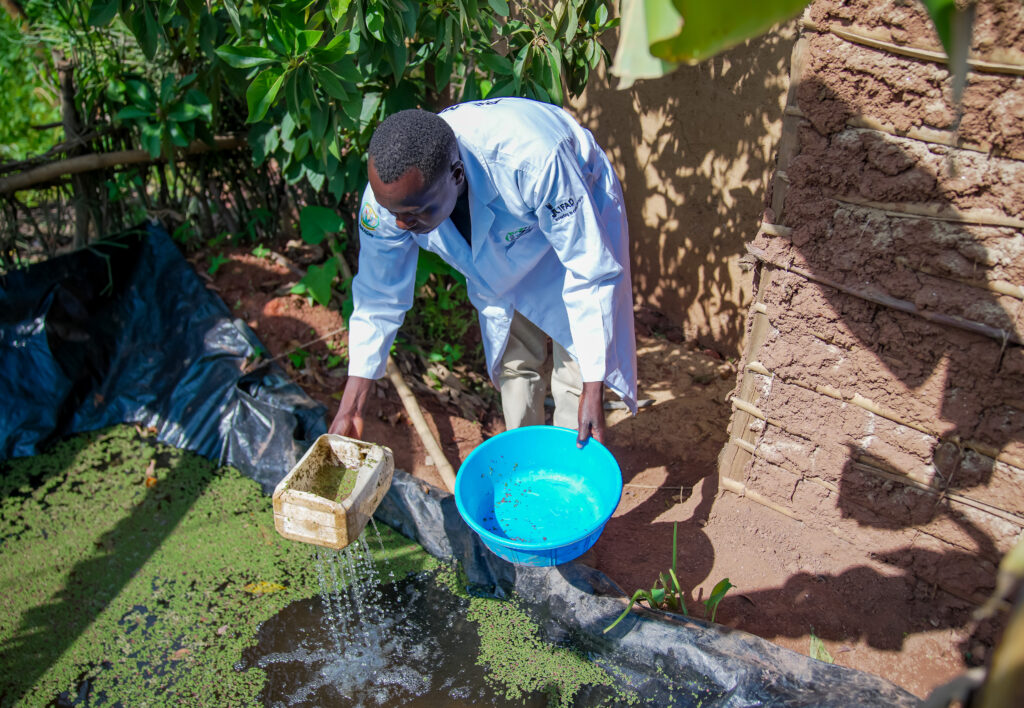
Today, her homestead tells a compelling story of transformation — one driven by skills, innovation and a climate-smart solution that supports both livelihoods and care for the Earth: Azolla-based livestock feed.
Through PRISM, Musabyimana received two pigs. With improved animal care, better feeding practices, and training in climate-resilient agriculture, she began generating income that allowed her to diversify her livelihood base. She went on to purchase 10 chickens, two goats and a cow — clear evidence of how environmentally sustainable solutions can multiply impact at the household level.
To strengthen resilience to climate variability, the project also supported her with a 3,000-liter rainwater harvesting tank. With this investment, Musabyimana can store water during the rainy season and use it efficiently during dry periods, reducing pressure on natural water sources while supporting livestock production in a changing climate.
Musabyimana credits PRISM’s training — particularly on climate-smart feed production — for dramatically reducing her costs while improving livestock productivity.
“Before the training, I used to spend about 17,000 francs per month on animal feeds. Today, I spend only 6,000 francs,” she said. “The 11,000 francs I save every month help me meet other household expenses.”
At the center of this shift is Azolla, a fast-growing aquatic plant rich in protein that can double in size in just a few days. This rapid growth allows Azolla to absorb large amounts of carbon dioxide from the atmosphere, making it a natural tool for reducing greenhouse gases while producing nutritious animal feed.
Azolla lives in symbiosis with nitrogen-fixing microorganisms, which means it enriches soils naturally and does not need synthetic fertilizers. This natural soil enrichment reduces emissions linked to fertilizer production while also improving soil health — an important step toward regenerative agriculture.
After learning how to cultivate Azolla using simple, locally available materials, Musabyimana began producing it at home and mixing it into her animal feeds.
“When I fed my cow with Azolla, milk production increased from two liters to five liters per day, and the quality improved significantly,” she said.
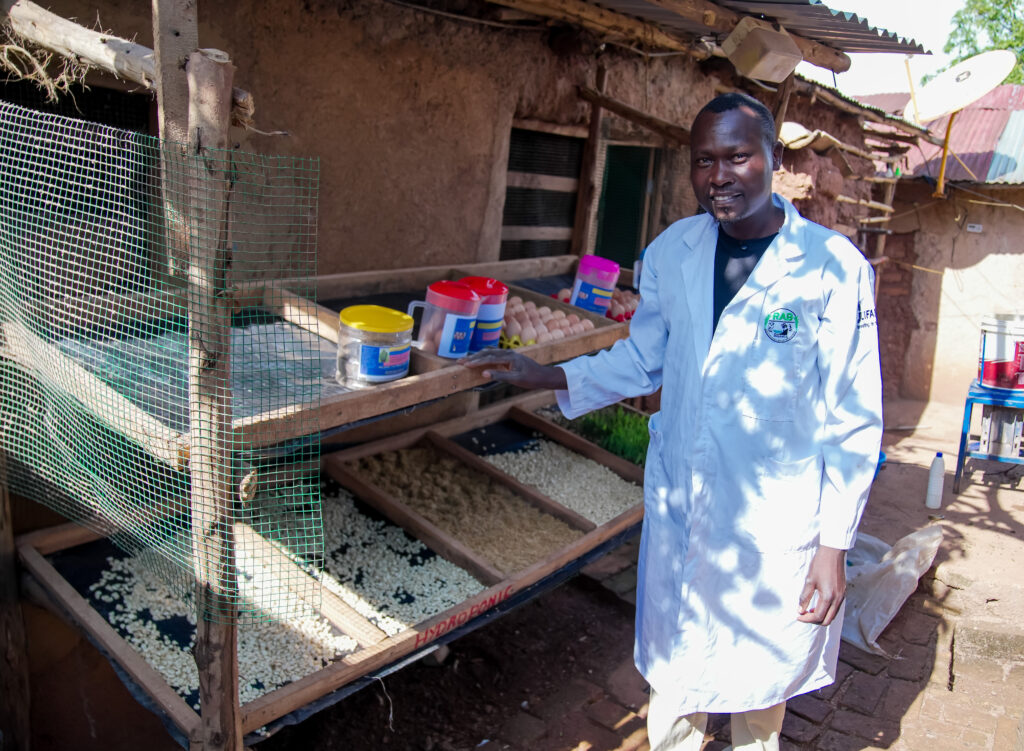
Musabyimana has realized benefits across her livestock. Chickens now grow faster, lay eggs daily instead of three to four times per week and produce eggs with deeper yellow yolks, which are preferred in the market. Her pigs gain weight more quickly, shortening production cycles and reducing the overall resources — feed, water and time — needed to bring animals to market.
Azolla’s ability to float on water also reduces evaporation and protects water quality, helping farmers better cope with drought, flood and erratic rainfall. While Musabyimana’s limited space remains a challenge for expanding production, she continues to rely on Azolla as a low-cost, climate-resilient solution.
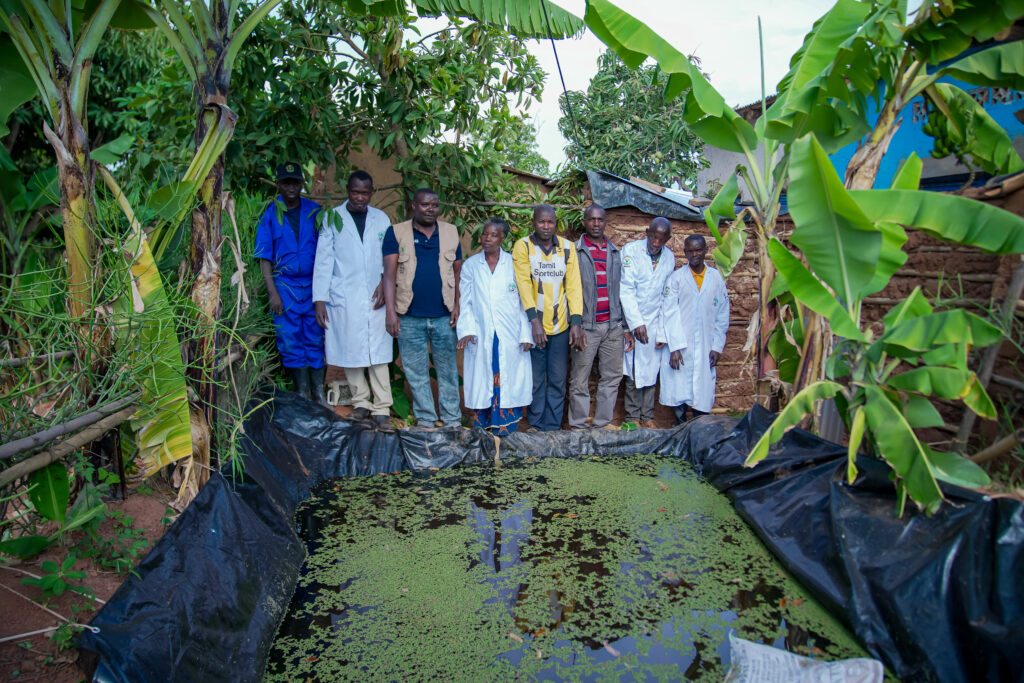
Azolla’s benefits extend beyond individual households. At the cooperative level, the Abesamihigo Cooperative — comprising 449 members — has seen significant improvements since partnering with PRISM.
According to the cooperative’s chairperson, Augustin Bucyana, PRISM began working with the cooperative three years ago, providing small livestock alongside training in animal management, sustainable feed production and climate-resilient farming practices. With project support, the cooperative established an office where members breed chicks and produce livestock feeds. Today, the cooperative breeds at least 500 chickens every month.
Bucyana explained that mixing Azolla into feeds has reduced both costs and environmental impact.
“Before Azolla, one chicken consumed about 10 kilograms of feed per month. After mixing feeds with Azolla, that amount dropped to seven kilograms,” he said. “At 700 francs per kilogram, this saves our members about 2,100 francs per chicken every month.”
By shortening the production cycle — from four months to just three — farmers reduce water use, labor and emissions while increasing profitability. Because Azolla can be grown locally using basins and buckets, farmers are less dependent on climate-vulnerable commercial feed supply chains.
“For Azolla in particular, it has made life easier for farmers because most of them can produce it themselves,” Bucyana added. “This has strengthened resilience at the household and cooperative level.”
Beyond on-farm use, Abesamihigo Cooperative has begun processing Azolla into powdered feed to improve storage, reduce waste and increase market access.
“We dry the Azolla and use a small machine to turn it into powdered feed,” Bucyana said. “This allows us to store it longer and make it available year-round.”
The cooperative also produces hydroponic grass, another climate-smart innovation that uses significantly less water and land than conventional fodder. Together, these practices diversify feed sources and ensure farmers can continue production even during prolonged dry seasons.
According to Theodomir Karera, PRISM project officer in Gisagara District, Azolla was introduced in response to feed shortages driven by climate stress and rising costs.
“Azolla reduces the amount of commercial feed needed by about 30 percent,” Karera said. “This not only saves farmers money but also reduces reliance on feed systems that are vulnerable to climate shocks.”
He added that Azolla improves animal health and reproductive performance while lowering mortality rates — outcomes that translate into more efficient use of resources and stronger livelihoods.
PRISM currently works with 2,234 farmers in Gisagara District, all of whom have adopted Azolla cultivation. The innovation has been introduced in all 15 districts where the project operates, helping farmers adapt to climate change while protecting natural resources.
The Rwanda Agriculture and Animal Resource Board (RAB) has also recognized the benefits of Azolla. According to Gatera Gilbert, a RAB staff member overseeing PRISM and RDDP implementation in Gisagara District, livestock mortality has declined significantly since its introduction.
“Previously, we received frequent reports of pigs dying due to poor feeding,” he said. “Since the introduction of Azolla, mortality rates have dropped. Farmers are saving money while improving animal health and reducing pressure on the environment.”
While some farmers initially hesitated to adopt the innovation, continued training and demonstrations have helped shift mindsets.
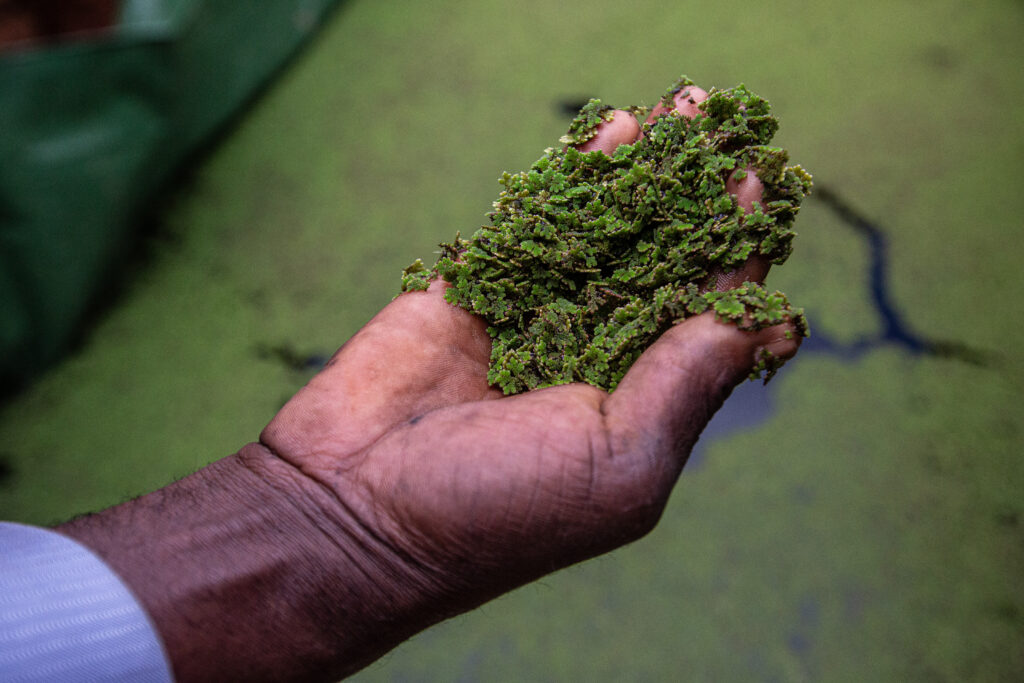
What began as a response to a feed crisis has evolved into a farmer-driven, climate-smart innovation with wide-ranging benefits. By capturing carbon, improving soil health, conserving water and reducing greenhouse gas emissions — including methane in flooded fields — Azolla supports both climate adaptation and mitigation.
From household farms to cooperatives across districts, Azolla demonstrates that locally adaptable, nature-based solutions can strengthen livelihoods while caring for the Earth. As climate pressures intensify, innovations like Azolla show how smallholder farmers — supported by the right training and partnerships — can lead the way toward a more resilient and sustainable future for Rwanda’s agriculture.
Partnership for Resilient and Inclusive Small Livestock Markets (PRISM) is a five-year project to reduce poverty, improve livelihoods and enhance resilience for rural households in 15 districts across Rwanda’s Northern, Southern and Western provinces.
Co-funded by the International Fund for Agricultural Development, the Government of Rwanda and Heifer International, the project provides livestock and training for smallholder farming households to enhance the pig, poultry, goat and sheep value chains. PRISM also invests in veterinary networks and market infrastructure while expanding access to tailored financial services that give farmers the means to invest in their herds and businesses.
As of 2025, PRISM has reached nearly 36,000 households, exceeding its 23,400-goal, with 100 percent of households adopting community-driven sustainable practices. Participating families have nearly doubled their average household income since fiscal year 2023 while also making notable strides in food security and dietary diversity.
By Kim Kamasa and Harriet Mutoni | November 12, 2025
A new assessment in Rwanda shows major improvements in income, nutrition and social cohesion among households engaged in PRISM.
Did you know?
You can add multiple resources to this cart! Feel free to keep browsing, add more resources, and get all of your resources in one package. Easy!
Cart is empty
Success!
Please be patient while we send you to a confirmation page.
We are unable to process your request. Please try again, or view common solutions on our help page. You can also contact our Donor Services team at 855.9HUNGER (855.948.6437).
Success!
Please be patient while we send you to a confirmation page.
We are unable to process your request. Please try again, or view common solutions on our help page. You can also contact our Donor Services team at 855.9HUNGER (855.948.6437).