
What is a Smallholder Farmer?
By Aimée Knight | September 16, 2025
Heifer believes ending poverty and hunger begins with agriculture, and smallholder farmers are at the heart of this effort. But what exactly is a smallholder farmer?


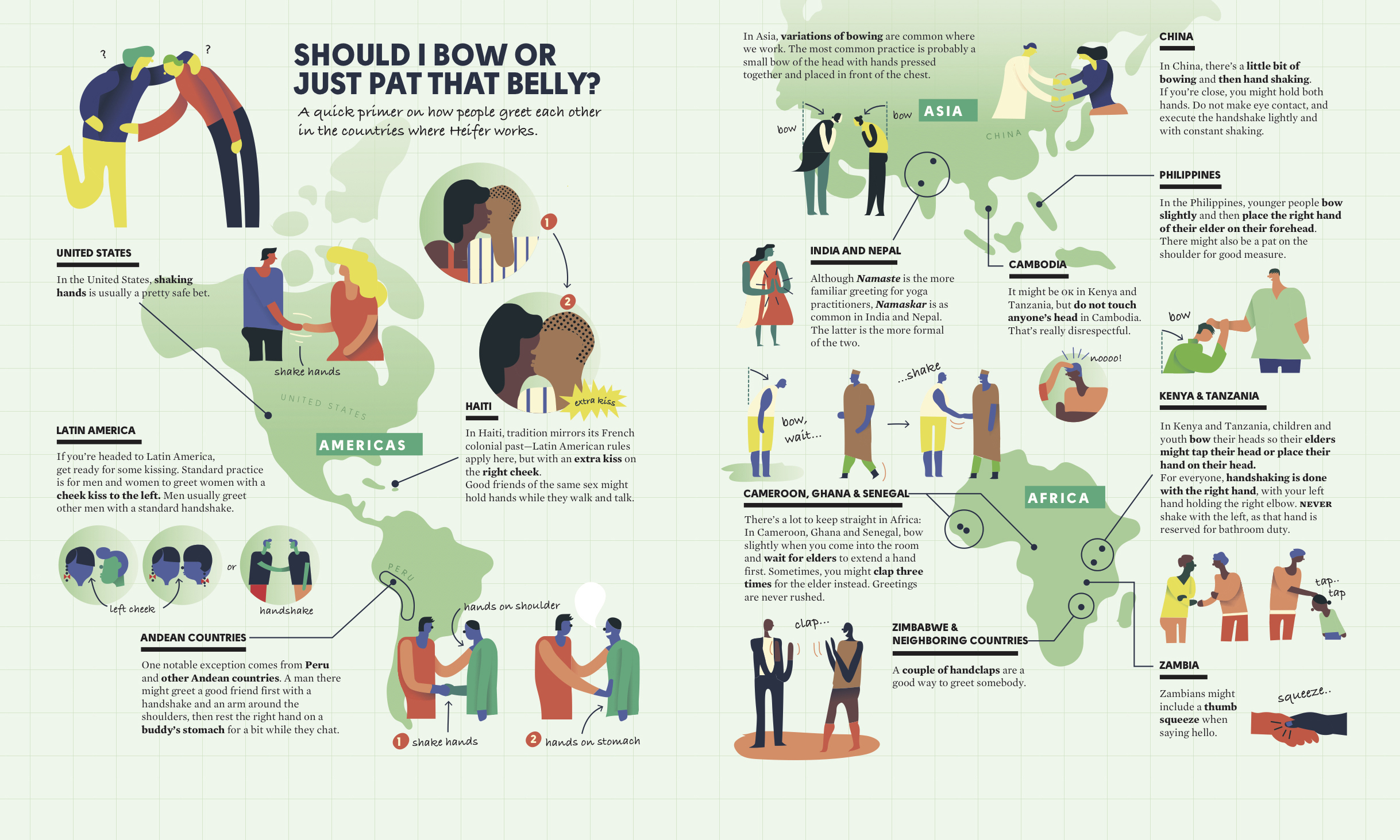
From handshakes and hugs to bows and cheek kisses, people around the world have unique ways of saying hello. These traditions reflect the cultures, customs and communities that make each place special.
Whether you’re traveling somewhere new or simply curious about other cultures, here’s a quick primer on how people greet each other in areas where Heifer International works.
 United States
In the United States, shaking hands is usually a pretty safe bet.
Latin America
If you’re headed to Latin America, get ready for some kissing. Standard practice is for men and women to greet women with a cheek kiss to the left. Men usually greet other men with a handshake.
Haiti
In Haiti, tradition mirrors its French colonial past–Latin American rules apply here, but with an extra kiss on the right cheek. Good friends of the same sex might hold hands while they walk and talk.
 Andean countries
One notable exception comes from Peru and other Andean countries. A man there might greet a good friend first with a handshake and an arm around the shoulders, then rest the right hand on a buddy’s stomach or waist for a bit while they chat.
In Asia, variations of bowing are common where we work. The most common practice is probably a small bow of the head with hands pressed together and placed in front of the chest.
 China
In China, there’s a little bit of bowing and then hand shaking. If you’re close, you might hold both hands. Do not make eye contact, and execute the handshake lightly and with constant shaking.
Philippines
In the Philippines, younger people bow slightly and then place the right hand of their elder on their forehead. There might also be a pat on the shoulder for good measure.
Cambodia
It might be OK in Kenya and Tanzania, but do not touch anyone’s head in Cambodia. That’s really disrespectful.
India and Nepal
Although Namaste is the more familiar greeting for yoga practitioners, Namaskar is as common in India and Nepal. The latter is the more formal of the two.
 Kenya and Tanzania
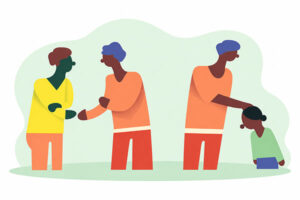
In Kenya and Tanzania, children and youth bow their heads so their elders might tap their head or place their hand on their head. For everyone, handshaking is done with the right hand, with your left hand holding the right elbow. Never shake with the left, as that hand is reserved for bathroom duty.
Cameroon, Ghana and Senegal
There’s a lot to keep straight in Africa: In Cameroon, Ghana and Senegal, bow slightly when you come into the room and wait for elders to extend a hand first. Sometimes you might clap three times for the elder instead. Greetings are never rushed.
Zimbabwe and neighboring countries
A couple of handclaps are a good way to greet somebody.
Zambia
Zambians might include a thumb squeeze when saying hello.
From handshakes and hugs to bows and unique local traditions, there are countless ways to say hello around the world. While greetings may look different from one culture to another, they all share something in common: bringing people together.
By Aimée Knight | September 16, 2025
Heifer believes ending poverty and hunger begins with agriculture, and smallholder farmers are at the heart of this effort. But what exactly is a smallholder farmer?
Did you know?
You can add multiple resources to this cart! Feel free to keep browsing, add more resources, and get all of your resources in one package. Easy!
Cart is empty
Success!
Please be patient while we send you to a confirmation page.
We are unable to process your request. Please try again, or view common solutions on our help page. You can also contact our Donor Services team at 855.9HUNGER (855.948.6437).
Success!
Please be patient while we send you to a confirmation page.
We are unable to process your request. Please try again, or view common solutions on our help page. You can also contact our Donor Services team at 855.9HUNGER (855.948.6437).