
She Teaches by Growing in Bangladesh
December 31, 1969
In a lush field in the Jashore district of southwestern Bangladesh, tomato plants, spinach, cauliflower and cabbages are planted in long, raised rows.

June 30, 2026

Smallholder farmers have long borne the risks of climate shocks, market volatility and crop failures, yet their share of agricultural profits has always been the least. Heifer International’s five-year Bangladeshi Women Farmers Grow Vegetables, Flowers and Wealth project partners with women farmers in Jessore, Bangladesh, to change this through formal vegetable and flower markets, including exports, adoption of improved agroecological practices and strengthened infrastructure support — all grounded in collective action and convergence.
Bringing farmers together in cooperatives has enabled producers to aggregate their produce, increase negotiation power and amplify their voices. These strong farmer cooperatives have become attractive collaborators to private and public stakeholders to streamline the relevant market systems.
Mobilized by the project, women farmers have so far established partnerships with exporters such as Maisha Trade International and Al Adib International and are now exporting fresh vegetables to countries in the Middle East and Europe, including Saudi Arabia, Kuwait, Ireland, the UK, Germany and Malaysia. In fiscal years 2024 and 2025, the women exported a combined 8.1 metric tons of vegetables, generating $17,645. Export volumes are projected to reach 20 metric tons by fiscal year 2026.
This progress began with building social capital.
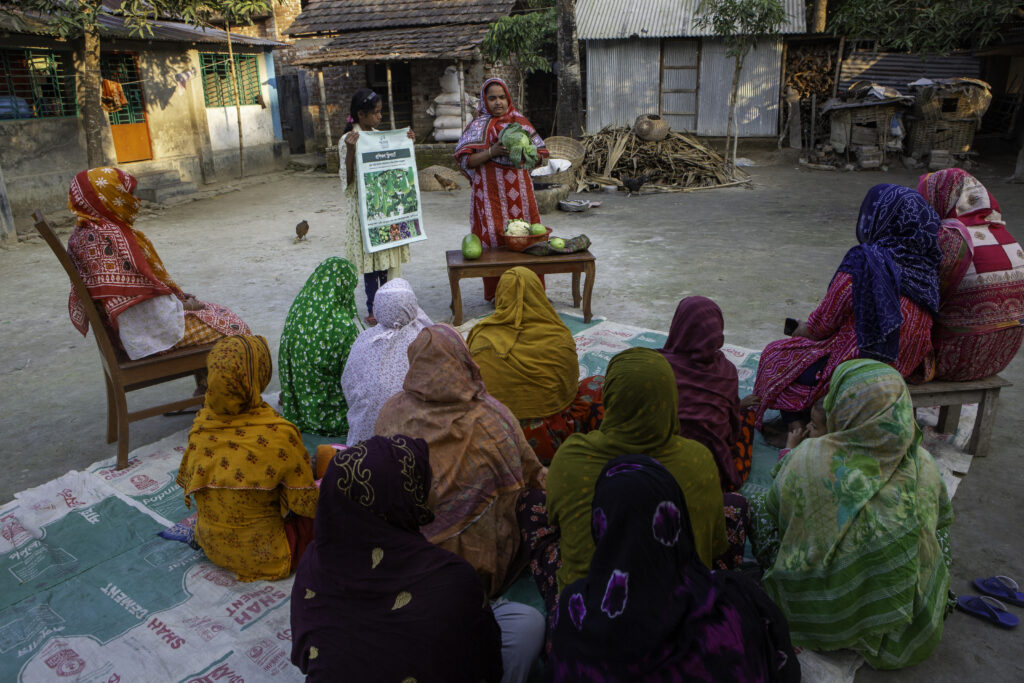
Co-design workshops at the beginning of the project uncovered deep-rooted challenges: mobility constraints, gender barriers, limited access to finance, unsustainable farming practices weighed down by high irrigation costs and unfair pricing.
Heifer supported women farmers to address these barriers together. Participating producers formed 225 self-help groups, federated into two cooperatives. Collective savings allowed access to small loans for farm inputs and household needs. This safety net has strengthened trust, solidarity and confidence.
As cooperative member Rehana Khatun shared: “Being part of this organization has helped me move forward. Now I feel more confident… I hope this cooperative grows bigger and creates employment for more women like me.”
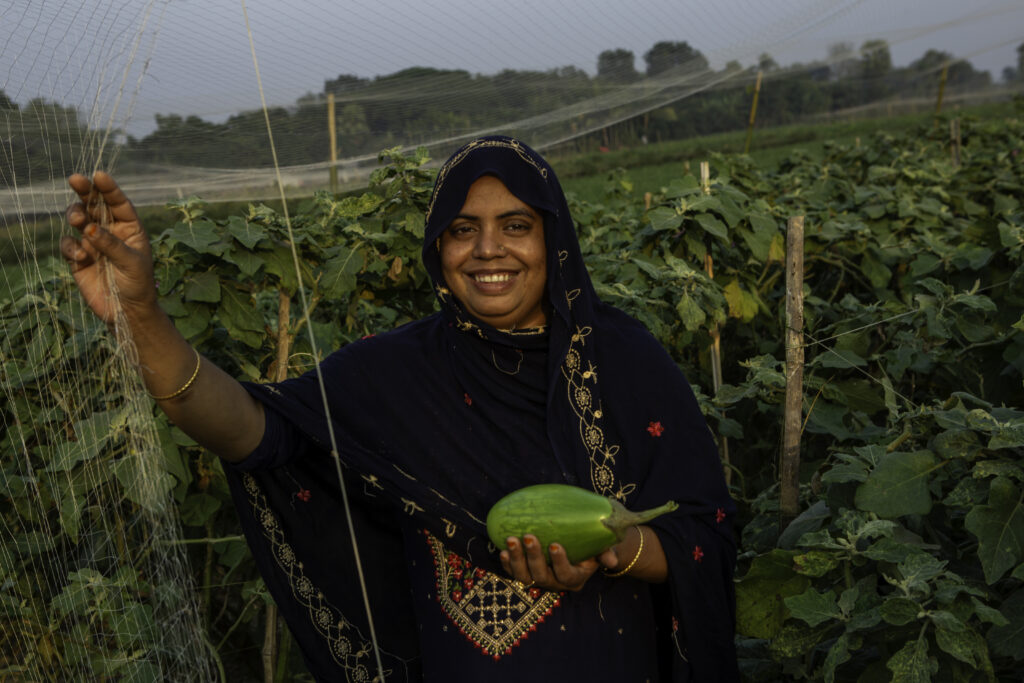
Cooperatives now aggregate produce, negotiate better prices, and partner with suppliers and exporters. Larger volumes and consistent quality have given women bargaining power. Training in climate-smart farming and Good Agricultural Practices (GAP) — including new crop varieties, composting, mulching, balanced fertilization and solar irrigation — has reduced costs, improved soil health and built resilience.
When exporters cited high transport costs as a barrier to offering good prices, farmers — demonstrating the power of their collective voice — raised their concerns and declined the proposed arrangement. To bridge the gap, Heifer facilitated a collaboration with the Bangladesh Agricultural Development Corporation (BADC). By leveraging BADC’s cooling vans, logistics costs were reduced, enabling exporters to remain profitable while farmers secured better prices. This solution improved export efficiency and strengthened government trust in Heifer and the farmers’ cooperative, which is now exploring ways to extend agricultural services to the other 75 Heifer-supported cooperatives and beyond.
Meanwhile, discussions with the Department of Agricultural Marketing (DAM) aim to develop aggregation centers at cooperative sites to remove systemic supply chain bottlenecks.
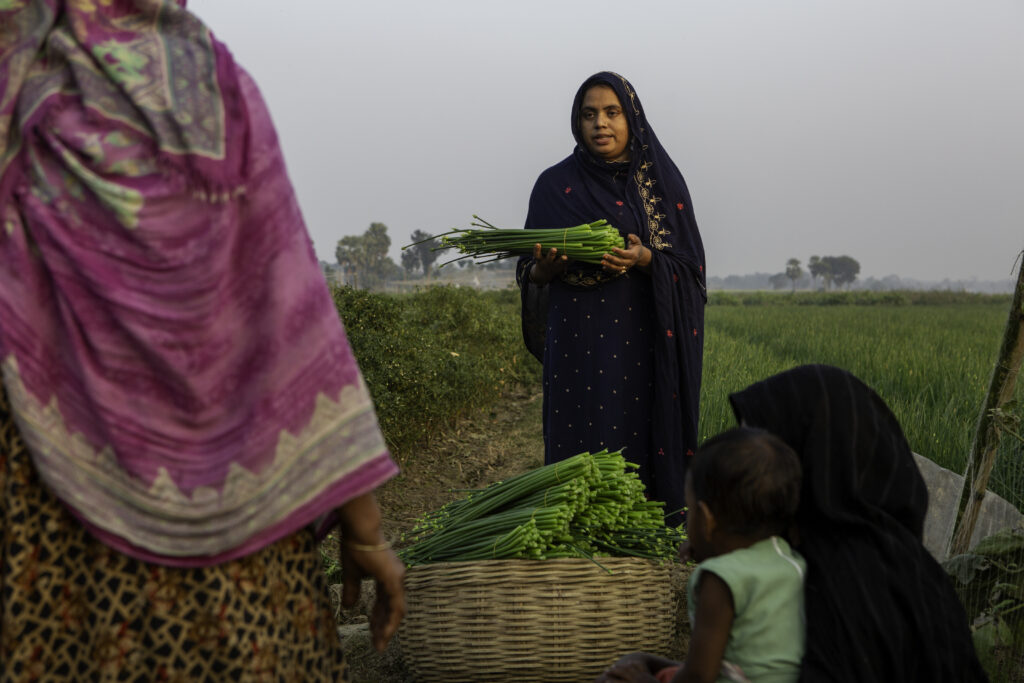
The impact extends well beyond agriculture. Women are stepping into public life as decision-makers and leaders. In communities where women were once sidelined, they are now leading cooperatives, negotiating prices and contributing to local planning. Cooperative members sit on advisory boards, collaborate with government officials and represent their communities in broader forums. Rural women are becoming visible, vocal and vital to local development. This is the power of the collective.
To further strengthen value chains, cooperatives are actively working with multiple government departments: with BADC for cold storage and transportation, DAM for market access, the Department of Agricultural Extension for production and market linkages, and the Soil Resource Development Institute for soil testing services.
The region’s vegetable export success is more than just a market achievement — it’s a testament to what rural women can accomplish with the right tools, partnerships and support. These farmers are not just growing crops; they are cultivating leadership, confidence and community transformation.
December 31, 1969
In a lush field in the Jashore district of southwestern Bangladesh, tomato plants, spinach, cauliflower and cabbages are planted in long, raised rows.
Did you know?
You can add multiple resources to this cart! Feel free to keep browsing, add more resources, and get all of your resources in one package. Easy!
Cart is empty
Success!
Please be patient while we send you to a confirmation page.
We are unable to process your request. Please try again, or view common solutions on our help page. You can also contact our Donor Services team at 855.9HUNGER (855.948.6437).
Success!
Please be patient while we send you to a confirmation page.
We are unable to process your request. Please try again, or view common solutions on our help page. You can also contact our Donor Services team at 855.9HUNGER (855.948.6437).