
Families are Abuzz with Success in Ethiopia
August Impact Stories

Bezuye, a mother of four from Asosa in western Ethiopia near the Sudanese border, is breaking longstanding gender barriers in beekeeping.
While Asosa is known for its rich biodiversity and ideal conditions for beekeeping, traditional norms have often made this practice inaccessible to women.
Beekeeping in Bezuye’s community has meant hanging heavy wooden hives 10 meters high in dense forests — an arduous and risky task that excluded most women. While women played supporting roles in processing and marketing honey, they were largely left out of the most profitable aspects of honey production.
But being able to join Heifer-supported common interest groups has changed this for Bezuye. And it’s all thanks to your generosity.
Through these groups, she received training, access to modern beekeeping techniques and the attire needed to safely work the job. These innovations eliminated the need to climb trees, made beekeeping safer, provided women with more access to the practice and significantly increased honey yields.
Previously, Bezuye had worked mostly with other crops like tomatoes, as her hives only provided enough for basic food and medicine for her family. Now, her honey annual output has nearly doubled. Before, her wax was ineffectual, now she successfully produces enough, along with the increased honey output, to increase her family’s income.
The group Bezuye joined also received guidance on how to access markets for their honey, helping them address the longstanding challenge of connecting with buyers and growing their customer base. The improved market access will help increase her income even further.
Because of your giving, Bezuye is now able to harvest more honey than ever before, and she is hoping to earn enough to buy land and a home in the city and provide her children with a better education.
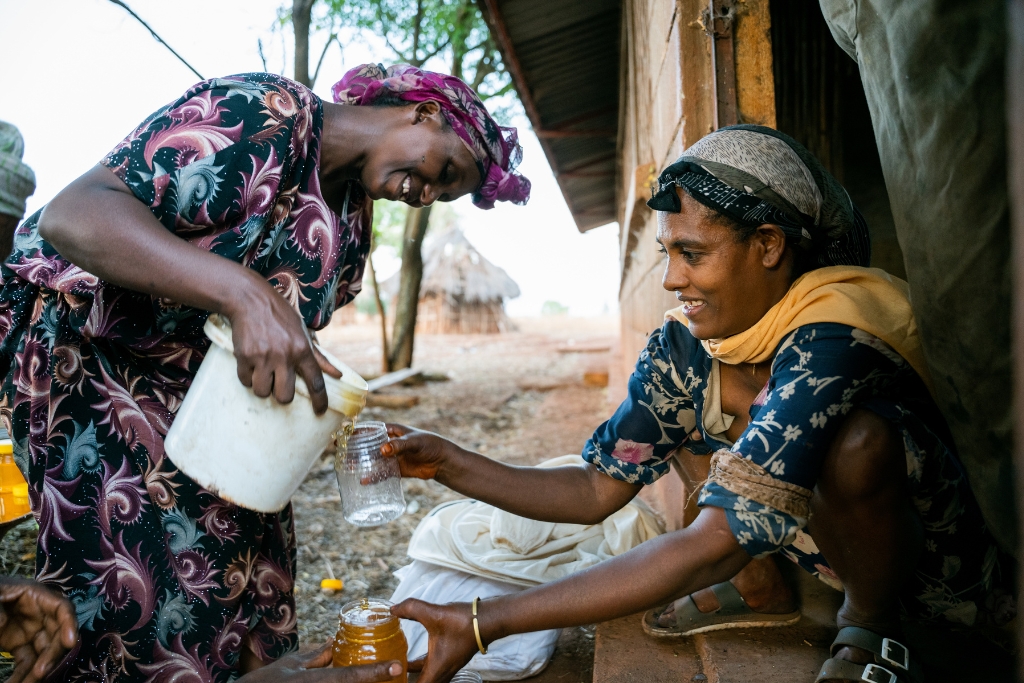
By working together, Bezuye and the other women in her community have built a strong support network that drives shared success. They meet regularly to discuss hive maintenance, exchange market tips and split transport costs, transforming what was once a solo effort into a shared enterprise.
“It’s better to work in groups…we work well because we care for each other. I’m personally happy that… we have our rights respected enough to be part of projects like this. I’m grateful for the opportunity.”
Bezuye is an inspiration, and you’ve been an inspiration for her — so thank you for all you do.
Empowering Women Farmers in India
Damyanti Pangi’s sons bring her apples as a small way of honoring her hard work on their family farm in Odisha, India. Thanks to the success of her growing agriculture business, her family now enjoys a diverse diet that includes mushrooms, paneer, dahl, leafy green vegetables and bananas — a stark contrast to the hunger she experienced growing up.
As a child, Damyanti’s family often survived on small amounts of rice in exchange for work or simple millet porridge when work was scarce. After marrying at 17, she and her husband shared a one-room home with his parents and owned only enough land to grow a small plot of millet. They often worked neighboring farms to make ends meet.
Over time, they began cultivating turmeric and potatoes but still struggled to get by each day.
Three years ago, thanks to you support, Damyanti was able to become a member of the Alekh Mahima Farmers Producer Company, a women-led farmer producer organization (FPO). The FPO is supported through the Women Entrepreneurs for Women Entrepreneurs (WE4WE) initiative that helps smallholder farmers improve food security and access economic opportunities.
Through this, Damyanti gained access to training, markets and financing and began to sell her turmeric through the FPO rather than navigate the market alone.
“We have the produce, but we don’t know whom to sell to, so Passing Gifts helped us to get connected with a proper vendor or company,” Damyanti explained.
Today, the family of five owns an acre of land, leases an additional acre, and lives in a comfortable four-room house.
Because of your generosity, Damyanti also gained access to life-changing equipment.
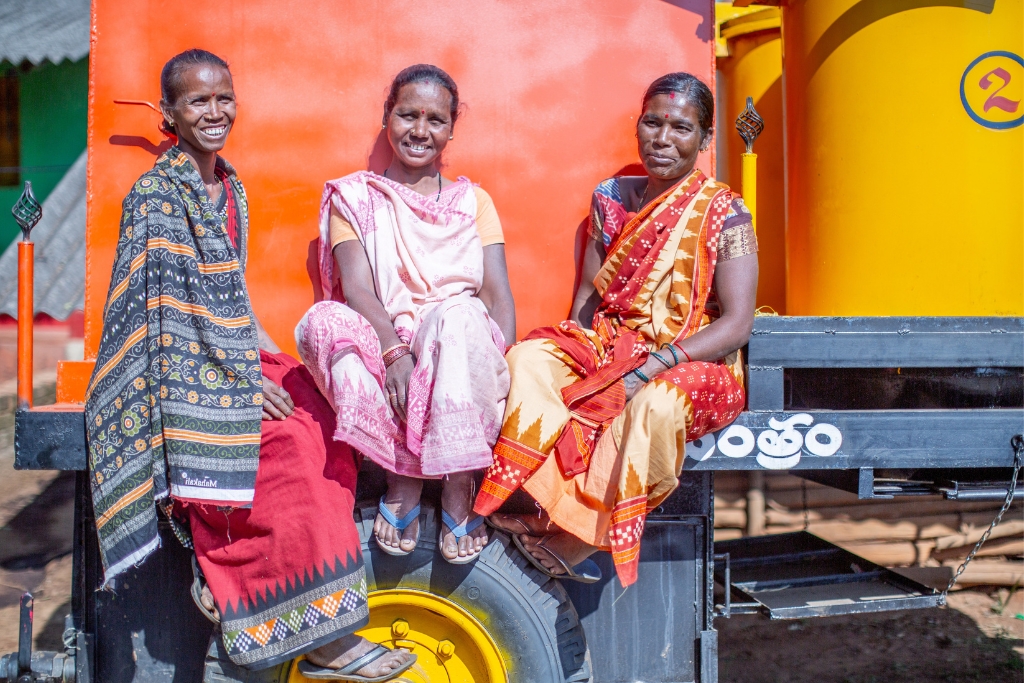
Processing turmeric can be a time-consuming ordeal. Previously, it took Damyanti more than a week to boil just five bags of turmeric. Now, her village has a new 1,000-liter water tank and two massive, bright yellow steam drums that means she no longer needs to use her stovetop.
And she can sell her turmeric at six times the rate she used to be able to.
“We used to cry a lot because of hunger,” she said. “Now, we laugh because we are happy.”
Through Alekh Mahima, Damyanti learned new farming techniques that increased her harvests and gave her more time to invest in her family and community. She has expanded her business to grow a variety of crops — including coffee, ginger, tomatoes and a valuable black turmeric — helping increase her family’s income by a factor of four.
Damyanti now has the ability to thrive on her own terms, having a greater role in decision making in the community and providing a better education for her children. This is all thanks to you!
Helping Women Build Stronger Futures in Guatemala
Guatemala has one of the most diverse rainforest systems in Central America. Its landscape spans from tropical rainforests to mountainous forested highlands.
The forest has traditionally supported a win-win environment for people and the planet — a symbiotic relationship that adapts to change, embraces nature’s rhythms, and perfectly suits its unique ecology and geography.
Over time, this finely tuned balance has gradually shifted, posing a growing threat to the lives and livelihoods of the Indigenous communities residing in the rainforest. Despite the forest’s capacity to ensure food security, an estimated 350,000 cardamom farming families in Guatemala continue to grapple with poverty, facing significant gaps in food consumption.
Within this ecosystem, Heifer’s Green Business Belt (GBB) Signature Program supports thousands of farmers and producers as they build and develop spice-related products and eco-tourism services. The project works to improve forest management, strengthening green enterprises that improve harvests and help farmers access new markets, so they can earn more profit for their hard work.
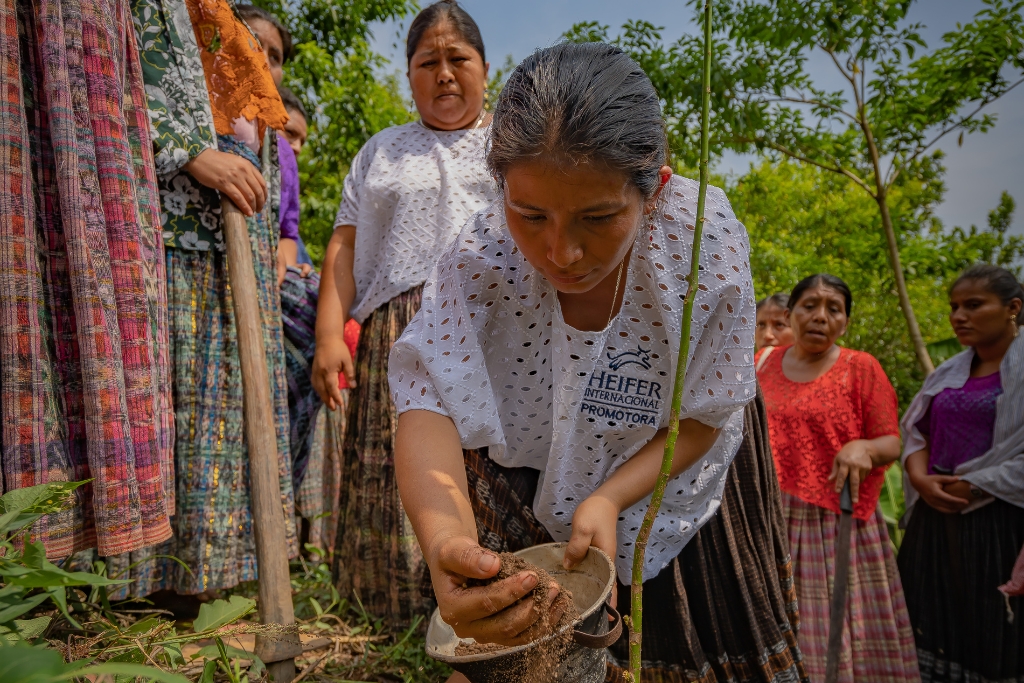
A cardamom and cinnamon farmer, Florinda Araceli Tzib Maaz started working with Heifer to “support my fellow women, to lose fear, working the land that our parents have left us.”
Florinda, who is also a promoter with the GBB program, moves between Raxruhá and Chisec teaching members in small groups so that even those with little formal education can receive and use the training and information needed to successfully engage in this type of farming.
Florinda has come a long way since she started this work a year ago. Now, she’s no longer afraid of speaking in front of groups and works hard to support the women in her community, who often manage alone due to migration.
“Some of my fellow women have their husbands in the United States, and they are in charge of the household in Guatemala,” she said.
“As long as we have the support, the advice of the technicians, we can get ahead bringing sustenance to our families.”
Thank You
Thanks to your support, women like Florinda are gaining the skills and confidence to strengthen their livelihoods and lead others in their communities. Together, they are building thriving green enterprises, providing for their families and creating stronger futures while protecting Guatemala’s forests.