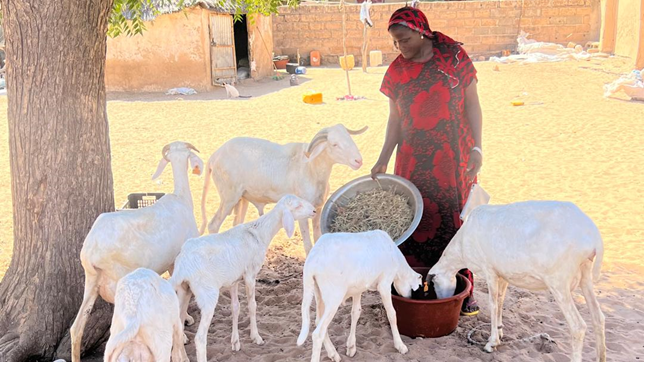
Bintou Dione collects fodder for her sheep in Ngoumsan village, Senegal. Photo by Heifer International/Russell Powell.
Sheep play a vital role in Senegal’s economy and culture, yet the country cannot meet its own demand for the livestock. Each year, people in Senegal consume nearly 2 million sheep. However, domestic production is not sufficient to meet the seasonal surge in demand during the important religious celebration of Tabaski, requiring annual imports of 250,000–300,000 sheep, equivalent to 15–30 percent of the country’s Tabaski needs. These imports leave local producers cut off from fully participating in a high-demand value chain — and keep some families from fully participating in Tabaski.
Rural communities — particularly women and youth — often struggle to turn smallholder livestock rearing into reliable income or lasting financial security. Their productivity is constrained by high feed costs, disease, limited veterinary care and weak access to markets.
Meeting this national challenge requires a complete system: farmers to raise healthy animals and local businesses to supply the resources they need to thrive. In Senegal’s rural communities, women are stepping up to fill both sides of that equation. In the village of Ndiagne, Khady Gaye is growing the local sheep supply, while in Ngoundioura, Lemou Ka runs a retail shop that provides essential feed to keep flocks healthy.
Building Supply From the Ground Up
In Ndiagne, Khady used to feel the agricultural market strains firsthand. She and her husband had few productive farming assets and no steady source of income, forcing them to rely on irregular earnings and rented housing. It was difficult for them to plan beyond their daily needs.
Wanting to become self-sufficient, Khady applied for animal husbandry training through the Mayor’s Initiative for Sheep Self-Sufficiency (IMAM2) project, a partnership between Heifer International, the Association of Mayors of Senegal and the Ministry of Livestock and Animal Production. Between 2017 and 2019, a pilot phase of IMAM2 lifted more than 40,000 families out of poverty while strengthening every link in the local sheep value chain. Khady applied for Phase 2 of the initiative, which launched in 2022.
Growing Income and Family Stability With Social Capital
Khady Gaye feeds her sheep in Ndiagne, Senegal. Starting with two breeding ewes, she grew her flock and now earns income from sheep sales.
Through IMAM2, families like Khady’s join self-help groups and cooperatives, where they receive training in animal husbandry, financial management and leadership. The initiative puts women at the center of this transformation, empowering them to become successful farmers and agribusiness leaders.
As part of Khady’s training, she received two breeding ewes, essential veterinary supplies and the skills she needed to build a productive and sustainable agribusiness. With training and support, she steadily expanded her flock. Her original two ewes produced 10 lambs: six males and four females.
As the flock grew, so did Khady’s options for generating income and providing for her family. She sold three rams at market to generate income for her household and business, while reserving a fourth ram for household consumption during the Tabaski festival. Through sheep farming, Khady was able to secure her family’s nutrition and honor an important cultural tradition.
“Starting with just two sheep, I was able to grow my flock, sell sheep and use the income to change my family’s situation,” Khady said. “Sheep farming has become a real economic activity for us.”
Today, Khady owns seven sheep alongside her original two ewes. Income from sheep sales has allowed her to invest in building a permanent home on a family-owned plot of land, moving her toward long-term security.
“Starting with just two sheep, I was able to grow my flock, sell sheep and use the income to change my family’s situation.”
— Khady Gaye
Unlocking the Local Supply Chain
Helping farmers increase production is only part of the livestock solution in Senegal. Growing flocks also require reliable access to quality feed, supplies and local markets. IMAM2 invests in rural entrepreneurs who can provide those inputs, strengthening the entire livestock value chain so production and supply support one another.
In the village of Ngoundioura, located in the Sam Yabal commune, Lemou Ka provides that critical link. She runs a small retail shop, selling essential goods to local farmers and families.
Before IMAM2, supply shortages meant Lemou’s modest earnings didn’t cover household needs, and her shop couldn’t carry enough livestock feed to support local smallholders. Families and farmers were forced to travel long distances to find basic supplies, which limited everyone’s earning potential.
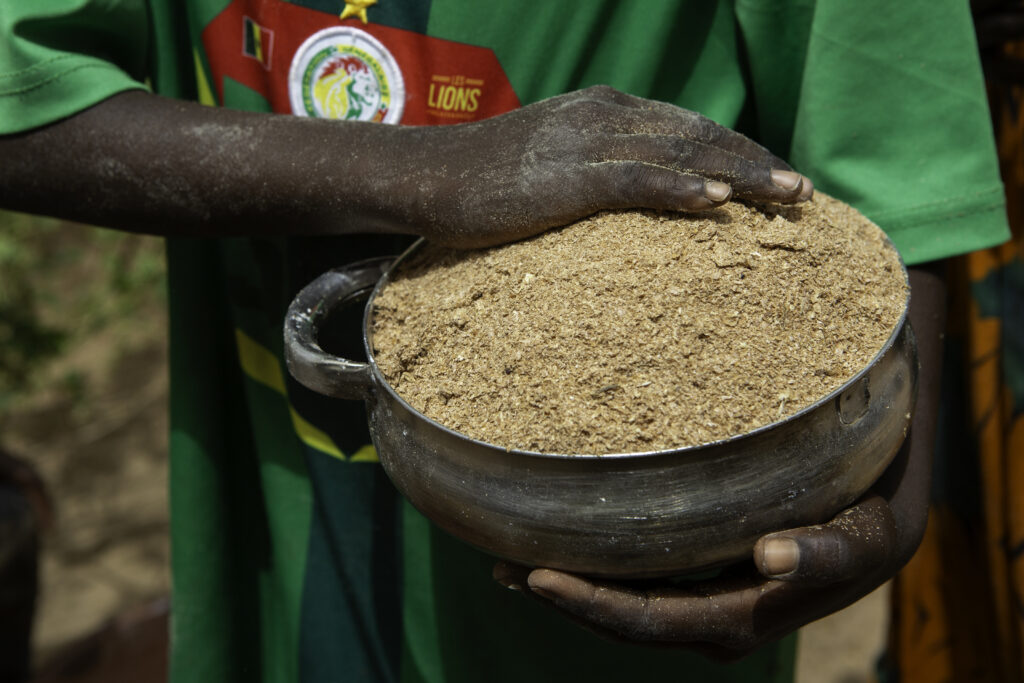
Access to livestock feed is a key part of a strong local supply chain and allows farmers to raise healthy animals. Photo by Heifer International/Russell Powell.
The village’s economic ecosystem changed when Lemou received a start-up grant of 300,000 CFA francs, or about $500, from IMAM2. She used the money to purchase and sell improved livestock feed — exactly what sheep farmers like Khady need to keep their expanding flocks healthy and productive. Access to a reliable local feed supply is what transforms small-scale breeding into a thriving business.
Within 45 days, Lemou sold out her entire inventory, generating 352,500 CFA francs (about $621) in total sales and a net profit of 36,750 CFA francs (around $65). She reinvested her profits, using them to expand her store. During the rainy season, Lemou began stocking rice, millet, sugar, cooking oil and flour, reducing the need for local families to travel outside the village for everyday essentials.
Today, her shop serves nearly 50 regular customers, including livestock farmers, women, young people and nomadic families. She used business credit to invest in a freezer and earns additional income from mobile phone credit sales.
“Thanks to the IMAM2 project, I can now meet the needs of my village,” Lemou said. “Before, we had to travel to Touba or Sam Yabal to buy basic supplies. Today, essential products are available right here in my shop.”
Cultivating Lasting Change for the Community
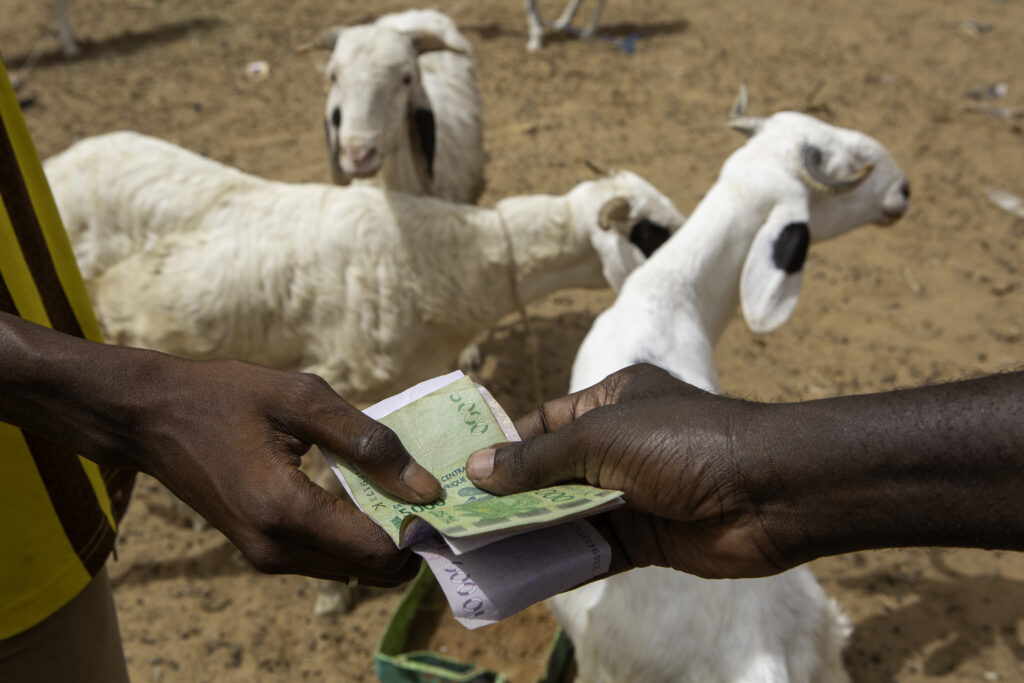
Local livestock markets are another link in the value chain, where sheep farmers sell directly to buyers and earn income from their flocks. Photo by Heifer International/Russell Powell.
Khady and Lemou’s stories show what happens when the livestock value chain functions as a complete, interconnected system. Smallholder producers and local entrepreneurs support one another, turning individual success into community-wide economic strength and resilience.
Between January and June 2026, IMAM2 took a major step toward a market systems development (MSD) model. Alongside technical support, animal health services, productive assets and community capacity building, participants now have expanded access to finance, stronger producer cooperatives and closer connections with markets and business partners. The evolution builds on the project’s community-based approach while creating more sustainable market opportunities for participants.
Through Heifer’s Passing on the Gift® model, participating households also share livestock and knowledge with others. At the same time, the MSD approach connects local cooperatives, businesses and market services so they can continue to support producers long after the project ends.
By uniting production and supply, women farmers and entrepreneurs engaged in IMAM2 are cultivating a more self-sufficient and inclusive food system across Senegal that is built to last.
Heifer Senegal Boosts Food Self-Sufficiency for Tabaski Holiday
By Heifer International|June 3, 2025
During Senegal’s lean season, demand for sheep peaks. A Heifer-supported initiative is helping smallholder farmers improve production and build food self-sufficiency.
Please be patient while we send you to a confirmation page.
We are unable to process your request. Please try again, or view common solutions on our help page. You can also contact our Donor Services team at 855.9HUNGER (855.948.6437).
-
includes to cover payment processing costs.
Give in Honor
You'll have the opportunity to fill out a free card after your donation
Details
,
Success!
Please be patient while we send you to a confirmation page.
We are unable to process your request. Please try again, or view common solutions on our help page. You can also contact our Donor Services team at 855.9HUNGER (855.948.6437).
Your Donation Amount
/mo
/yr
includes to cover payment processing costs.
Give in Honor
You'll have the opportunity to fill out a free card after your donation